It is Friday evening, you have your phone in one hand and a scrap of chicken in the other, and in under five minutes your dog is already giving you a high five. You do not need to be a professional trainer or have some kind of canine genius on your hands. You need a good treat, a little patience, and ten minutes a day. This guide gives you a list of easy, fun dog tricks, the kind you will want to film and show everyone, with a step-by-step plan for teaching each one.
Why Teach Your Dog Tricks (Beyond Showing Off)
A dog who shakes hands or plays dead looks great in a video, but tricks do a lot more than entertain your guests.
When you teach your dog tricks, you are really doing several things at once:
- You tire out his brain, not just his legs. Ten minutes of learning something new wears a dog out as much as a good walk. A mentally tired dog shreds fewer couch cushions.
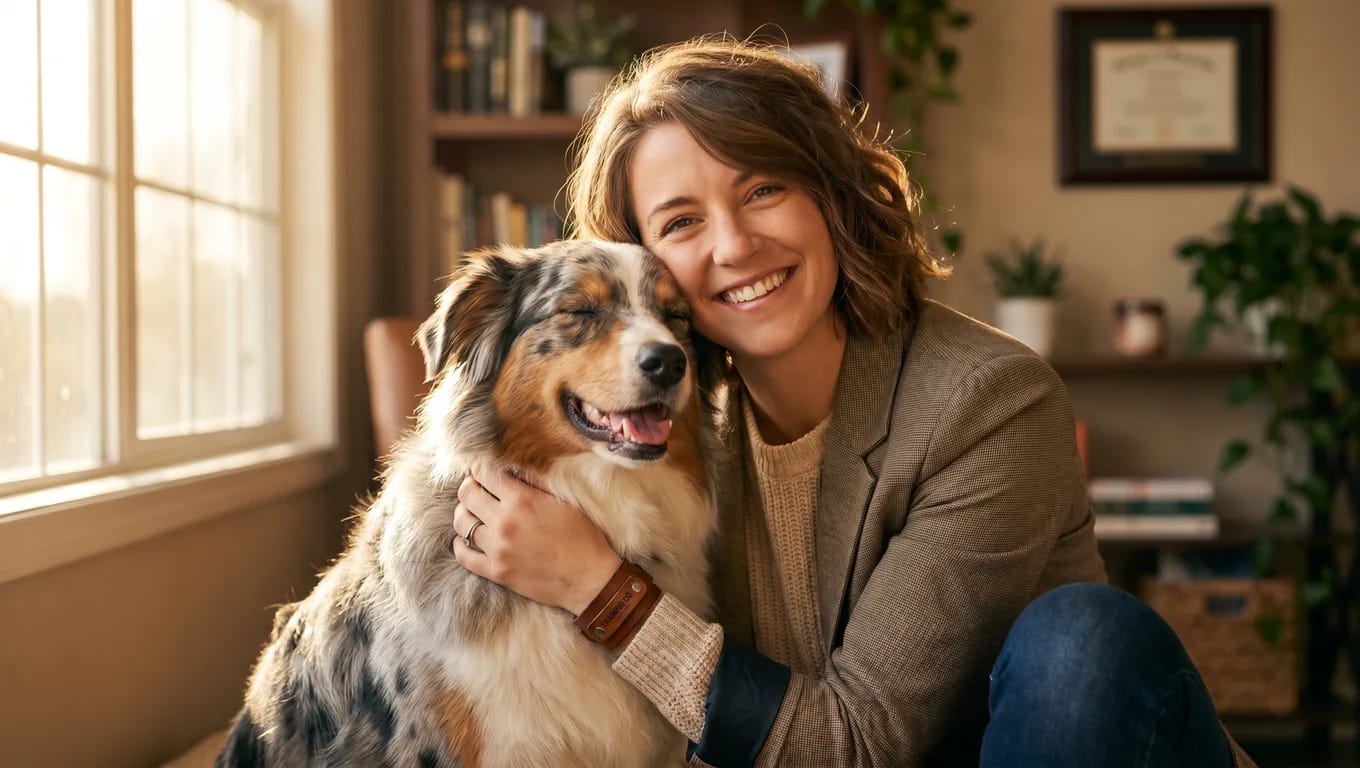
- You strengthen your bond. Every session is a stretch of focused time between the two of you, where you are the source of all the good stuff.
- You sharpen obedience without it feeling like obedience. Learning to "spin" or to "touch" trains the same skills as a formal obedience drill: focus, self-control, and responding to your cue.
- You build confidence. A shy dog who learns to high-five discovers that trying new things brings treats, not scares.
Tricks are the perfect gateway to training. They are low-stakes (if it goes wrong, no big deal) and rewarding for both of you, so you and your dog both get into the habit of training and actually look forward to it.
Before You Start: What You Need
You do not need to buy anything expensive. Just get four things ready and you are halfway to a trick.
Small, High-Value Treats
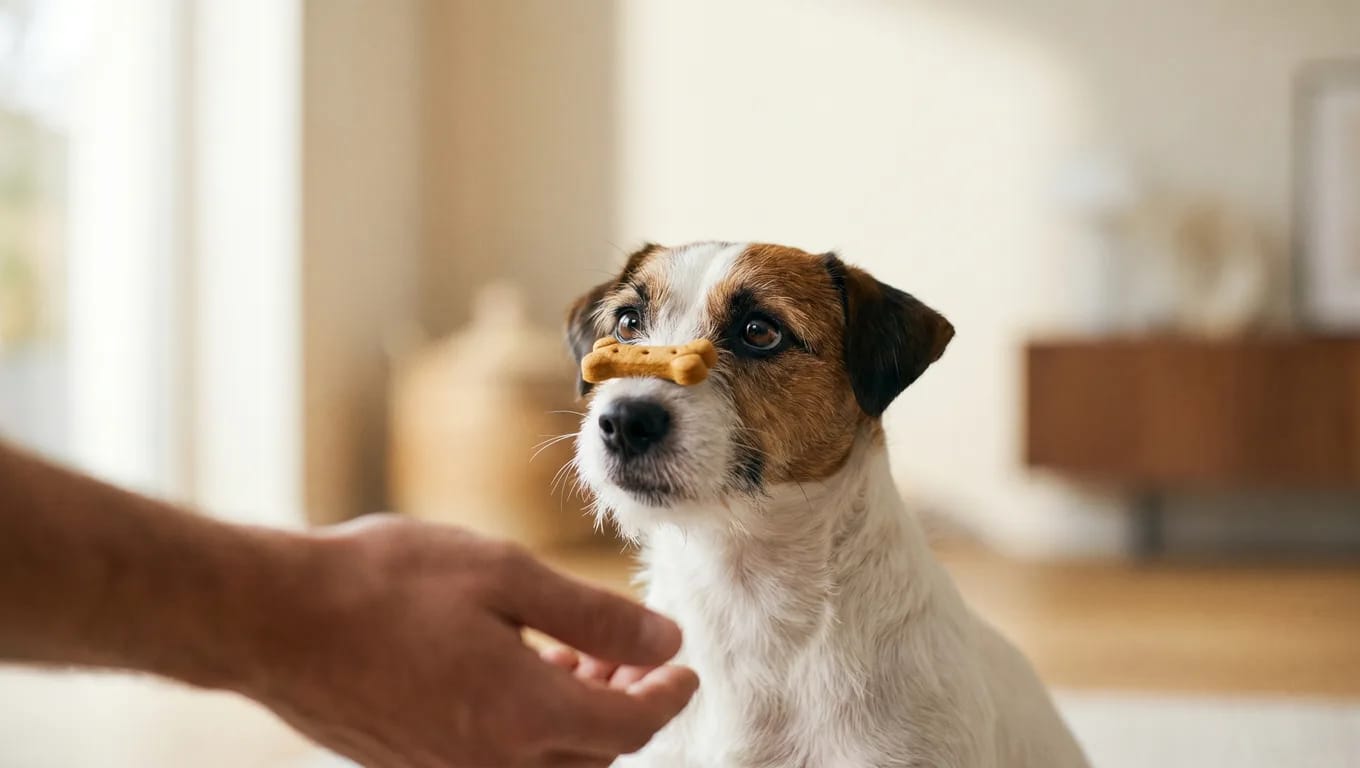
Use pea-sized pieces of something your dog loves: cooked chicken, hot dog, cheese, or a soft store-bought treat. They need to be small so he can eat plenty without filling up and so the pace of the session never stalls.
A Marker (the Magic Word)
A marker is a sound that tells your dog "that thing you just did was right, a treat is coming." You can use a clicker or, even simpler, a short, upbeat word like "yes!" The key is to mark the exact instant he does the right thing and deliver the treat right after.
Short Sessions and a Quiet Spot
Always start at home, with no noise, no other dogs, and no kids running around. And above all: sessions of 3 to 5 minutes, several times a day. Training little and often is far more effective than one long session that ends up boring your dog.
Always stop while your dog still wants more, never once he is tired or frustrated. Ending on a trick he nails plus a good treat is what brings him back eager for the next session.
7 Easy Dog Tricks, From Simplest to Most Impressive
Here is the list. They are ordered from easiest to hardest, so work through them in order: each trick sets up the next. This is the foundation of any stress-free routine of tricks to teach your dog.
| Trick | Difficulty | Approximate Time |
|---|---|---|
| Hand touch | Very easy | 1-2 sessions |
| Shake | Easy | 2-4 days |
| High five | Easy | 3-5 days |
| Spin | Easy | 3-5 days |
| Roll over | Medium | 1-2 weeks |
| Play dead | Medium | 1-2 weeks |
| Fetch an object | Medium | 1-2 weeks |
How to Read the Steps
Almost all of these tricks are taught with the same technique: luring. You hold a treat in your hand and guide your dog's nose with it, because where the nose goes, the body follows. As soon as you get the movement, you mark and reward. Then you repeat until he does it on his own and, finally, you name it (the verbal cue or the hand signal).
Easy Tricks to Start Today
If your dog has never done a trick, start here. These three get results in the first or second session and are seriously addictive.
1Hand Touch (the Target)
The easiest of them all and the foundation for a ton of other behaviors.
- Hold your open palm an inch or two from your dog's nose.
- Out of curiosity, he will move his nose closer to sniff it. The moment he touches it, mark ("yes!") and reward.
- Repeat, moving your hand a little farther away each time so he has to move toward it.
- Once he does it without hesitating, add the cue: say "touch" right before you present your hand.
2Shake
A classic that almost every dog picks up right away.
- Ask your dog to sit.
- Close a treat in your fist and hold it near one of his front paws.
- He will try to get to the treat with his mouth; when that gets old, he will lift his paw to bat at your hand. The instant he does, mark and open your hand so he can eat.
- Repeat and, once he is lifting his paw eagerly, say "shake" right before and start offering an open hand.
3High Five
If your dog already shakes, this one almost teaches itself.
- Start from "shake," but this time raise your hand a little and turn your palm toward him.
- As he lifts his paw to make contact, mark and reward the higher touch.
- Raise your hand gradually over the following days until it is at handshake height.
- Add the cue "high five" or, better yet, let the gesture of your hand be the cue itself.
Does your dog go blank halfway through a trick? Do not repeat the command over and over. Pause for a second, drop the difficulty down a notch (go back to the previous step), and reward him for something simple to rebuild his confidence. Frustration is the biggest enemy of learning.
How to Teach a Dog Tricks: the Intermediate Level
With the basics above mastered, your dog already knows how to "play" the training game. These are still easy dog tricks, but they add a bit more movement and they are the ones that earn the "ooooh!"s at the park. You will see the same pattern for how to teach a dog tricks repeat itself: lure, mark, reward, name.
4Spin
With a treat at your dog's nose level, move your hand in a slow circle around him: his nose will follow the treat and his body will turn to keep up. As he completes the turn, mark and reward. Then make the circle smaller and smaller until a flick of your finger is enough, and add the cue "spin."
5Roll Over
Start with your dog lying down and draw a treat from his nose toward his shoulder, so he has to turn his head and flop onto his side. Keep moving the treat over his back so he rolls to the other side, and mark the moment he completes the roll. At first, reward every small step (turning his head, flopping onto his side), then only the full roll. Add the cue "roll over."
6Play Dead
Ask for "down" and, with a treat, draw his nose toward his shoulder until he flops onto his side, like in "roll over," but this time so he stays put. Mark and reward while he is still lying there, slowly stretching out the seconds before you reward. Add a fun cue: a "bang!" with your hand shaped like a gun works like a charm.
7Fetch and Bring an Object
Start with his favorite toy and mark the simple act of taking it in his mouth. Once he is doing that eagerly, toss it a short distance and celebrate him going after it. Encourage him to come back to you by calling him in a happy voice and, when he brings it, trade the object for a treat. Add the cue "bring" or "fetch."
If your dog grabs the toy but will not let go, do not yank it away. Offer him a treat in exchange: the second he opens his mouth to eat, he will drop the object and learn that handing it over is a good deal.
Common Mistakes When Teaching Tricks (and How to Avoid Them)
Almost all the trouble people run into teaching tricks to teach your dog comes from the same four mistakes:
- Sessions that run too long. More than five or ten minutes and your dog checks out. Three short stretches a day beat one endless one.
- Rewarding too late. If you mark or treat two seconds after the fact, your dog has no idea which behavior you are rewarding. Timing is everything.
- Raising the difficulty too fast. Do not ask for the full trick in a park full of distractions before it is rock-solid in your living room.
- Repeating the cue nonstop. Saying "spin, spin, spin" teaches your dog to tune you out. Say the cue once, wait, and if he does not respond, help him out with the lure.
And remember something important: never punish a trick that does not work out. A trick is a game. If your dog gets it wrong, no treat comes and you simply try again. Scolding only teaches him to stop wanting to try.
Turn Tricks Into a Fun Habit
The beautiful thing about tricks is that they never really end. Once your dog has these seven down, you can chain them into sequences ("spin, then lie down"), compete against yourself to see how many he can do in a row, or use them to settle him in moments of excitement. Each new trick is a little easier than the last, because your dog already knows how the learning game is played.
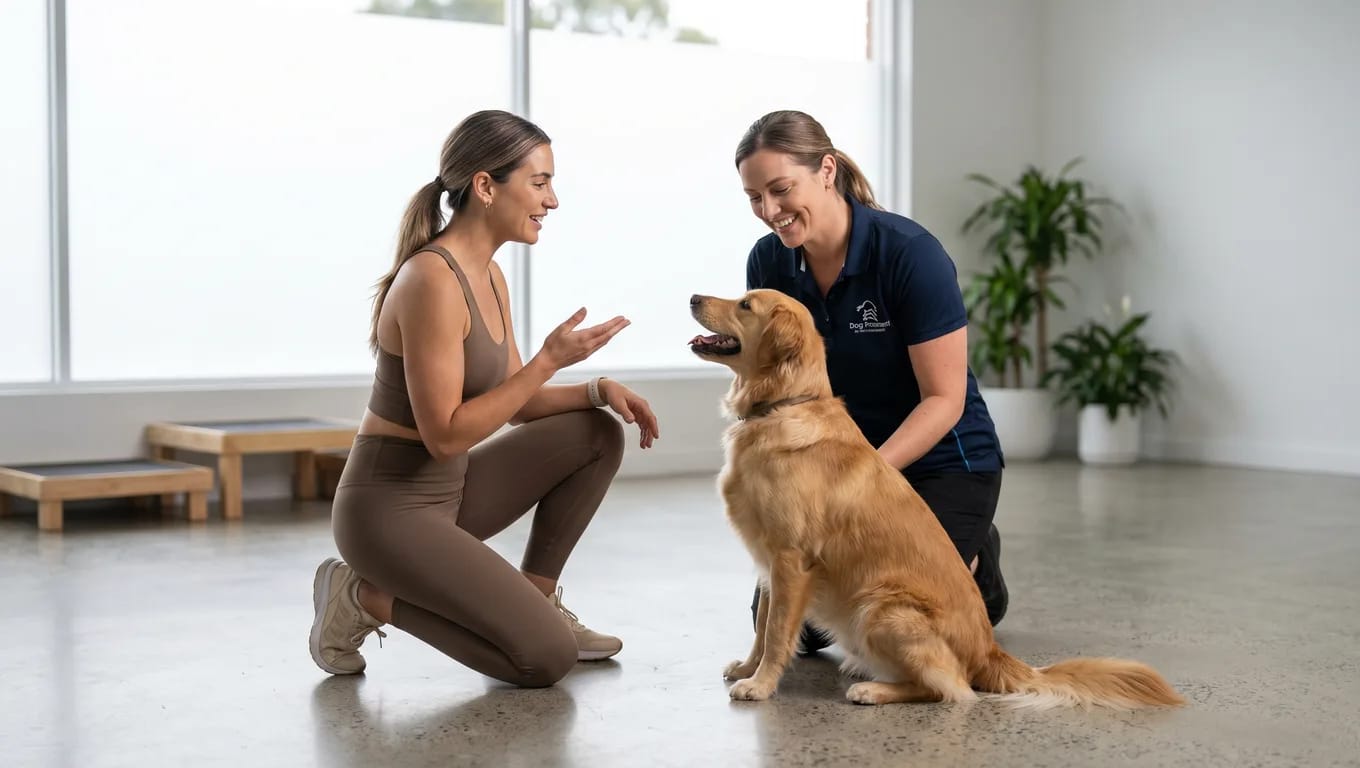
If you are hooked and want to take it further (more advanced tricks, sports like canine freestyle, or simply rock-solid obedience), a class with a pro is the natural next step. A trainer corrects your technique, gives you fresh ideas, and works your dog around real distractions, something that is hard to recreate at home.
Want to learn new tricks with help from an expert and meet some other dogs along the way? You can find and book a positive obedience or training class with a qualified trainer near you on Canlyo, and give your dog his next big challenge.
So there you have it: grab a handful of treats, find a quiet corner, and give your dog five minutes today. Start with the hand touch, mark every win, and enjoy the look on your dog's face when he figures out what you want. Those little "he's got it!" moments are, in the end, the best part of having a dog.