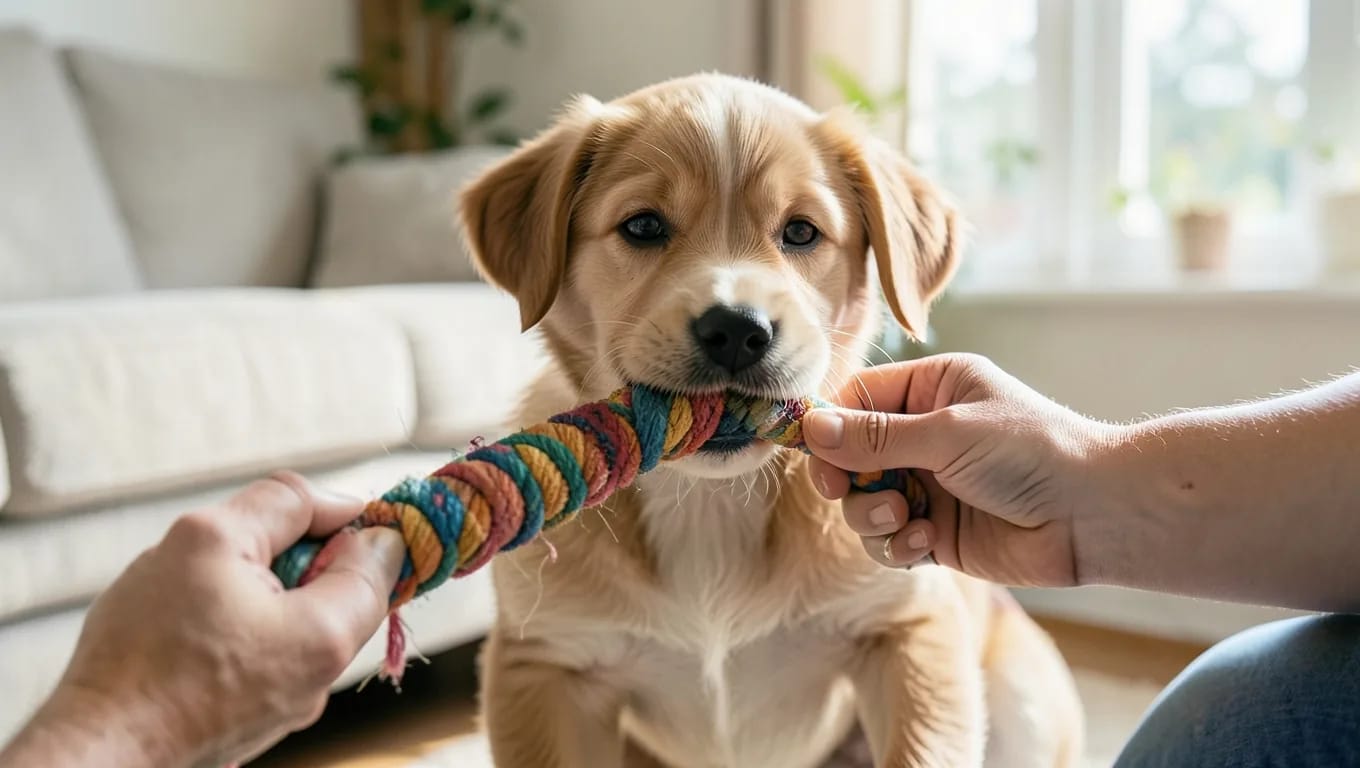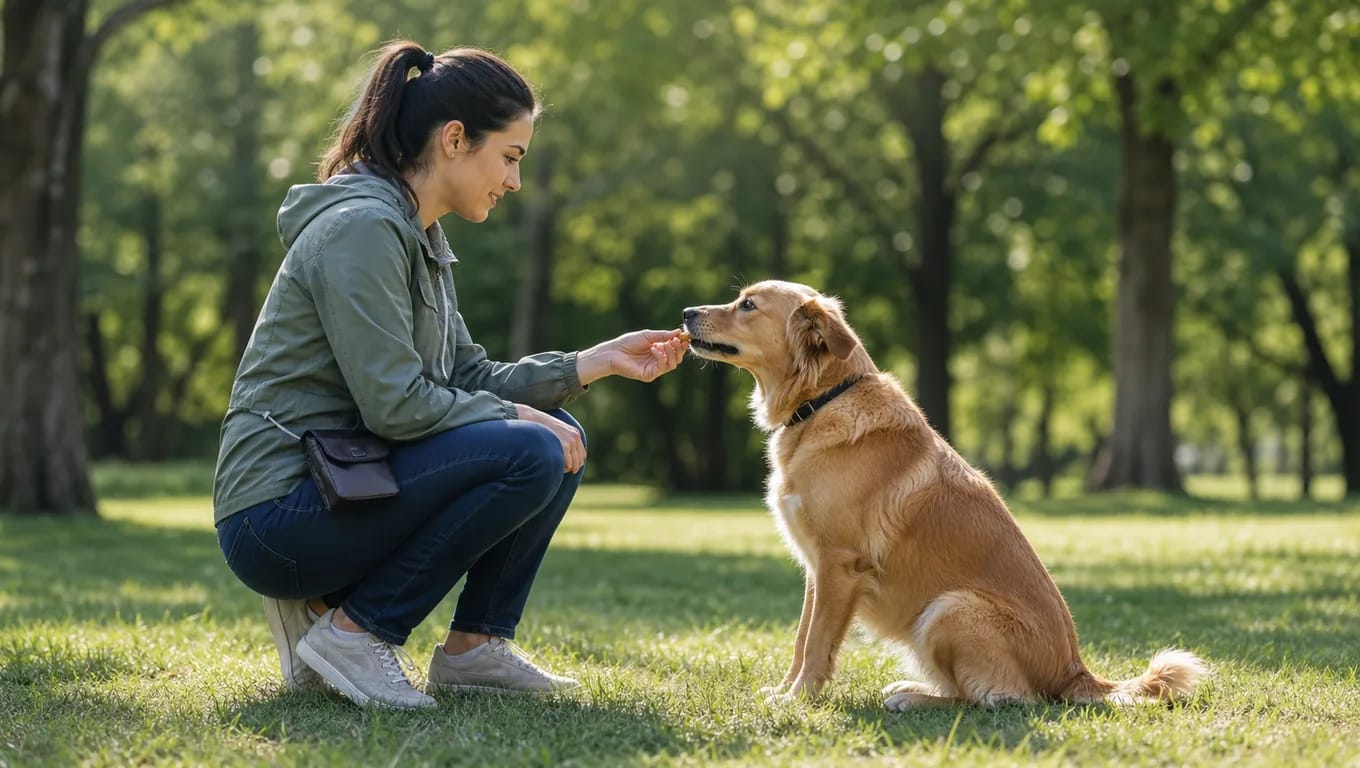
For a long time, dogs were trained with leash corrections, shouting, and the idea that you had to "dominate" the animal. We now know they learn far better, and are far happier, when we teach with rewards instead of fear. That is the foundation of positive dog training, and its main tool is positive reinforcement. This guide covers what positive reinforcement actually is, how it works, and how to apply it step by step to train your dog in the most effective and humane way.
What is positive reinforcement?
Positive reinforcement is a tool from operant conditioning, but the idea is wonderfully simple: you add something the dog enjoys right after a behavior so that behavior happens more often. Put another way, if your dog gets a treat every time it sits, it will choose to sit more.
It is one of the four quadrants of learning, but it is by far the one with the best long-term results. Instead of focusing on punishing what the dog does wrong, positive training rewards what it does right, so your dog starts to see you as a teammate rather than a judge, and joins in willingly and without stress.
Reinforcing positively does not mean allowing everything or showering your dog with treats at random. It means deliberately choosing which behaviors you want to see more of and rewarding them at the right moment, while managing the environment so mistakes are unlikely in the first place.
Why it works better than traditional methods
The behavioral science is clear, and it is why reward-based training is now recommended by professional trainers and the major canine organizations.
- Faster learning. A dog that trains without fear concentrates better and offers new behaviors instead of shutting down.
- A stronger bond. You become the source of good things rather than something to avoid, and that trust shows up on every walk.
- No nasty side effects. Punishment-based methods can create fear, anxiety, and even aggression. Positive reinforcement does not.
- It works for life. It is just as effective with a puppy, an adult dog, or a senior.
How to apply positive reinforcement step by step
The idea is simple, but the details are what separate a dog that understands from one that gets frustrated.
1Choose a reward that truly motivates
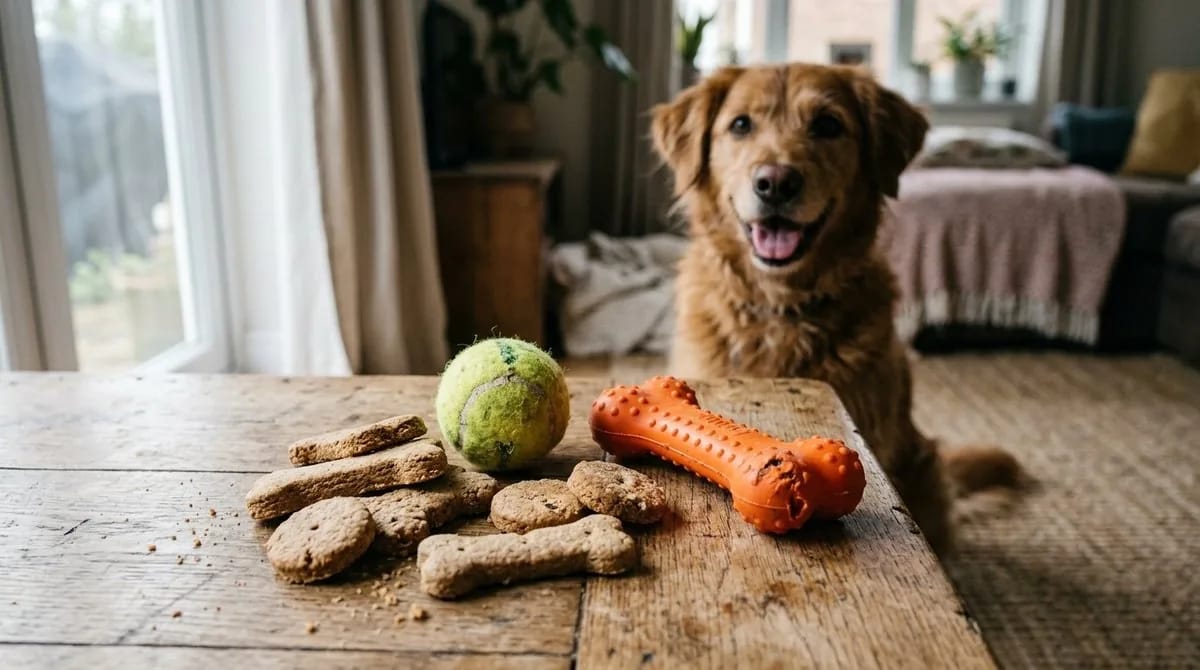
Not every reward is worth the same to your dog. Test small pieces of tasty food, a favorite toy, or praise and a happy voice, and watch what really lights them up. In distracting places, you will need your highest-value rewards.
2Reward at the exact moment
The reward has to arrive the instant your dog does the right thing, not ten seconds later. Reward late and you are teaching something else entirely. Timing is almost everything.
3Add a marker
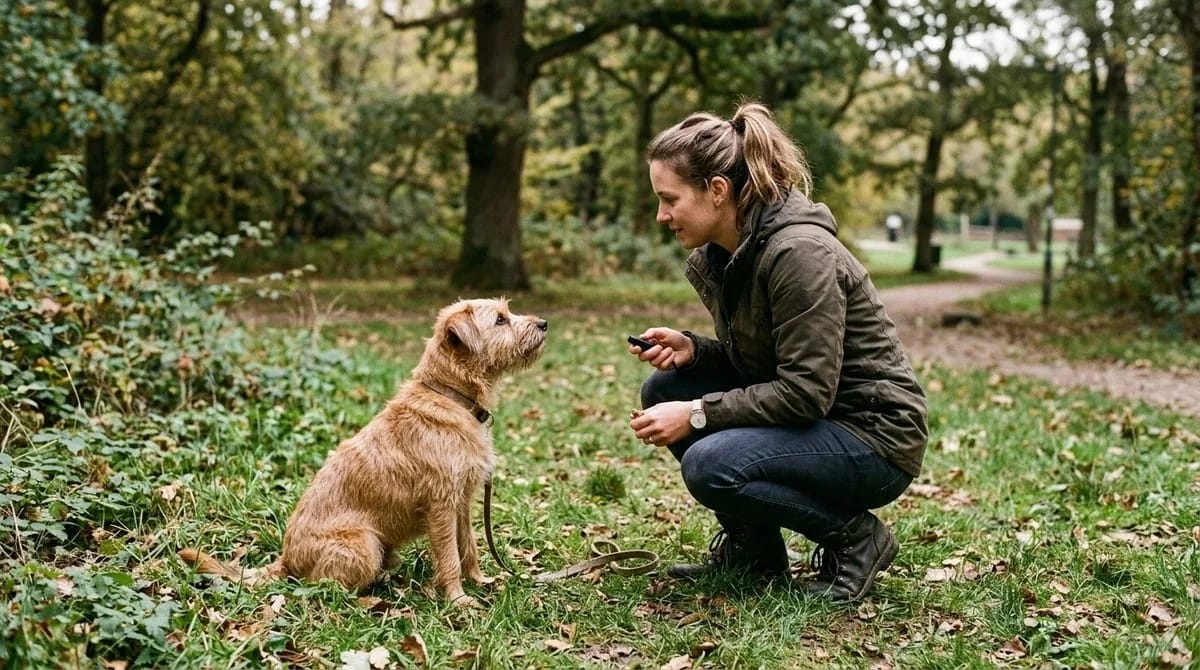
A short word like "yes" or the sound of a clicker lets you take a snapshot of the exact moment of success and deliver the reward right after. A marker is a secondary reinforcer: it has no value in itself, only the value of all the times you have paired it with something good. It tells your dog precisely which behavior earned the reward, and it speeds up learning enormously.
4Train in short, frequent sessions
Several two or three minute sessions across the day beat one long, boring one. Always end on an easy win so your dog is left wanting more.
5Fade the food rewards gradually
Once a behavior is solid, start rewarding intermittently and swap some food for play, praise, or simply carrying on with the walk. The behavior holds, the treats space out.
Why does my dog only obey when it sees the treat?
This is the most common complaint about positive training, and it almost always has the same cause: the reward has been too visible in your hand, so the dog learned to depend on that cue instead of the behavior. The fix is variable reinforcement. Keep the treat out of sight (in a pocket or a treat pouch), ask for the behavior, and reward afterward, varying both what you give (sometimes food, sometimes play, sometimes a scratch) and how often. When the dog cannot predict whether a reward is coming, it stops "working for the food it can see" and starts responding to the cue.
Common mistakes
Even with the best intentions, it is easy to trip over the same things.
- Rewarding late, so the dog links the reward to the wrong behavior.
- Repeating the cue over and over ("sit, sit, sit") instead of saying it once and waiting.
- Raising difficulty too fast, asking for focus in a busy park before the behavior is solid in a calm room.
- Rewards with no value for that dog in that moment, which cools the session instantly.
Positive training versus traditional methods
Not long ago, dog training revolved around "dominance." Aversive methods try to stop a behavior by adding something unpleasant or taking away something the dog likes. The problem is that the dog obeys out of fear, without understanding what is expected, and over time you see stress, anxiety, or even aggression, along with a damaged bond. Positive training aims for the opposite: a dog that understands, cooperates, and trusts. The result is longer-lasting learning and a much calmer life together.
When to take the step to a class
You can start applying positive reinforcement at home today, but a positive obedience class speeds up results. A good trainer fixes your timing, teaches you to raise difficulty without frustrating your dog, and works on obedience around real distractions, something almost impossible to recreate in your living room. And if serious issues appear (aggression, separation anxiety, deep fears, or a newly adopted dog with a difficult past), a professional is the best investment you can make.
Want to train your dog with a method that is both kind and effective? You can find and book a positive-reinforcement obedience class with a qualified trainer near you on Canlyo, and start off on the right foot.
Training in positive is not being permissive, it is being clear and fair. When your dog understands that good behavior brings good things, it stops obeying out of fear and starts cooperating out of willingness. And that shift, a dog that wants to get it right, is what turns training into one of the best parts of living with a dog.