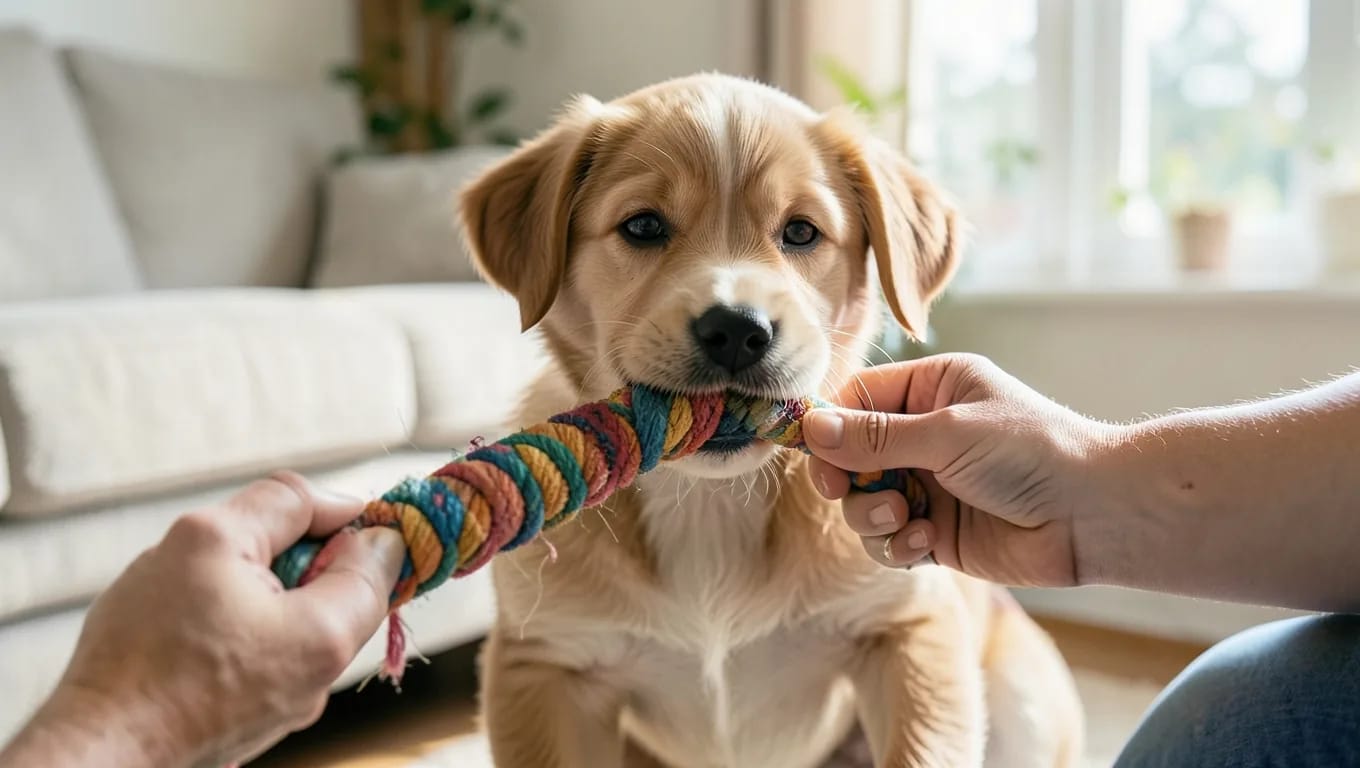
If your hands and ankles are covered in tiny tooth marks, take a breath: you are not failing, and your puppy is not turning aggressive. Mouthing and biting are how puppies explore the world and play, and almost every new owner ends up googling some version of "my puppy won't stop biting me, I've tried everything." The good news is that this is one of the most predictable, fixable stages of puppyhood. Let's look at why your puppy keeps biting you, when the phase naturally ends, and the gentle, proven steps that teach a soft mouth for life.
Why does my puppy keep biting me?
Puppy biting is normal, healthy behavior, even when it hurts. Understanding the reasons behind it makes everything that follows easier.
- Play and exploration. Puppies have no hands, so they investigate and play with their mouths. With littermates, biting is the main game in town.
- A body that hasn't caught up yet. A puppy's nervous system is still wiring up in the early months, so mouth control genuinely lags behind the urge to bite. Those clumsy, over-the-top nips are partly a brain still under construction.
- Teething. Between roughly three and six months, sharp puppy teeth give way to adult teeth, and chewing soothes sore gums.
- Learning bite inhibition. When pups play-bite each other, a too-hard nip ends the game. This is how they learn to control the force of their mouth, a skill we want to keep teaching.
- Overtiredness. This is the big one owners miss. An overtired puppy, like an overtired toddler, gets wild, frantic, and bitey. Many "aggressive" biting spells are simply a puppy who desperately needs a nap.
A puppy who bites hardest in the evening or after a long play session is usually not being naughty. They are overstimulated and exhausted. Try enforcing a rest before assuming the behavior is a training problem.
When does puppy biting stop?
The biting peaks during teething and then fades as the adult teeth settle in and your training takes hold, usually by around six to seven months. It helps to know roughly where your puppy is on the timeline, both for your sanity and your furniture.
| Age | What's happening in the mouth | What biting looks like |
|---|---|---|
| 0-3 weeks | No teeth yet | No play biting |
| 3-6 weeks | Baby teeth erupt (28 by 6 weeks) | Play and exploratory biting begins |
| 6-12 weeks | Full set of baby teeth | Biting peaks while they learn limits |
| 12-16 weeks | Baby teeth shed, adult teeth push through | Chewing and nipping intensify (gums hurt most) |
| 16-24 weeks | Adult teeth settle in (42 total) | Biting fades, usually resolved by 6-7 months |
Consistency is what shortens the timeline. The steps below are what move you from "constant" to "occasional" to "gone."
How to stop your puppy from biting, step by step
The aim is not to punish biting but to teach your puppy two things at once: that human skin is delicate, and that there are far better outlets for that mouth.
1Yelp and pause the moment teeth touch skin
When your puppy bites too hard, let out a high-pitched "ouch" and stop all movement and play for a few seconds. This mimics exactly what a littermate would do, and it sends a clear message: bites end the fun. Keep it calm.
2Redirect onto something they are allowed to bite
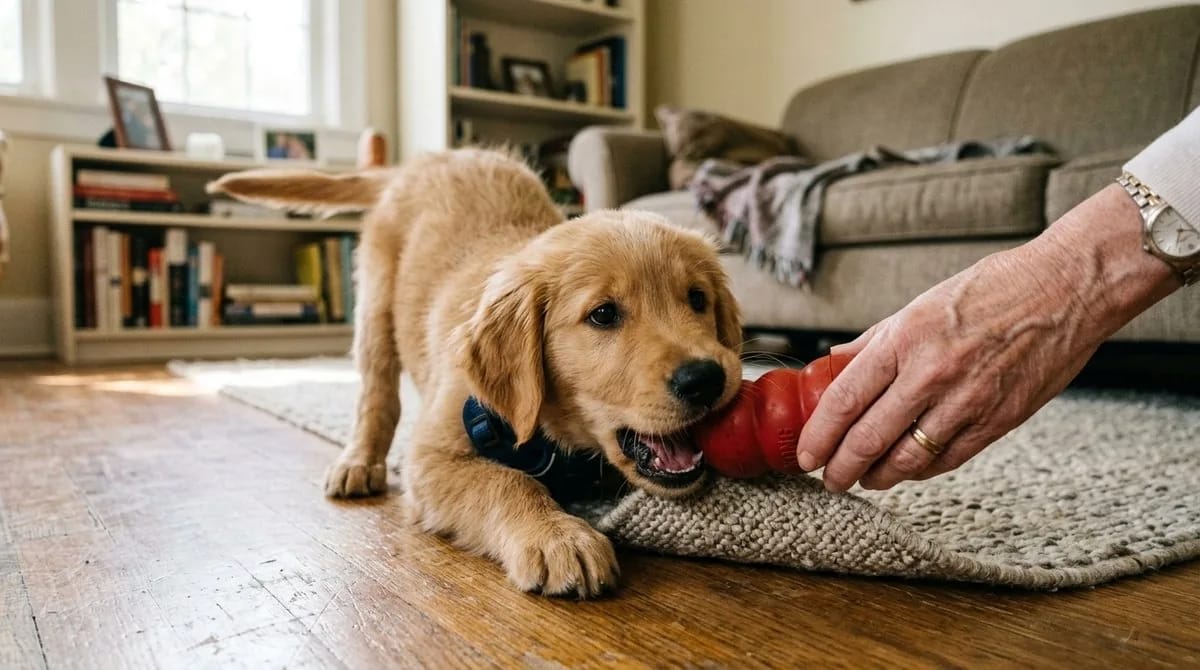
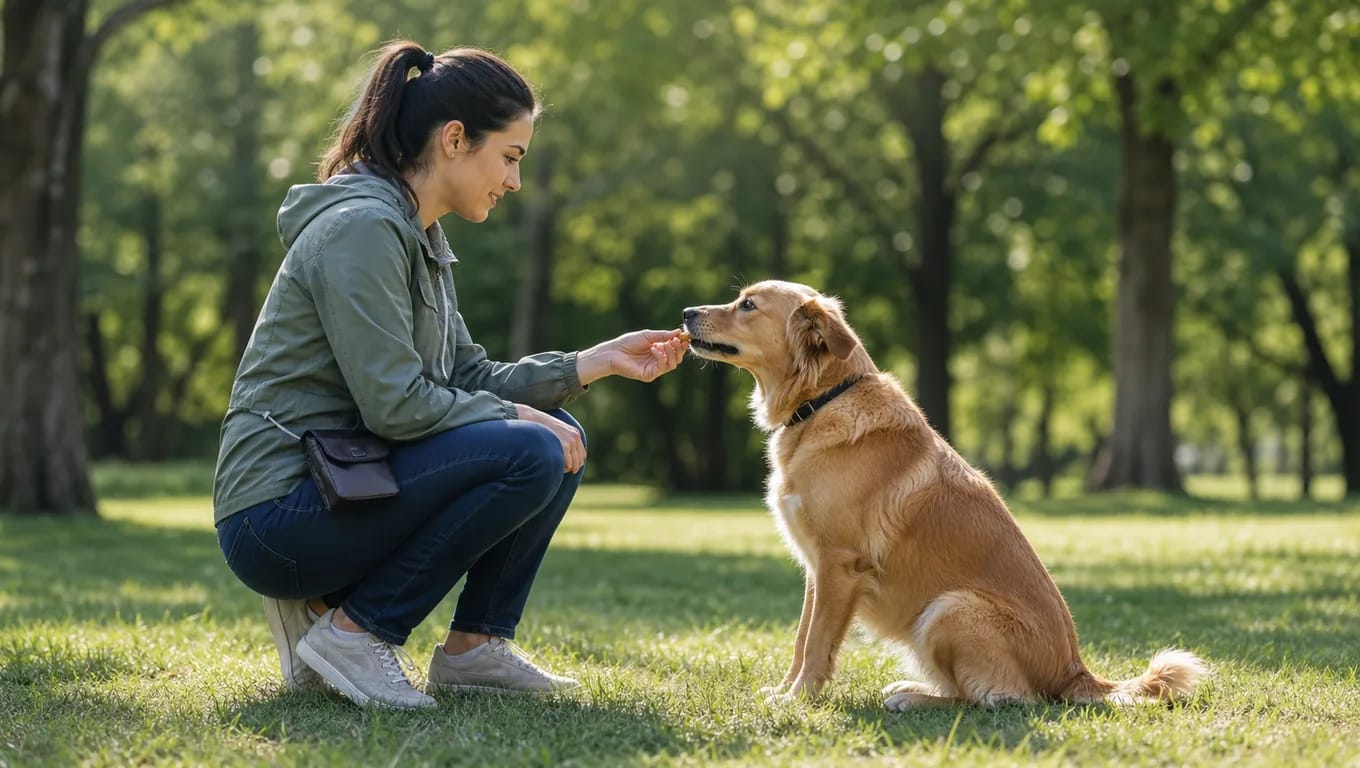
Right after the pause, offer an appropriate chew or tug toy. You are not just stopping a behavior, you are answering the question "then what should I bite?" Keep a toy in every room so the swap is always within reach, especially during the witching-hour energy spikes. Chilled or freezable chews are a real help while gums are sore.
3Reward the calm, gentle moments
It is easy to only react when teeth are out. Flip it around. When your puppy licks instead of bites, or chooses a toy on their own, mark the moment with praise or a treat. Dogs repeat what gets rewarded, so catch them being gentle.
4Protect your puppy's sleep
Build a predictable routine with frequent naps in a quiet space or crate. A puppy this age may need sixteen to eighteen hours of sleep a day. Enforcing rest before the meltdown prevents most of the worst biting before it ever starts.
5Never use your hands as toys
Wrestling and finger-wiggling games feel fun, but they teach your puppy that hands are fair game to chew. Always play through a toy so there is a clear, consistent line between "hand" and "bite this."
Help, my puppy keeps biting me aggressively and I've tried everything
If it feels like nothing is working, it is almost always one of these culprits rather than a flaw in the method.
- The puppy is overtired. Worth repeating, because it is the most common cause of frantic, hard biting. Build in more rest.
- Your yelp is backfiring. Some puppies treat a loud "ouch" like a squeaky toy and get more excited. If that is your dog, drop the yelp entirely: go silent, stand up, fold your arms away, or step out of view for a moment. Removing the fun is the message.
- There is no acceptable outlet. A puppy with energy and nothing to chew will chew you. Add more chew toys, sniffing games, and short training sessions.
- Missed socialization. Pups raised without littermates often skipped the natural "too hard" feedback, so be patient and lean on calm, vaccinated adult dogs, who are wonderful teachers, to model gentle play.
- Everyone is doing something different. If one person wrestles and another redirects, your puppy cannot learn the rule. Get the whole household on the same page.
True aggression in young puppies is rare, but stop and get help if biting comes with a stiff body, hard staring, growling over food or objects, or seems fear-driven rather than playful. Also loop in your vet if biting is paired with lethargy, a refusal to eat, or your puppy pawing at or flinching around its mouth, since pain can drive nipping. A qualified trainer or your vet can sort it out early, when it is easiest.
Turn the biting stage into a head start
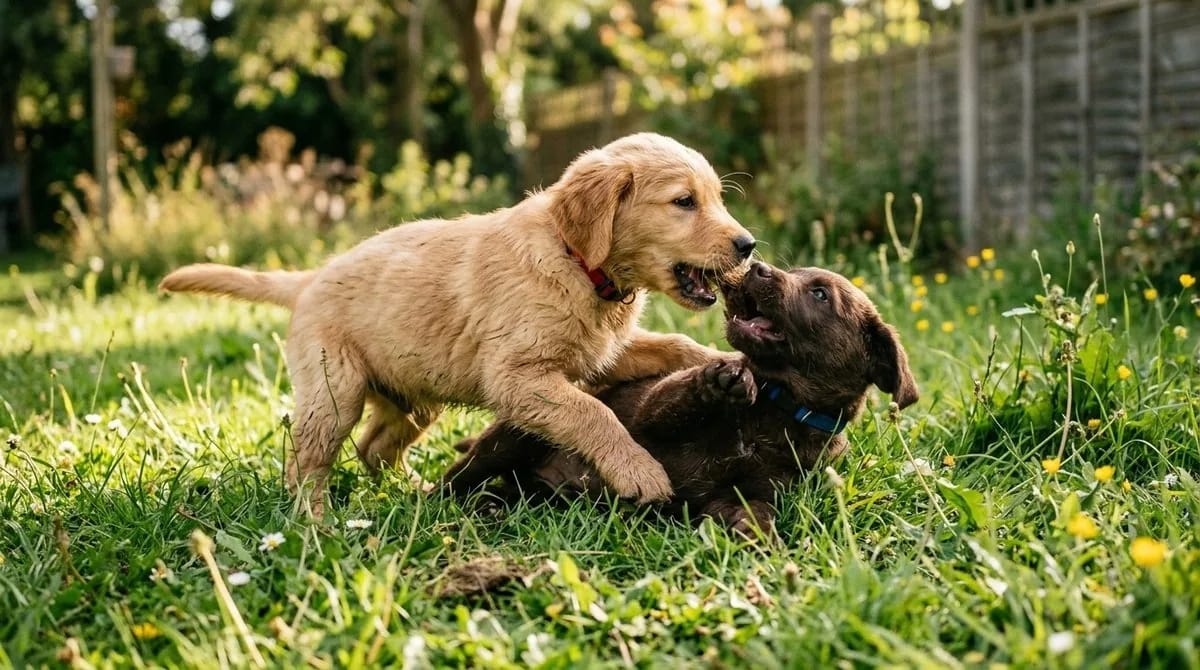
Bite inhibition is one of the most valuable lessons your dog will ever learn, and a structured puppy class is the perfect place to practice it. Socialization classes let your puppy play with others, learn from the natural give-and-take of canine play, and build confidence during the critical early weeks, all under an instructor's eye.
Ready to set good habits early? You can find and book a puppy or socialization class near you on Canlyo, and tackle the biting stage with expert support beside you.
Hang in there. The shark-teeth phase feels endless when you are in it, but with calm, consistent practice it passes quickly, and the gentle, soft-mouthed adult dog on the other side is well worth the few weeks of patience.