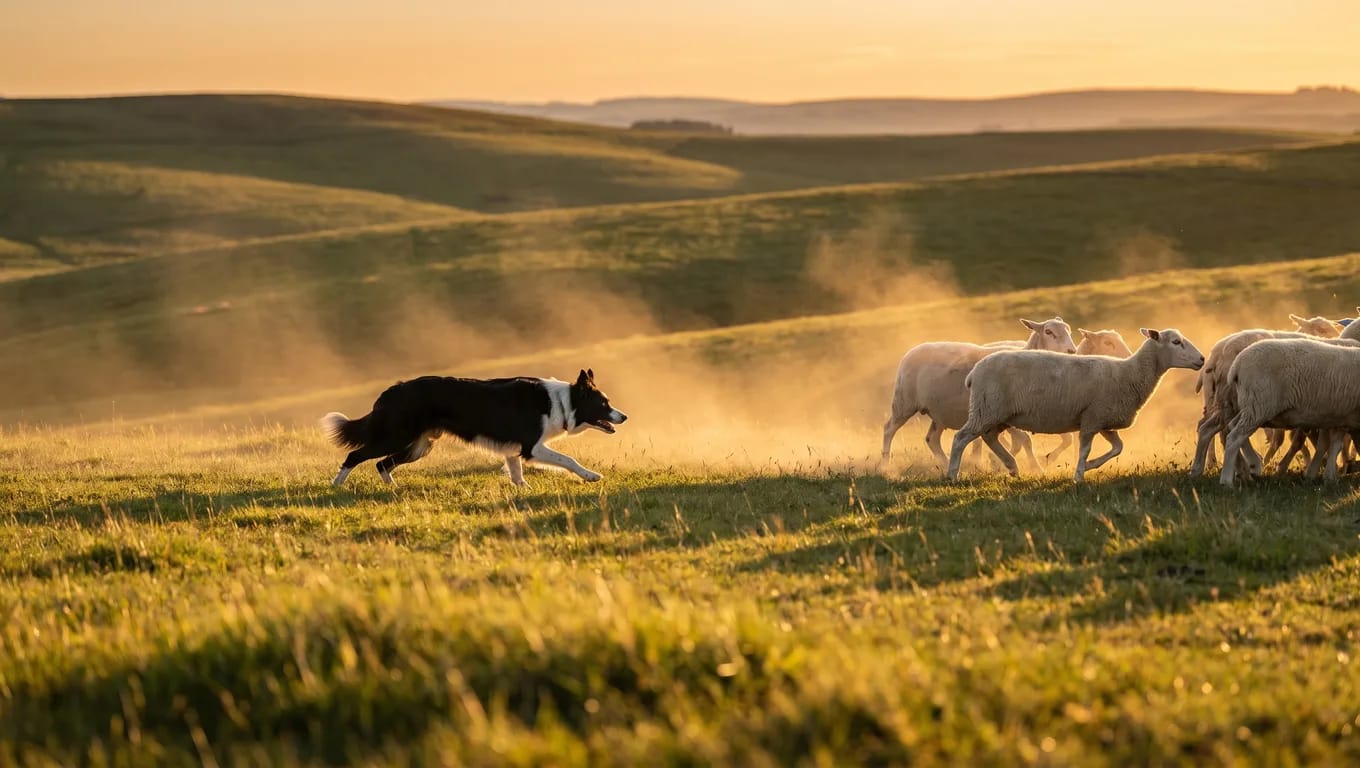
Watch a Border Collie flatten itself onto the grass and lock eyes with a stray sheep, and you witness something that looks almost telepathic. That quiet intensity is the signature of herding dogs, a remarkable family of breeds shaped over centuries to think, move, and partner with people in a way few other dogs can match. Unlike their sporting or guarding cousins, herders pair razor-sharp intelligence with a drive to control movement using almost no force. Whether you are choosing a new companion or simply curious about the dogs behind the legend, this guide walks you through the main types of herding dogs, what sets each apart, and how to keep that busy mind happy.
What makes a dog a herding dog?
At its heart, herding is a carefully edited version of the wolf's hunting sequence. Breeders kept the parts that move livestock, the stalk and the gather, while dialing the bite at the end almost all the way out. The result is a dog that wants to control movement, gathering scattered animals into a group and steering them in a chosen direction, without harming them.
That single instinct shapes everything else. Herd dogs tend to be intensely intelligent and quick to learn (a Border Collie often picks up a new cue in fewer than five repetitions), and deeply tuned in to their handler, because a working shepherd needed a partner that could read a hand signal or a whistle across an open hillside. They also come loaded with energy, since a day of real work might cover many miles.
The herding toolkit: eye, head, heel, and circle
Herders do not simply chase. They use a precise set of moves, and recognizing them helps explain a lot of "odd" behavior at home:
- Eye: the famous unblinking stare. A strong-eyed dog can move stock with a look alone.
- Heading: racing to the front to block and turn animals that try to bolt.
- Heeling: a controlled nip at the heels to push a stubborn cow or sheep forward.
- Circling: sweeping around the group to form a living fence and bunch it together.
Herding breeds are not the same as livestock guardian dogs. Guardians like the Great Pyrenees or Maremma live among the flock and protect it from predators, while herding breeds move the flock. The two jobs call for completely different temperaments.
Three ways herding dogs work
Not every herding dog works the same way, because farms, terrain, and livestock differ. Most breeds fall into one of three working styles, and knowing a breed's style tells you a lot about its energy and personality.
| Working style | Primary method | Example breeds |
|---|---|---|
| Gatherers | Circling and "eye" to pull scattered stock together | Border Collie, Australian Kelpie |
| Heelers (drovers) | Nipping heels to drive stock from behind | Australian Cattle Dog, Welsh Corgi |
| Tenders | Patrolling a boundary to keep a flock grazing in place | German Shepherd, Belgian shepherds |
The classic gatherers: sheepdogs that fetch the flock
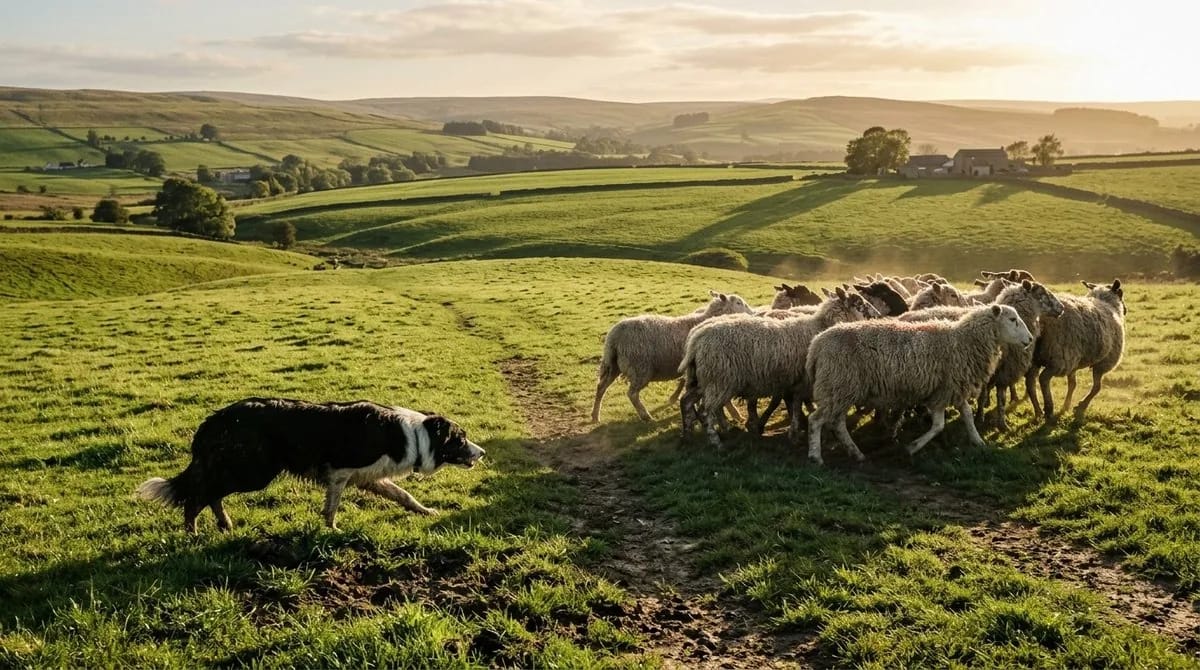
When most people picture a sheepdog, they are picturing a gatherer. These breeds run wide around livestock and bring them back toward the handler.
Border Collie
The Border Collie is the benchmark by which other herding breeds are measured. Bred along the English and Scottish border, it combines blistering speed, a powerful eye, and a problem-solving brain that never switches off. Border Collies routinely top obedience and agility rankings, but that same drive makes them a poor match for a quiet household. Without a job, they invent one, and you may not like their choice.
Australian Shepherd
Despite the name, the Australian Shepherd traces back to Basque shepherds and was refined on American ranches. Aussies are versatile, affectionate, and willing workers with a softer, more biddable streak than the Border Collie. Their merle coats win plenty of admirers, but underneath the looks is a serious athlete that thrives on structure.
Shetland Sheepdog and the Collies
The Shetland Sheepdog, or Sheltie, looks like a Rough Collie shrunk down for the harsh Shetland Islands. Bright, sensitive, and famously vocal, Shelties bond hard and excel at any sport that rewards precision. The Rough and Smooth Collie, immortalized by Lassie, is calmer than many cousins while keeping the gathering instinct intact, and the shaggy Old English Sheepdog rounds out the group.
The drovers and heelers: cattle dogs that push from behind
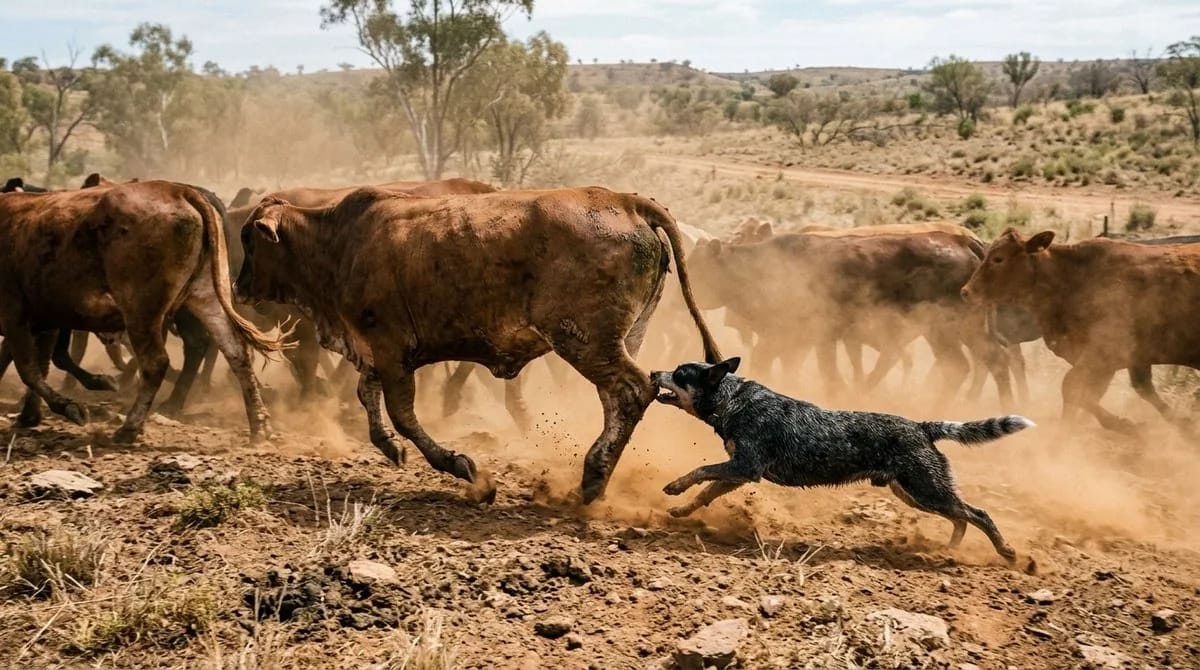
Moving cattle is a different job. Cattle are large and stubborn, so these breeds work close and low, nipping heels to drive stock, then ducking the kick.
Australian Cattle Dog
The Australian Cattle Dog, often called the Blue Heeler, is tough, tenacious, and built for endurance in brutal heat. These dogs bond intensely with one person and need a real outlet for their drive. Bored Cattle Dogs are escape artists and will "herd" anything that moves, including joggers and bicycles.
Welsh Corgi
It surprises many people that the Pembroke and Cardigan Welsh Corgi are true herders. Their low, long build was no accident: it kept them under the swinging hooves of cattle while they nipped heels. Behind the famous ears and short legs is a bold, clever working dog that still loves a task.
The all-purpose shepherds and tending breeds
A third group was bred to "tend," patrolling a living boundary to keep a flock grazing within unfenced land. These are some of the most capable working dogs on earth.
German Shepherd
The German Shepherd, shaped in the late 1800s by Max von Stephanitz, was developed as the ultimate tending dog before its intelligence carried it into police, military, and service work worldwide. It remains prized for loyalty, confidence, and versatility.
Belgian shepherds, Briard, and Beauceron
Belgium gave us four close relatives, the Malinois, Tervuren, Groenendael, and Laekenois. The Malinois has become the working dog of choice for demanding protection and detection roles, thanks to its speed and astonishing work ethic. From France come the tending Briard, sometimes called "a heart wrapped in fur," and the powerful Beauceron, both capable and devoted.
Traits that define herding breeds
Across all these types of sheep dogs, a few shared qualities show up again and again. Understanding them helps you decide whether a herding breed truly fits your life.
| Trait | What it looks like | What it means for you |
|---|---|---|
| High intelligence | Learns commands in a handful of repetitions | Training is a joy, but the dog also learns bad habits fast |
| Strong work drive | Always looking for a task | Needs daily physical and mental outlets, not just a walk |
| Low stimulation threshold | Comes alive at the smallest sound or movement | Can fixate on cars, bikes, or running children |
| Sensitivity | Reads your mood and tone closely | Responds beautifully to gentle, consistent handling |
| Stamina | Built to work all day | A tired body and a busy mind are the keys to a calm home |
Do herding dogs make good family pets?
They absolutely can, with eyes wide open. A herding breed in a home that gives it exercise, training, and a sense of purpose is a loyal, brilliant, affectionate companion. The same dog left alone in a yard with nothing to do often becomes anxious, destructive, or obsessive. A backyard is not enough on its own; these breeds are built for long runs, challenging games, and problem-solving.
One thing surprises many new owners: the instinct does not switch off just because there is no flock. Left to their own devices, herders may circle running children or give a quick heel-nip during play. This is not aggression, it is the job looking for an outlet, but it does mean early socialization and clear guidance matter, especially around young kids and other pets.
How to channel the herding instinct
You do not need a flock of sheep to satisfy a herding dog. The goal is simply to give that gathering, problem-solving brain a job it is allowed to do.
- Herding trials and instinct tests let suitable breeds work sheep, cattle, or ducks under a handler's direction, the closest thing to the real job.
- Treibball, sometimes called "urban herding," is a brilliant stand-in when you have no livestock: the dog drives large exercise balls into a goal on your cue. It starts with teaching a simple nose-touch on the ball and builds from there, all through positive reinforcement.
- Agility rewards the speed, focus, and handler connection these dogs already have in spades.
- Obedience, rally, and scent work scratch the mental itch on rainy days and tire even the most wired dog.
The single best thing you can do for a herding breed is give it a structured outlet with other dogs and an experienced instructor. You can find and book a local herding, instinct-test, or dog-sport class near you on Canlyo, and turn all that drive into something you both enjoy.
From the hypnotic stare of a Border Collie to the bold strut of a Corgi, herding dog breeds share a single thread: they were born to work in partnership with people. Embrace and direct that purpose rather than fight it, and you gain one of the most capable, devoted companions in the canine world.