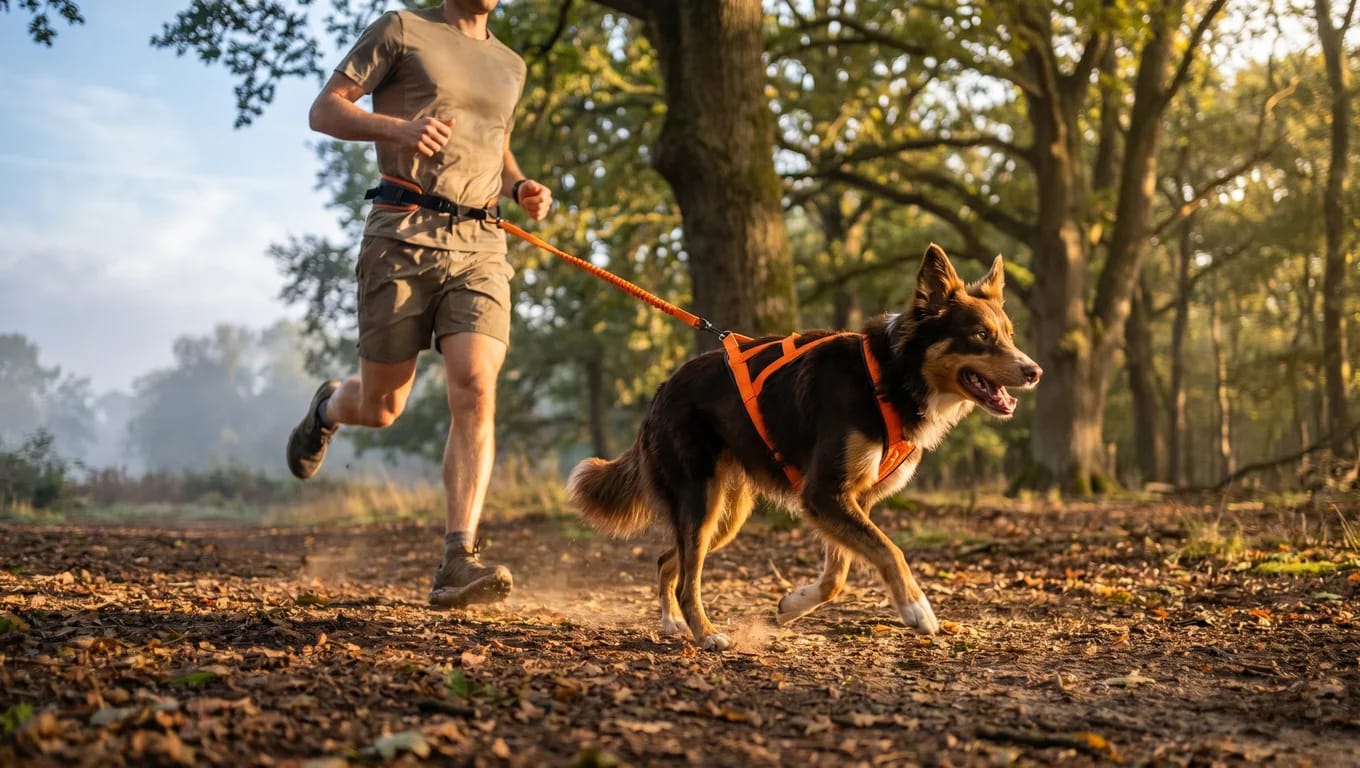
You crest a small rise on a quiet forest track, your dog stretched out ahead in a steady lope, the towline humming with just enough tension to tell you the team is working. You are barely pedaling, steering with your voice, watching ears flick back for your next cue. Then the trail opens up, your dog drops into a flat-out gallop, and for a few seconds the two of you are moving faster than either could alone. That rush, harnessed and under control, is bikejoring.
It is the close cousin of canicross, but on two wheels, and that single difference changes almost everything about the gear, the speed, and the safety margin. This guide covers what bikejoring actually is, why the bike raises the stakes, the bikejoring equipment you need, and how to get started without putting your dog or yourself in harm's way.
What Is Bikejoring?
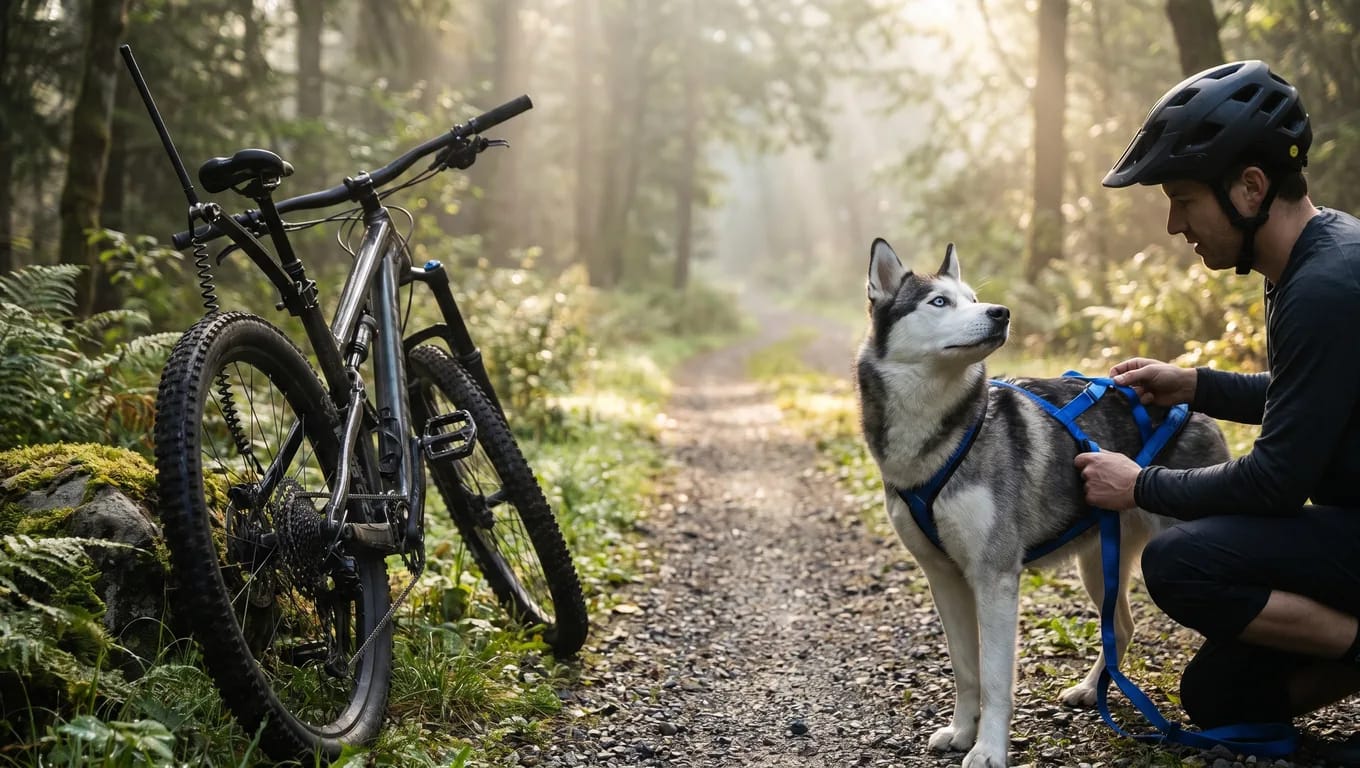
Bikejoring is the sport of cycling while attached to one or more dogs that run out in front and pull. You ride a bike, your dog wears a pulling harness, and a shock-absorbing towline connects the dog to the front of your bike through a rigid spacer called an antenna or bikejor arm. The dog provides forward drive; you pedal to contribute and to keep the line taut, and you steer the whole team with voice cues.
Like canicross, it comes straight out of sled-dog sport. Mushers use it to keep dogs fit when there is no snow, and it has grown into its own dryland discipline with clubs, races, and a welcoming beginner scene. The philosophy is familiar: the dog is meant to pull, the connection is hands-free, and the harness protects the body. The bike is what sets it apart.
A natural question is what is bikejoring compared with canicross or simply cycling with a dog on a leash? The differences all come back to speed and momentum. A running dog tows a bike far faster than it tows a runner, a bike does not stop the instant a dog does, and the line must be kept clear of the front wheel at all times. Mistakes happen quicker and hit harder, which is exactly why the gear and the technique matter.
Never attach a dog to your handlebars with a normal leash and ride off. If the line drops into the spokes or your dog cuts across the wheel, the bike can stop dead and throw you, or pull your dog under. Proper bikejoring equipment exists precisely to prevent this. Treat it as mandatory, not optional.
Why the Bike Changes the Safety Equation
Bikejoring is brilliant fun, and it is also the dryland dog sport with the most ways to get hurt. Going in clear-eyed about that is what keeps it safe.
Speed and stopping distance
On foot, if your dog stops suddenly, you stop within a stride. On a bike at 20-25 km/h, you carry momentum that wants to keep going. Read the trail well ahead, anticipate when your dog might brake or turn, and feather your brakes early and gently. A hard front-brake grab while a dog is pulling is a fast way to go over the handlebars.
Descents are the danger zone
Downhill is where most beginners get caught out. The bike accelerates, the towline goes slack, and a slack line can drop, tangle, or sweep across your dog. The rule on any real descent is simple: you take over. Brake to keep gentle tension on the line so the bike never overruns the dog, and on steep sections it is perfectly normal to dismount and walk. Going up, the dog pulls; going down, you control the speed.
Heat, surfaces, and the dog's body
These risks are shared with canicross, but the higher pace raises the stakes.
- Heat is the number one danger. Dogs cool by panting, not sweating, and they overheat far faster than you do. Because a sustained gallop generates more heat than a run, keep the ceiling lower than you would for canicross: ride in the cool of early morning or evening, avoid hard efforts much above roughly 12°C / 54°F, and stop at the first sign of distress.
- Choose soft, predictable surfaces. Forest tracks, gravel, and quiet dirt trails are far kinder than asphalt and far safer than anything with traffic, loose dogs, or blind corners.
- Watch the paws. Press the back of your hand to the ground for seven seconds; if it is too hot for you, it is too hot for paws.
Bikejoring suits dogs that already love to pull and have the build and stamina for sustained speed: huskies and other northern breeds, German shorthaired pointers, and many fit crossbreeds. It is not appropriate for very small dogs, flat-faced (brachycephalic) breeds that cannot cool or breathe under load, or dogs that are not yet physically mature.
Bikejoring Equipment: The Gear You Actually Need
Here is the kit that turns "cycling with a dog" into safe bikejoring. Three things matter most: the antenna, the harness, and the bike itself.
The antenna (bikejor arm)
The antenna is a rigid pole or fiberglass arm that mounts to the front of your bike, at the head tube or fork, and holds the towline up and out, away from the front wheel. This is the single most important piece of bikejoring equipment. It does two jobs:
- Keeps the line clear of the wheel and spokes, even when it goes slack on a descent or a turn.
- Pulls from the center-front of the bike, so the steering stays balanced rather than yanked to one side.
Pair it with a shock-absorbing towline, a bungee section that smooths the jolts of the dog surging and slowing, sized so the dog runs ahead of the front wheel, never alongside it.
The bikejoring harness
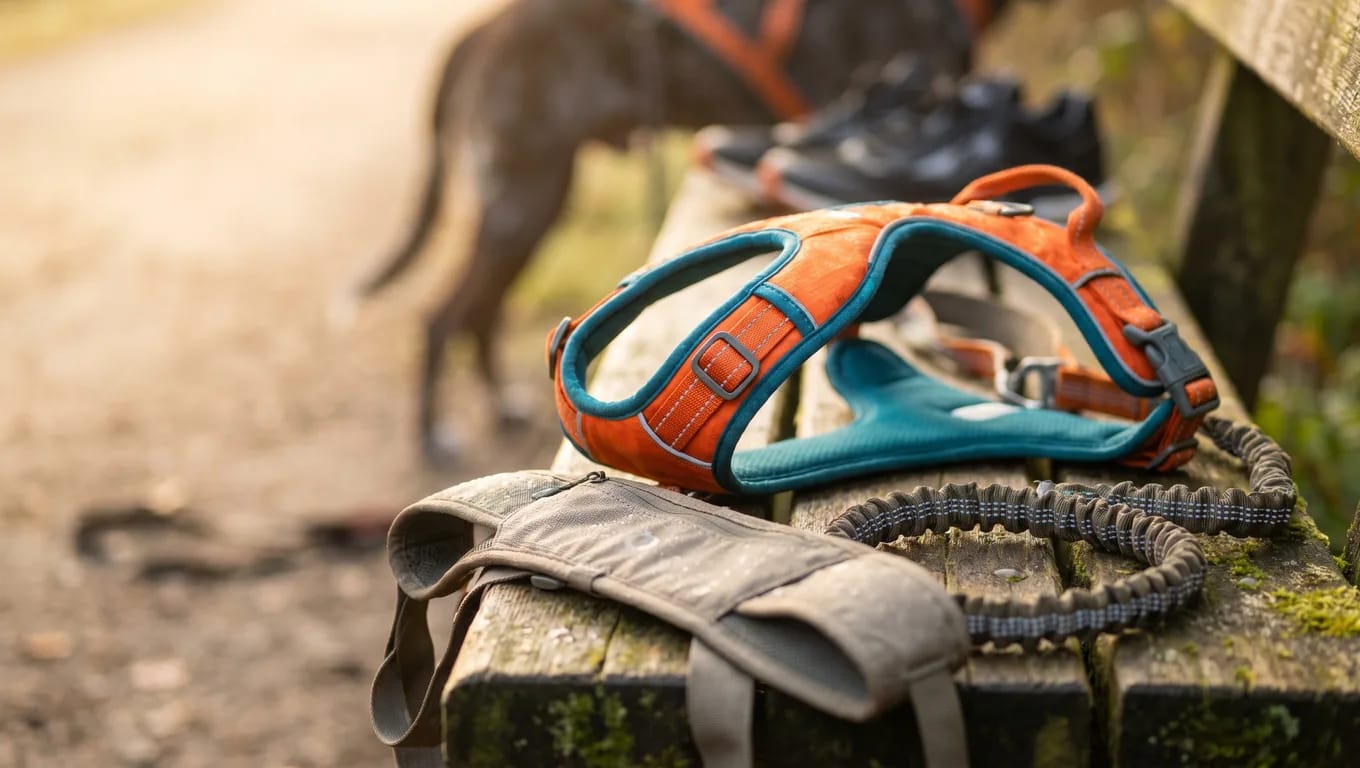
Your dog must wear a proper bikejoring harness, the same pulling harness used in canicross and sledding. A flat collar or a no-pull walking harness is wrong and can hurt your dog. A good pulling harness:
- Spreads the load across the chest and shoulders, never the neck or throat.
- Fits snugly without restricting the shoulders or stride.
- Has an attachment point at the base of the back, so the pull lines up straight behind the dog.
Fit is everything: a poor one rubs, restricts breathing, and can injure at speed. If you are unsure, have it checked by an experienced bikejoring or canicross trainer before you ride.
The bikejoring bike
You do not need a specialist rig to start, but the bikejoring bike must be up to the job:
- Mechanically sound and well maintained, especially the brakes. Disc brakes that work in mud and wet are a real advantage at these speeds.
- Sturdy enough to mount an antenna without flexing or cracking. A solid hardtail mountain bike or a gravel bike is ideal.
- Tires suited to the terrain, with grip for loose trails rather than slick road tires.
| Gear | What it does | Why it matters |
|---|---|---|
| Antenna / bikejor arm | Holds the towline clear of the front wheel | Prevents tangles and crashes; the core safety part |
| Shock-absorbing towline | Connects dog to bike with bungee give | Smooths surges, protects joints and your balance |
| Bikejoring harness | Pulling harness on the dog | Spreads force safely across chest and shoulders |
| Bikejoring bike | Sturdy, well-braked bike | Stable platform; reliable stopping at speed |
| Helmet, gloves, glasses | Protects the rider | You are moving fast on rough ground |
And do not skip your own protective gear. A well-fitting helmet is essential, and gloves plus eye protection against grit, branches, and trail spray make every ride safer. Bikejoring is a fast sport; dress for the speed, not the stroll.
How to Get Started With Bikejoring
The fastest way into the sport is to build the foundation on foot first, then transfer it to the bike. Experienced teams say the same thing: learn the cues in canicross, then add wheels.
1Build the foundation in canicross
Teach your dog to pull into a harness and follow a small set of voice cues while you are running, not riding. Running first lets you both learn the partnership at a speed where mistakes are cheap, long before a bike is in the picture.
2Teach a clear directional vocabulary
You steer a bikejor team with words, not the handlebars. Pick a consistent set of cues and use the exact same words every time:
- Hike / Go to start and pull forward
- Gee for right, Haw for left
- Steady / Easy to slow down
- Whoa / Stop to stop
- On by to ignore a distraction and keep going
These need to be reliable on foot before they are tested at bike speed, where there is far less time to react.
3Introduce the bike at walking pace
Let your dog get used to the bike standing still, then walk it alongside your dog with the antenna and line fitted but no riding yet. You want the dog comfortable with the strange new object moving near it, with zero pressure and plenty of praise.
4Take short, easy first rides
Begin on flat, soft, traffic-free ground with the line attached. Keep the first sessions to a few exciting minutes with the dog out front, so it learns that the bike means "pull and have fun." Always pedal enough to keep the line under gentle tension, and never let the bike overrun the dog.
5Build distance and skills slowly
Once your dog is confident and recovering well, gradually extend the running segments, adding no more than about 10 percent to your total distance per week. Practice braking smoothly, managing slack on gentle descents, and holding your cues at higher speed. Watch how your dog moves the day after a ride: stiffness or reluctance means you pushed too far, too soon. Progress here is measured in control, not in top speed. A dog that starts keen, holds the line, takes its cues, and finishes happy is the real sign your training is working, however modest the distances stay.
Building Good Habits From Day One
A few principles separate teams that thrive from teams that get hurt or burn out:
- Warm up and cool down. A few minutes of easy movement at each end of a ride protects muscles and joints at speed.
- Read your dog constantly. A steady gait, a taut line, and engaged ears are good signs. Heavy panting with a wide curled tongue, dropping back, or limping means stop now.
- Keep it fun. End while your dog still wants more. Enthusiasm is the engine of this sport; protect it.
Finding Your Footing in the Sport
You should not piece bikejoring together alone from videos, because at these speeds the cost of bad habits is high. The quickest, safest way in is to learn from people who already ride: experienced eyes on your harness fit and antenna setup, someone to teach you how to manage descents, and a community that knows the safe local trails and seasons. Training alongside others is also the easiest way to teach your dog to work calmly around other dogs before you ever line up at a start.
Ready to feel that first taut-line stretch of trail? Find and book a beginner canicross or bikejoring class near you on Canlyo, get matched with a trainer who can check your gear and teach you the cues, and start building the running partnership you and your dog were made for.
Bikejoring rewards preparation over raw speed. Build the cues on foot, invest in a proper antenna, harness, and bike, respect the descents, and grow distance slowly. Do that, and the day will come when you crest a rise, your dog drops into a gallop, the line hums tight, and the whole team flies.