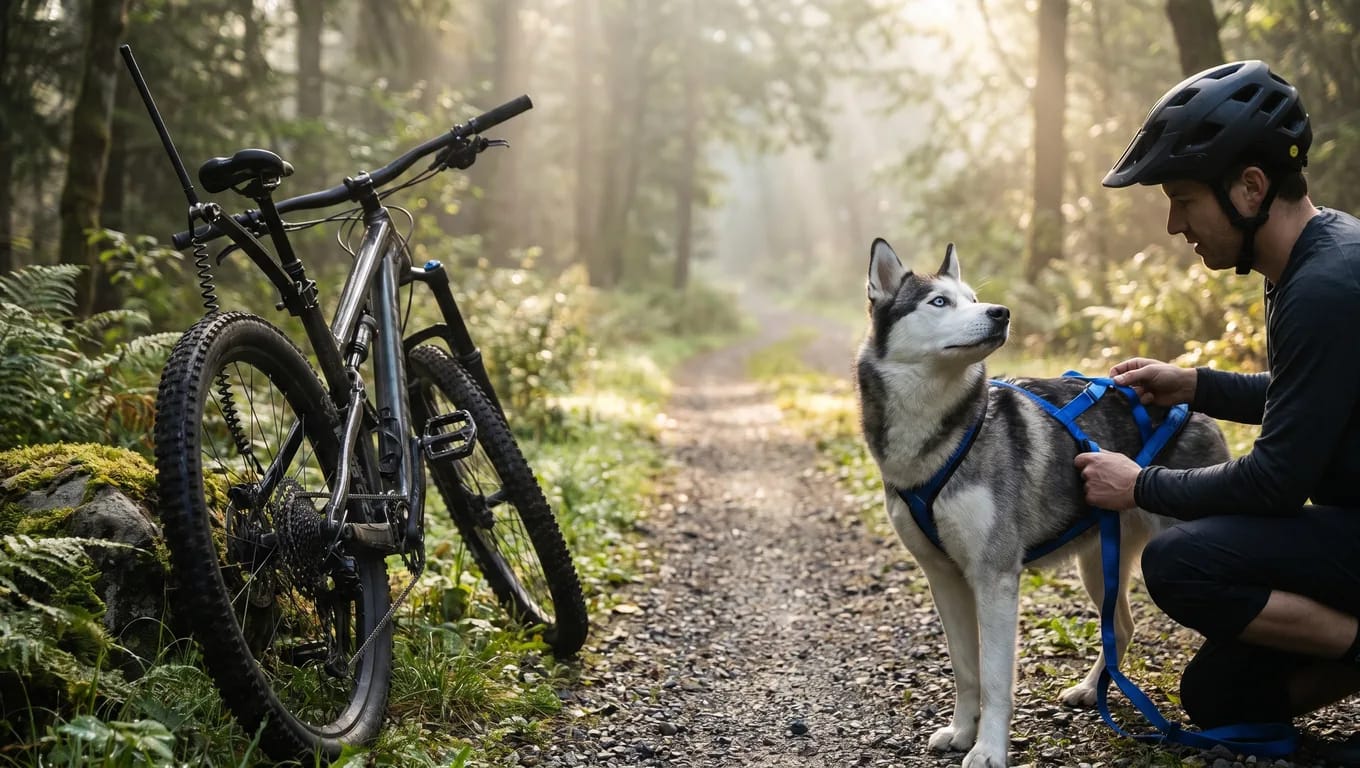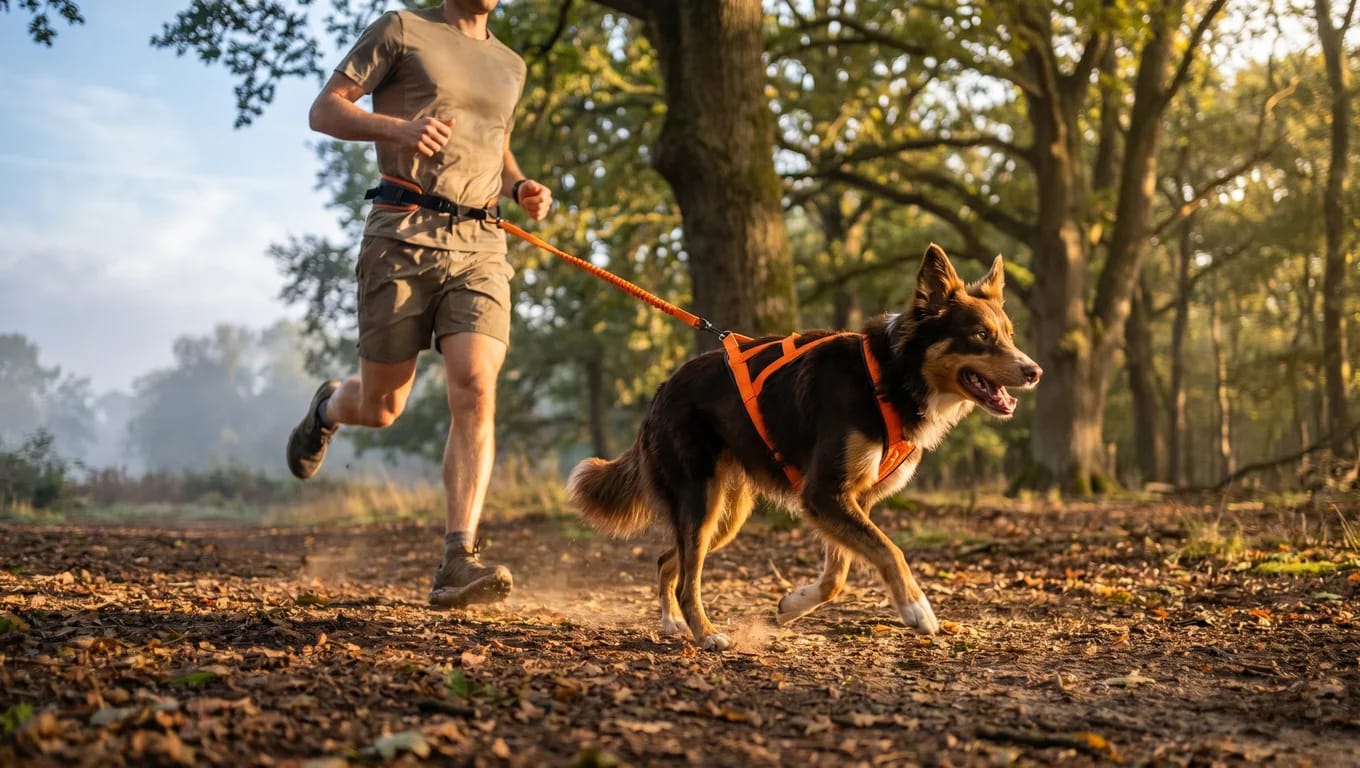
Picture your dog at the front door on a cool morning, leaning into the harness, tail going like a metronome, while you clip a bungee line to your waist belt. You take the first few strides together and something clicks: you are not dragging each other along anymore, you are pulling in the same direction. That feeling, two athletes moving as one team, is the heart of canicross. And the good news is you do not need to be a marathon runner or own a husky to get there.
This guide is for the absolute beginner. We will cover what canicross actually is, how to know if your dog is ready, and the first practical steps to start running with your dog without injuries or frustration.
What Is Canicross?
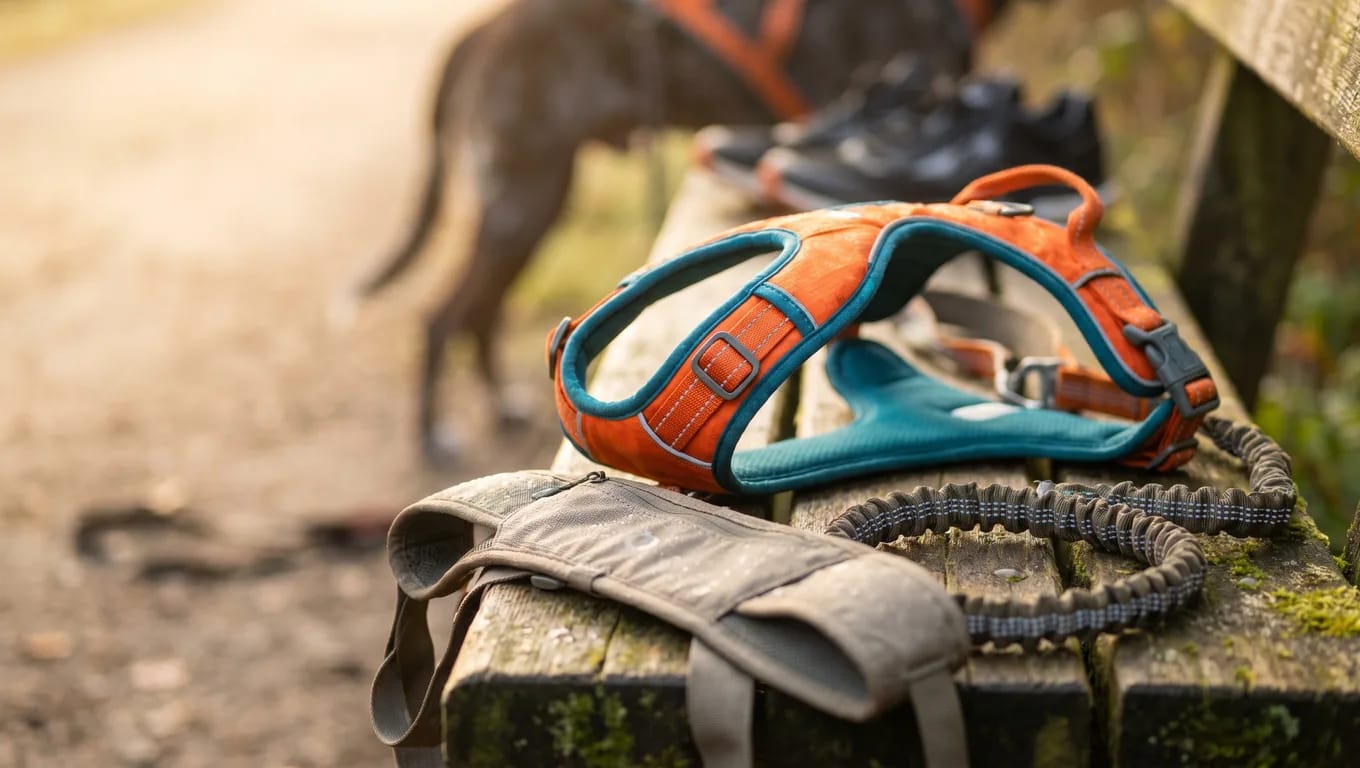
Canicross is the sport of running cross country while attached to your dog. You wear a padded waist belt, your dog wears a properly fitted pulling harness, and a bungee line with built-in shock absorption connects the two of you. The dog runs out in front and pulls, while you run behind and steer with your voice.
It comes from the world of sled-dog sports. When there is no snow, mushers keep their dogs fit by running them on dry ground, and canicross is the one-human, one-dog version of that off-season training. Over the last decade it has grown into its own discipline with local clubs, timed races, and a friendly community that welcomes complete beginners.
A common question is: what is canicross compared to just jogging with your dog on a normal leash? Three things make it different and, frankly, better for both of you:
- The dog pulls on purpose. Instead of correcting a dog that lunges ahead, you reward forward drive. Pulling is the point.
- The connection is hands-free. The line attaches to your waist, not your hands, so your arms swing naturally and you keep your balance if the dog surges.
- The gear protects the dog's body. A pulling harness spreads force across the chest and shoulders, never the neck or throat.
You do not need a sled-dog breed. Canicross works with most active dogs: spaniels, collies, crossbreeds, pointers, and plenty of mixed-breed shelter dogs make superb running partners. What matters is health, build, and enthusiasm, not pedigree.
Is Your Dog Ready? Fitness and Age Checks First
Before you think about pace or distance, you need an honest look at whether your dog is built and ready for the impact of running. This is the part beginners rush, and it is the part that prevents injuries.
Age: wait for the growth plates to close
Running long distances on hard ground is repetitive, high-impact exercise. In a young dog the growth plates (the soft areas at the ends of the bones) are still developing, and too much loaded running before they close can cause lasting joint damage.
As a general rule:
- Small breeds finish growing around 10-12 months.
- Medium breeds around 12-15 months.
- Large and giant breeds can take 18-24 months.
Until then, keep things to free play, short walks, and recall games. Ask your vet for a clear answer for your specific dog before you start any structured canicross training.
A vet check is non-negotiable
Book a general health check and say plainly that you intend to run with your dog. Ask the vet to look at:
- Joints and hips, especially in breeds prone to dysplasia.
- Heart and lungs, so endurance work is genuinely safe.
- Weight, because carrying extra kilos turns every stride into added strain.
- Brachycephalic concerns for flat-faced breeds (pugs, French bulldogs, boxers) that struggle to cool down and breathe under load. For many of these dogs, sustained running is not appropriate at all.
Heat is the single biggest danger in this sport. Dogs cool themselves by panting, not sweating, and they overheat far faster than you do. Run in the cool of early morning or evening, avoid anything above roughly 15°C / 59°F for hard efforts, and stop at the first sign of heavy distress. A run is never worth a heatstroke.
Your own fitness counts too
Canicross is a two-athlete sport. You will be running on trails and grass rather than smooth pavement, often with a dog gently towing you, so it taxes your legs and core differently than a treadmill. If you are new to running, build a base of comfortable walking and easy jogging first. You do not have to be fast. You just have to be steady enough to stay in control.
How to Start Running With Your Dog: The First Steps
Here is the part you came for. Learning how to start running with your dog comes down to a handful of simple, repeatable steps. Take them in order and resist the urge to skip ahead.
1Teach the harness before you teach the run
Let your dog wear the pulling harness on ordinary walks for a few days so it feels normal and positive. Pair it with treats and a happy tone. You want the dog to think harness equals fun, long before any line tension is involved.
2Build a simple directional vocabulary
You steer a canicross dog with words, not the leash. Most teams use a short, consistent set of cues. Pick your words and use the same ones every time:
| Cue (common) | Meaning |
|---|---|
| Hike / Go | Start running, pull forward |
| Left / Gee | Turn left |
| Right / Haw | Turn right |
| Steady / Easy | Slow down |
| Whoa / Stop | Stop |
| On by | Ignore that distraction, keep going |
Start teaching these on normal walks at walking pace. Say the cue just before you change direction, then reward the moment your dog gets it right. The vocabulary matters more than your speed for the first few weeks.
3Encourage the pull (yes, really)
For dogs trained never to pull on a walk, this can feel backwards, so let the pulling harness and a clear release word signal that this gear means pulling time, separate from everyday walking. Let a friend or another dog jog ahead to spark the chase instinct, cheer your dog on, and let the line go taut. Keep these first attempts to short, exciting bursts so pulling stays a happy game.
4Run in short, frequent intervals
Begin with run-walk intervals, not continuous running. A realistic first session is something like:
- 5 minutes brisk walking to warm up
- 1 minute easy running, then 2 minutes walking
- Repeat the run-walk block 4-5 times
- 5 minutes walking to cool down
Do this two or three times a week with rest days in between. Rest days are training too: they are when muscles, tendons, and your dog's joints actually adapt and get stronger.
5Add distance slowly
Once your dog is comfortably running the intervals and recovering well, gradually stretch the running segments. A safe guideline is to increase total distance by no more than about 10 percent per week. Watch how your dog moves the day after a run. Stiffness, reluctance, or lagging behind means you went too far, too soon. Dial it back.
Progress is not just about running farther. A dog that starts the run keen, holds the line, and finishes happy is a sign your training is working, even if the numbers stay modest for a while.
Building Good Habits From Day One
A few principles separate teams that thrive from teams that burn out or get hurt.
Always warm up and cool down
Five minutes of brisk walking before and after every session loosens muscles and eases the heart rate up and down gently. Cold muscles tear; this small habit prevents a lot of strain for both of you.
Mind the surface and the weather
Soft trails, grass, and forest paths are far kinder on your dog's joints and paws than hot asphalt or gravel. In warm months, press the back of your hand to the ground for seven seconds: if it is too hot for your hand, it is too hot for paws. Carry water for longer outings and offer it on breaks.
Read your dog constantly
Your dog cannot tell you it is tired or in pain, so you have to watch. Good signs are a steady gait, a line that stays taut, and ears and tail that look engaged. Warning signs are excessive panting with a wide curled tongue, dropping behind, limping, or simply losing interest. When in doubt, stop. There is always another day.
Keep it fun
The fastest way to ruin canicross is to turn it into a chore. End sessions while your dog still wants more, celebrate the good runs, and let some outings be short and playful. Enthusiasm is the engine of this sport. Protect it.
Finding Your Footing in the Sport
You do not have to figure all of this out alone, and you should not. The quickest way to improve is to run with people who already know the cues, the local trails, and the safe seasons for your area. A beginner-friendly canicross class or club session gives you experienced eyes on your technique, a safe place to teach your dog to pull around other dogs, and a built-in reason to keep showing up.
Most areas have more options than newcomers realize: introductory canicross classes, social group runs, and clubs that run weekly whatever the weather. Training alongside others is also the easiest way to socialize your dog around the chaos of a real start line before you ever consider a timed event.
Ready to take the first real stride? Find and book a beginner canicross class near you on Canlyo, get matched with a trainer who runs at your level, and start building the running partnership you and your dog were made for.
Canicross rewards patience more than raw fitness. Get the age and health checks right, teach the harness and the cues before the speed, and grow distance slowly. Do that, and the morning will come when your dog leans into the line, you take those first strides together, and the whole thing finally feels like flying.