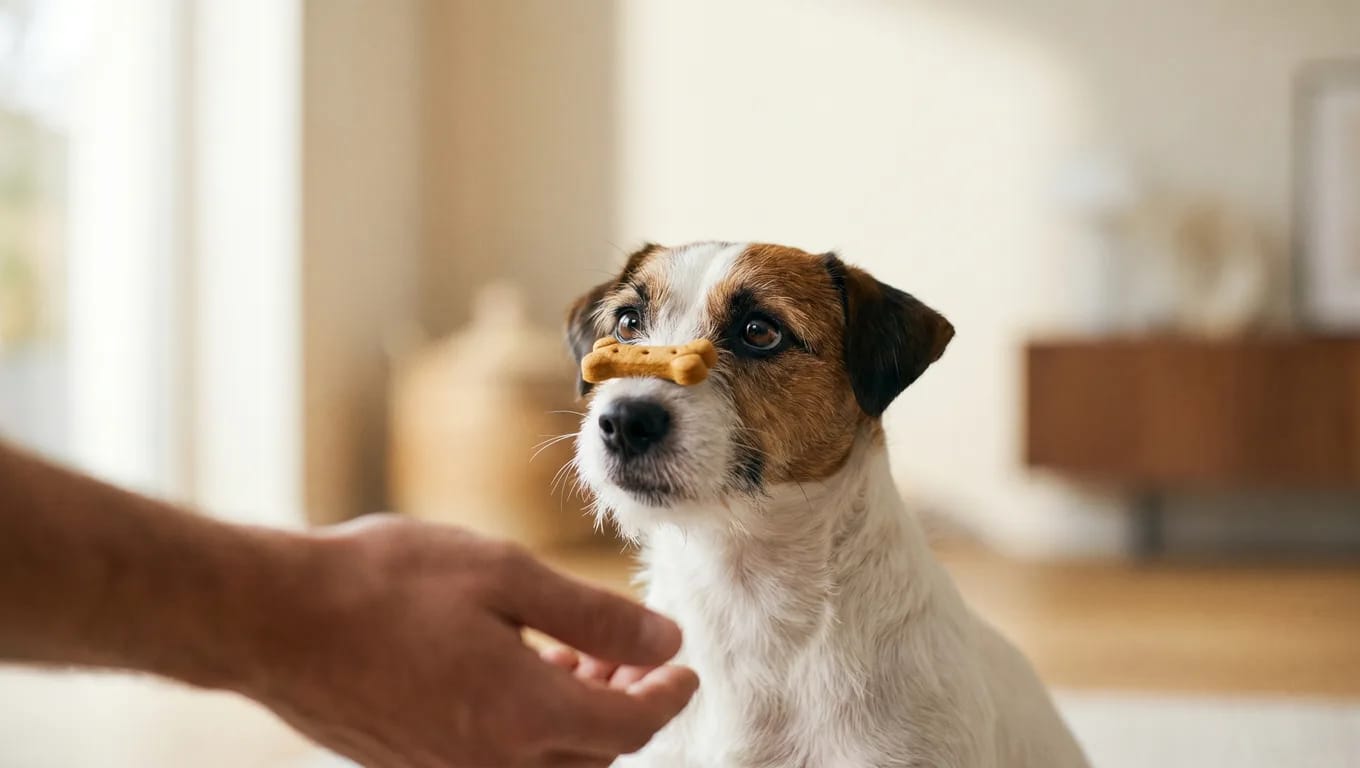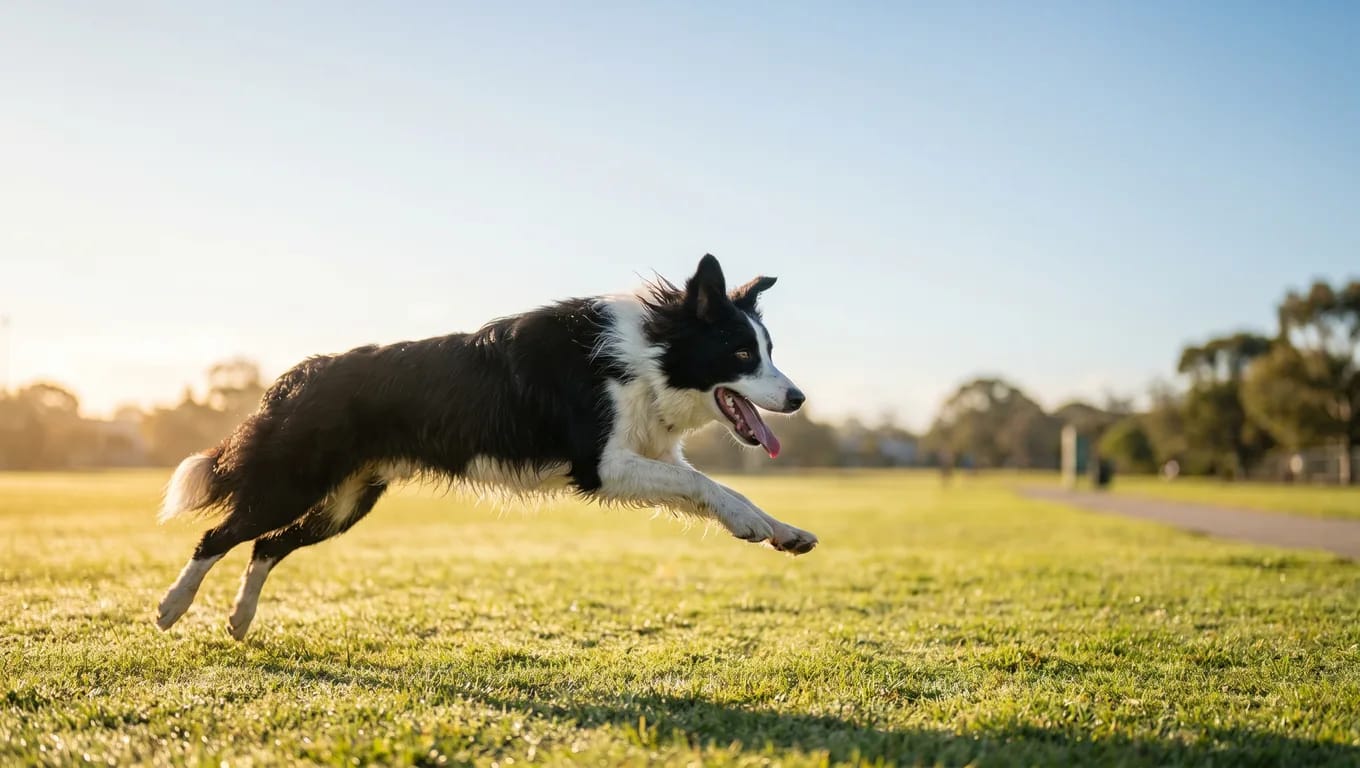
On a Saturday morning, in a field on the edge of town, you watch a Border Collie blast through a tunnel at full speed while, a few yards away, a Beagle with its nose glued to the ground tracks a scent you can't even detect. Farther off, a woman runs tethered to her dog along a dirt trail, and a group sends discs sailing against the sky. All of it, as different as it is, fits under one phrase: dog sports. And the best part is that there's almost certainly one tailor-made for your dog, whatever the breed, age, or energy level.
This guide is a map. It walks through the most popular dog sport disciplines, tells you in a few lines what each one is about, what kind of dog tends to fit best, and what you need to get started. The goal isn't to try everything; it's to recognize, as you read, the one that makes you think "this is our thing."
Why Train a Sport With Your Dog
Dog sports, and canine activities in general, aren't just a weekend hobby: they change how your dog lives the rest of the week. Here's what they bring to the table:
- They tire out the brain, not just the body. Ten minutes of scent work or focused training leaves a dog more satisfied than an hour of fetch. Mental work is what truly settles a dog.
- They strengthen the bond. Every dog sport is, at its core, a conversation between you and your dog. You learn to read each other, and it shows at home.
- They prevent behavior problems. A dog with a job it loves has less time and less reason to invent its own chewing, barking, or anxiety.
- They build community. Behind every discipline there are clubs, training centers, and people to share afternoons, road trips, and celebrations with.
You don't need a "sporting breed" or any ambition to compete. Most people who do dog sports do it for fun and for the connection with their dog. Competition, if it comes, is the icing on the cake, not the reason.
The Map of Dog Sport Disciplines
I've grouped the sports by the kind of dog and handler who tend to enjoy them. Read the descriptions with your specific dog in mind: its energy, its nose, its drive to run or to think.
Speed and Obstacle Sports
This is where coordination, speed, and handling at a distance take the lead.
Agility
The best known of them all. Your dog runs a course of jumps, tunnels, weave poles, and ramps following your cues, against the clock and without faults. It's pure teamwork: you direct with your voice and body, and the dog reads, decides, and executes. It suits agile, motivated dogs of any size, though it's wise to wait until the joints have matured before any real jumping begins.
If this is the one calling your name, start here: what agility is and how to take your first steps.
Flyball
Flyball is the loudest, most adrenaline-fueled dog sport out there. Two teams race side by side: each dog runs a relay down a lane, clears four hurdles, hits a box that launches a ball, catches it, and races back so the next dog can go. It's pure speed and teamwork. It's the marquee sport for fast, ball-obsessed dogs with energy to burn; it's no accident that flyball draws mostly high-drive dogs that need to wear out their brain and their legs at the same time. The hard part isn't running, it's the self-control in the middle of all that excitement.
Hoopers
A modern, low-impact alternative to agility. Instead of jumps and ramps, the dog moves through hoops, barrels, and tunnels following your signals, almost always at a distance and without you having to run alongside. With no jumps or sharp turns, it's perfect for senior dogs, large breeds, dogs in rehab, or handlers with limited mobility. It offers the mental game of agility without the physical wear and tear.
Nose Sports
If your dog lives with its nose to the ground, this is where it belongs. These are open to just about any dog, including the shy, the reactive, and the senior.
Scent Work (Nose Work)
The dog learns to search for a specific odor and to tell you where it is, whether in boxes, vehicles, outdoors, or indoors. It grew out of professional detection work and was adapted for the family dog. It's the easiest sport to start at home, the cheapest, and one of the best confidence builders for insecure dogs, because the dog is the one leading and getting it right.
There's a complete guide to getting started here: scent work for dogs, from scratch.
Mantrailing
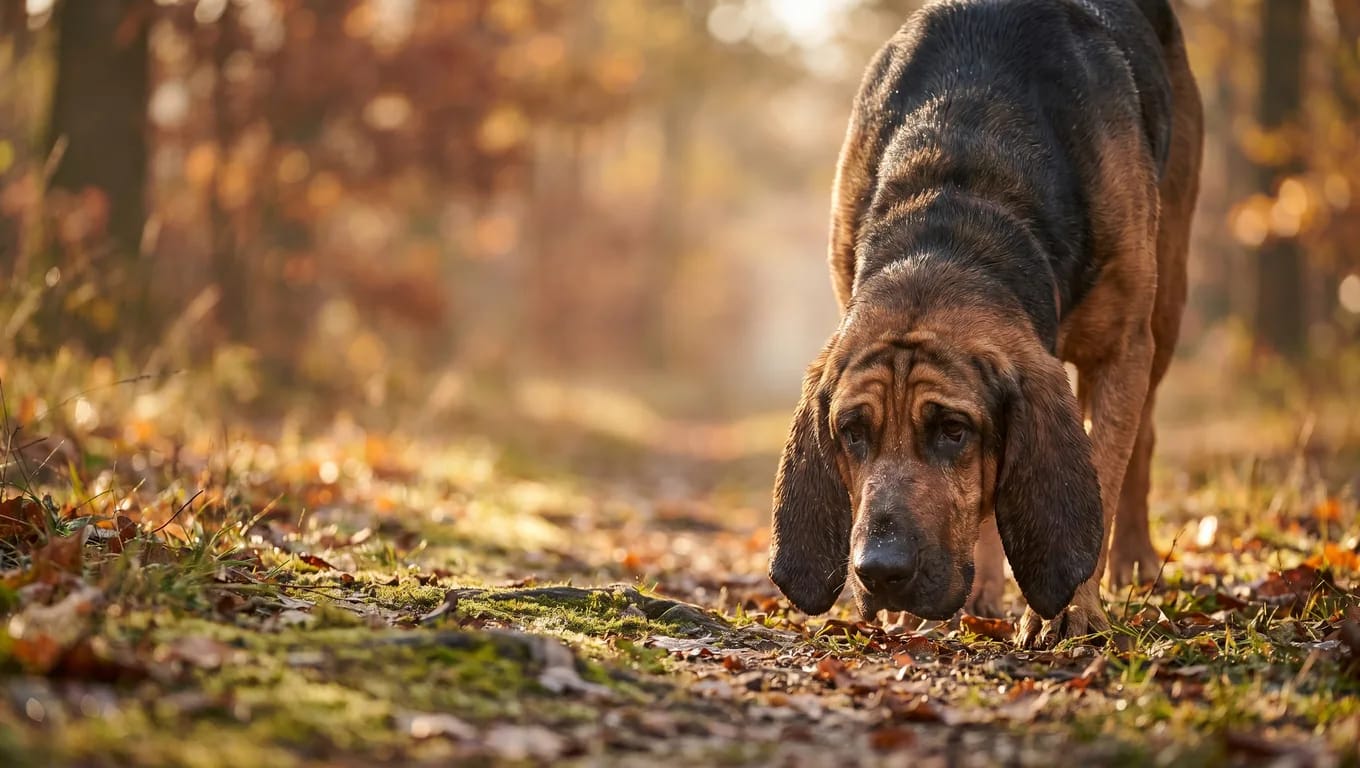
The human-tracking specialty. Starting from a scent article, the dog follows one person's individual trail across real terrain: streets, parks, woods. It's the same principle search-and-rescue dogs use. It hooks dogs of any size and is especially therapeutic for anxious dogs, because it gives them a serious job that focuses and relaxes them. It's done with a harness and a long line, and almost always in a group led by an instructor.
Outdoor Endurance Sports
For healthy, athletic dogs with miles in them, and for people who like to break a sweat alongside their dog.
Canicross
Running cross-country with your dog pulling you, connected by a belt, a bungee line, and a pulling harness. The dog sets part of the pace while you manage direction and effort. It's the gateway to pulling sports, accessible and seriously addictive. It works with just about any medium or large dog in good shape; Nordic breeds and high-energy mixes tend to love it. Its variants on a bike (bikejoring) or scooter expand the game once the dog is in peak condition.
Before starting any impact or endurance sport (agility, flyball, canicross, disc dog), see your veterinarian. Dogs shouldn't be doing jumps or hard pulling runs until they've finished growing, and it's worth ruling out joint or heart issues at any age.
Obedience and Connection Sports
What you're training here is the fine-tuned dialogue between dog and handler. These work for any dog and make an excellent foundation for everything else.
Obedience
The mother discipline. The dog performs precision exercises (heeling, staying put, coming when called, positions at a distance) with almost clockwork crispness. It sounds serious, and at the top level it is, but well-designed obedience is a communication game that improves daily life and lays the groundwork for agility, mantrailing, or any other sport. If you want a solid, respectful foundation, start by understanding positive dog training and positive reinforcement.
Rally Obedience (Rally-O)
A more relaxed, dynamic take on obedience. You work a course marked with signs, and at each one the two of you perform a different exercise: a turn, a change of position, a sit. There's less rigidity and more flow than in classic obedience, and you're encouraged to guide and motivate your dog throughout the run. It's a fantastic entry point into the world of competition, friendly for both the dog and the first-time handler.
Canine Freestyle (Dog Dancing)
Choreography set to music, where dog and handler string together spins, leg weaves, backups, and tricks. It's obedience turned into showmanship and creativity. It rewards dogs that love learning tricks and people with an artistic streak. It doesn't require an elite athlete, just patience, imagination, and plenty of desire to play together.
Prey, Retrieve, and Instinct Sports
Disciplines that channel a dog's natural drives in a controlled way.
Disc Dog (Frisbee)
Your dog chases, leaps, and catches flying discs. It ranges from simple long throws to acrobatic routines where the dog launches off your body to snag the disc midair. It's flashy, fun, and very physical. It suits athletic, fast dogs that are obsessed with chasing things. Important: you have to pay close attention to jumping and landing technique to protect the joints, and use soft discs made for dogs.
Herding
The instinct of the herding breeds, put to real work. The dog learns to move and gather a flock (sheep, ducks) in response to your cues at a distance. It's one of the oldest and most profound dog sports, and watching a herding dog "switch on" the first time it has sheep in front of it is hard to forget. Built mainly for Border Collies, shepherd breeds, and similar dogs with strong instinct, it requires facilities and livestock, so it's done at specialized centers.
IGP (Formerly Schutzhund)
The most complete and demanding dog sport. IGP combines three phases in a single discipline: tracking, high-level obedience, and protection (sleeve work with a decoy). It calls for a balanced, confident dog with serious working capacity, almost always working breeds like the German Shepherd or the Malinois, and a deeply committed handler. It's not a sport to wade into lightly: it's trained at clubs with certified decoys and a lot of technical support.
Quick Reference Table
If you want a bird's-eye view before deciding, this table sums up how each discipline fits.
| Discipline | Type of dog | Physical demand | Good to start with |
|---|---|---|---|
| Agility | Agile, motivated, any size | High | Yes, with a foundation |
| Flyball | Fast, ball-driven, energetic | High | Yes, at a club |
| Hoopers | Any dog, including seniors | Low | Very easy |
| Scent work | Any dog, even shy ones | Low | Very easy, at home |
| Mantrailing | Any dog, even anxious ones | Medium | Easy, in a group |
| Canicross | Medium/large, athletic | High | Easy, fitness required |
| Obedience | Any dog | Low | Very easy |
| Rally obedience | Any dog | Low | Very easy |
| Freestyle | Any dog, playful | Medium | Easy |
| Disc dog | Athletic, chaser | High | Medium |
| Herding | Herding breeds | Medium | Requires a center |
| IGP | Working breeds | High | Only with a club and expert handler |
How to Choose the Right Dog Sport for Your Dog
Watch what your dog does for fun, without being asked. If it sniffs nonstop, the path is nose sports; if it chases anything that moves, look toward disc dog or flyball; if it follows you, eyes locked on you, obedience, rally, or freestyle will come naturally. The best sport is the one that amplifies what your dog already enjoys. After that, be honest about its body and its age:
- Puppies: scent work, focus games, and obedience basics. No jumps or high-impact runs until the joints mature.
- Healthy adults: practically the entire catalog is open.
- Senior dogs or dogs in rehab: hoopers, scent work, gentle mantrailing, and rally. An active mind without punishing the body.
And factor yourself in too: dog sports work when you both enjoy them, so your style counts as much as your dog's. A trick that almost never fails: start with scent work and a foundation of positive-reinforcement obedience. They tire a dog out, they hook you, and they teach you to communicate; from there, jumping into a more specific discipline is far easier.
The First Step Is Always the Same: Find Where to Train
You can read a thousand guides, but dog sports are learned by doing them, and almost all of them take off better with an instructor correcting you from day one. A class saves you months of trial and error, protects your dog from bad habits, and drops you right into your discipline's community. Whether you're drawn to agility, mantrailing, canicross, or flyball, your next move is to find a training center or club near home and book your first session.
Ready to go from theory to the field? With the free Canlyo app, you can find dog training centers and trainers near you, see which disciplines they offer, and book your spot in minutes. Pick the sport that fits your dog and take the first step today. Discover the Canlyo app.