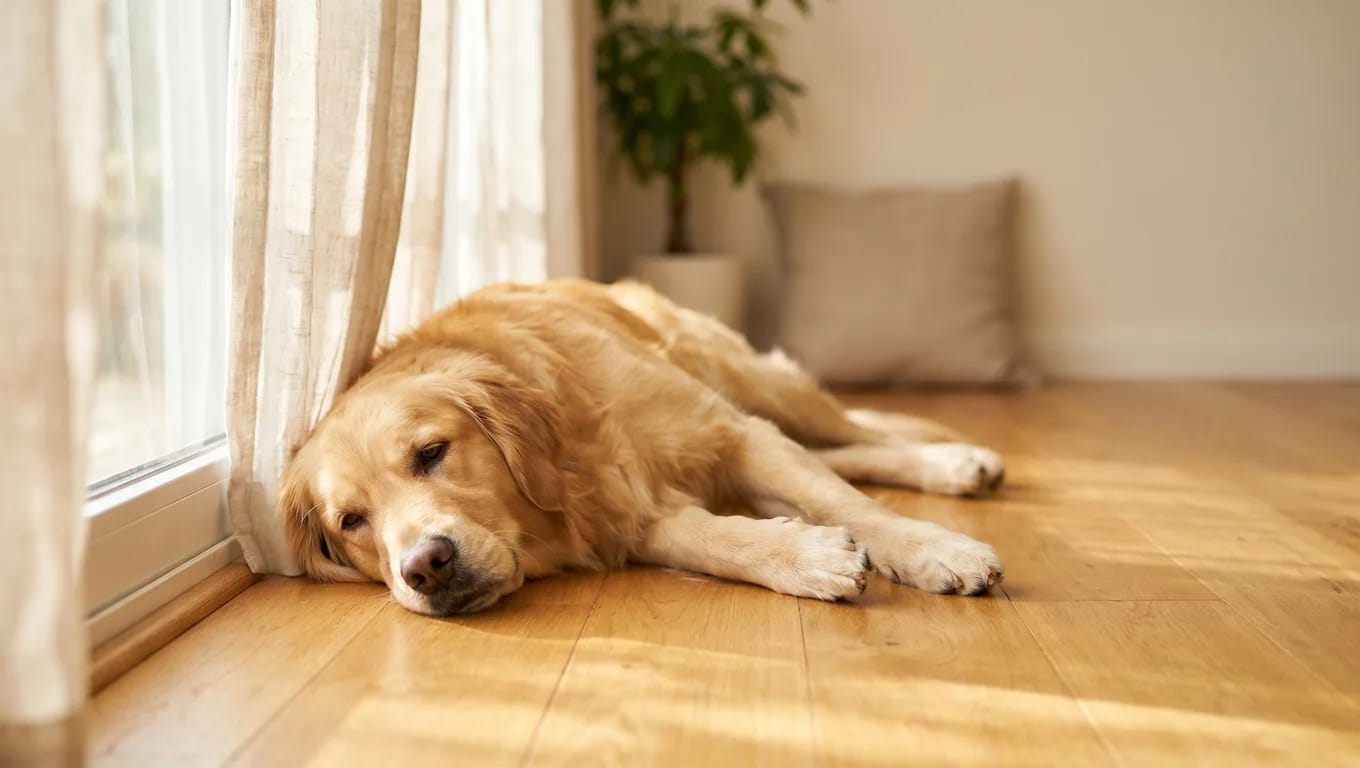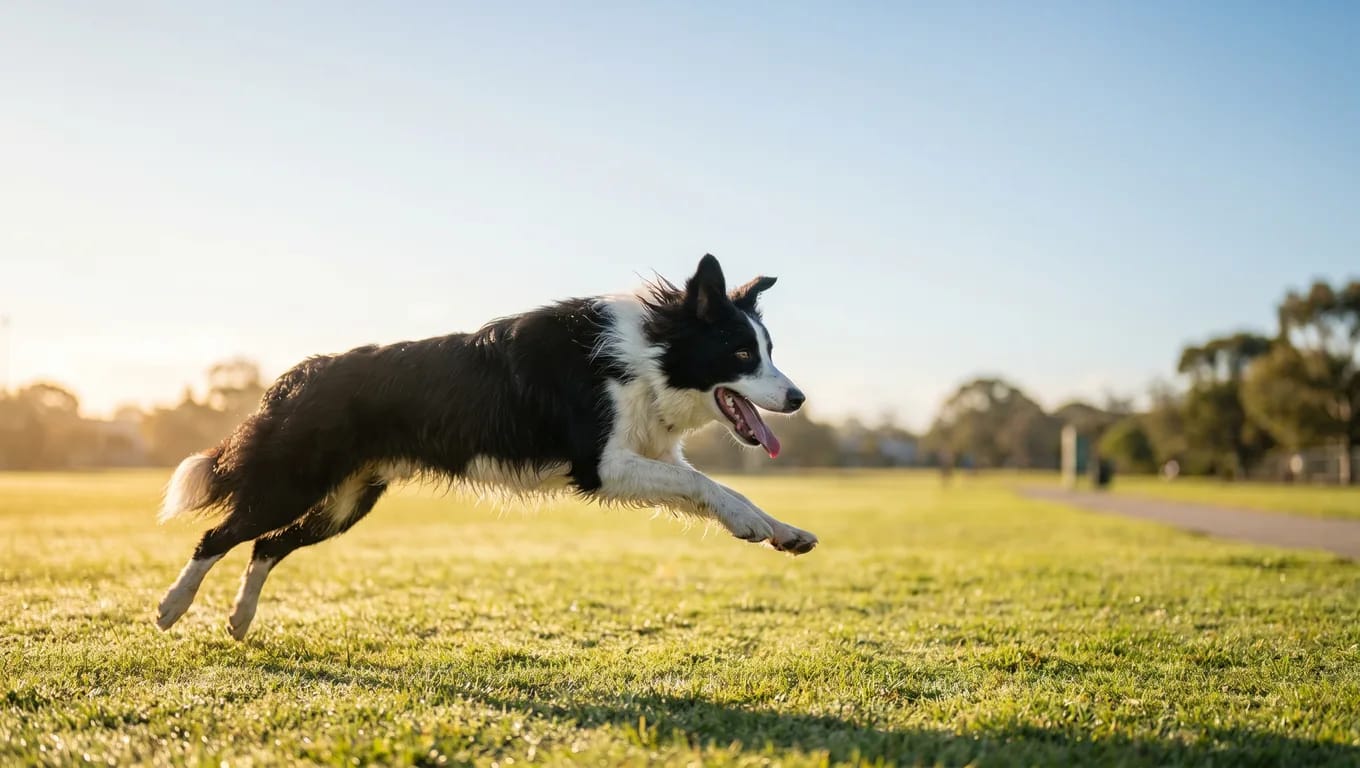
Your dog launches off the couch after a squirrel, lands a little wrong, and suddenly there is a hitch in his step. He is not crying out, but he keeps shaking out that back leg and giving you a look that says something is off. An hour later he is still favoring it.
Most of the time, what you are looking at is a dog pulled muscle: a soft tissue strain that happens when a muscle or its tendon gets stretched or torn past what it was ready for. It is one of the most common minor injuries in active dogs, and the good news is that many strains settle down with rest and sensible care. The tricky part is knowing the difference between "watch and rest" and "this needs a vet today." This guide walks you through both.
What a pulled muscle actually is
A muscle strain is damage to the muscle fibers or the tendon that anchors the muscle to bone. It usually comes from a sudden, awkward load: a hard sprint, a slip on a wet floor, an over-enthusiastic jump, or twisting at speed during play.
Vets often grade strains in three levels, and the grade is a useful mental model even before a professional confirms it:
| Grade | What happened | What you tend to see |
|---|---|---|
| Mild (Grade 1) | A few fibers overstretched | Slight limp, stiffness, dog still uses the leg |
| Moderate (Grade 2) | Partial tearing of fibers | Clearer limp, swelling, reluctance to bear full weight |
| Severe (Grade 3) | Major or complete tear | Refuses to use the leg, obvious pain, sometimes a visible dent or bulge |
The back legs take the brunt of it. A dog pulled muscle in back leg usually involves the hamstring group, the hip flexors, or the muscles around the thigh. Those are the muscles that power the explosive push-off dogs love, and they are also the ones that overload when a landing goes wrong.
Signs your dog has pulled a muscle
Dogs are stoic. They will often mask discomfort, so you are reading body language as much as obvious pain. Look for a cluster of these signs rather than a single one:
- Limping or favoring a leg, especially right after exercise or play
- Stiffness when getting up, often worse after rest and easing slightly with gentle movement
- Swelling, warmth, or tenderness over a specific muscle when you compare left to right
- A shortened or altered stride, or holding a leg slightly off the ground
- Flinching, licking, or guarding one area when you touch it
- Reluctance to jump, climb stairs, or do something he normally loves
How a strain differs from a cramp or spasm
People often mix up a strain with dog muscle spasms. A spasm is an involuntary contraction: the muscle visibly twitches, ripples, or locks up, sometimes briefly and sometimes in waves. You might feel a hard, knotted band under the skin. Spasms can happen alongside a strain as the surrounding muscle protects the injured area, but isolated, recurring spasms, especially with no clear injury, deserve a vet's input because they can point to dehydration, electrolyte imbalance, pain referred from the spine, or a neurological cause.
A simple way to think about it:
- Strain: a mechanical injury after a specific effort, painful on movement and pressure, tends to improve with rest.
- Spasm: a muscle misfiring, visible twitching or cramping, may come and go without obvious cause.
First steps in the first 48 hours
What you do in the first day or two matters. The goal is to calm the tissue down and avoid making a small tear bigger.
1Stop the activity
The instant you suspect a strain, end the walk, the game, or the training session. Continuing to run on a pulled muscle is the single fastest way to turn a mild strain into a serious one. Get your dog calm and on a lead even at home so he is not tempted to sprint.
2Rest and restrict movement
Strict rest is the cornerstone of recovery. For a mild strain, that means short, slow, on-lead toilet breaks only, no free running, no jumping on or off furniture, no stairs if you can avoid them, and no rough play with other dogs. A confined, comfortable space helps a fidgety dog actually rest.
3Cool the area early
In the first 24-48 hours, a cold compress can ease swelling and discomfort. Wrap an ice pack or a bag of frozen peas in a thin towel and hold it gently over the sore muscle for about 10 minutes, a few times a day. Never put ice directly on skin, and stop if your dog is distressed by it.
Do not give your dog human painkillers. Ibuprofen, paracetamol (acetaminophen), aspirin, and naproxen can be toxic to dogs even in small doses and can cause serious kidney, liver, or stomach damage. If you think pain relief is needed, that is a conversation with your vet, who can prescribe something safe.
4Watch, don't test
Resist the urge to repeatedly poke the area or ask your dog to "show you" if it still hurts by trotting him up and down. Quiet observation over the first day tells you more, and it spares the tissue. Keep a simple note of what you see each day so you can spot whether things are trending better or worse.
What recovery looks like
Recovery from a pulled muscle is rarely a straight line, but a mild-to-moderate strain often follows a recognizable arc.
| Timeframe | What to expect | What to do |
|---|---|---|
| Days 0-3 | Soreness, limp, possible swelling | Strict rest, cold compresses, calm environment |
| Days 3-7 | Swelling easing, limp improving | Continue rest, very short lead walks if comfortable |
| Weeks 1-3 | Gradual return of normal movement | Slowly reintroduce gentle activity, avoid the trigger |
| Weeks 3-6+ | Rebuilding strength | Controlled exercise, build back distance and intensity slowly |
The biggest mistake owners make is returning to full activity the moment the limp disappears. Muscle tissue can look fine on the outside while it is still knitting back together underneath, and re-injury is common. Add load back gradually: think in terms of weeks, not days, and shorten the session at the first sign of stiffness returning.
Heat, gentle movement, and warming up
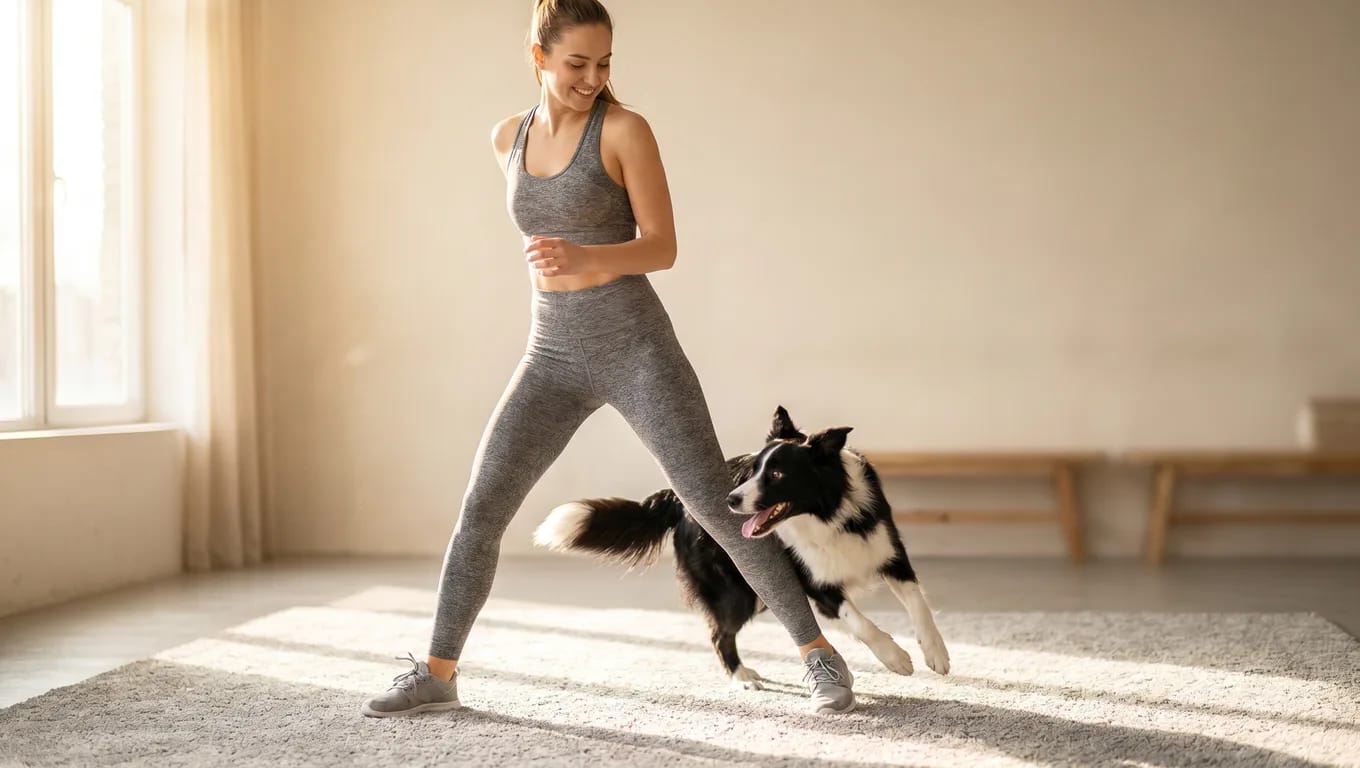
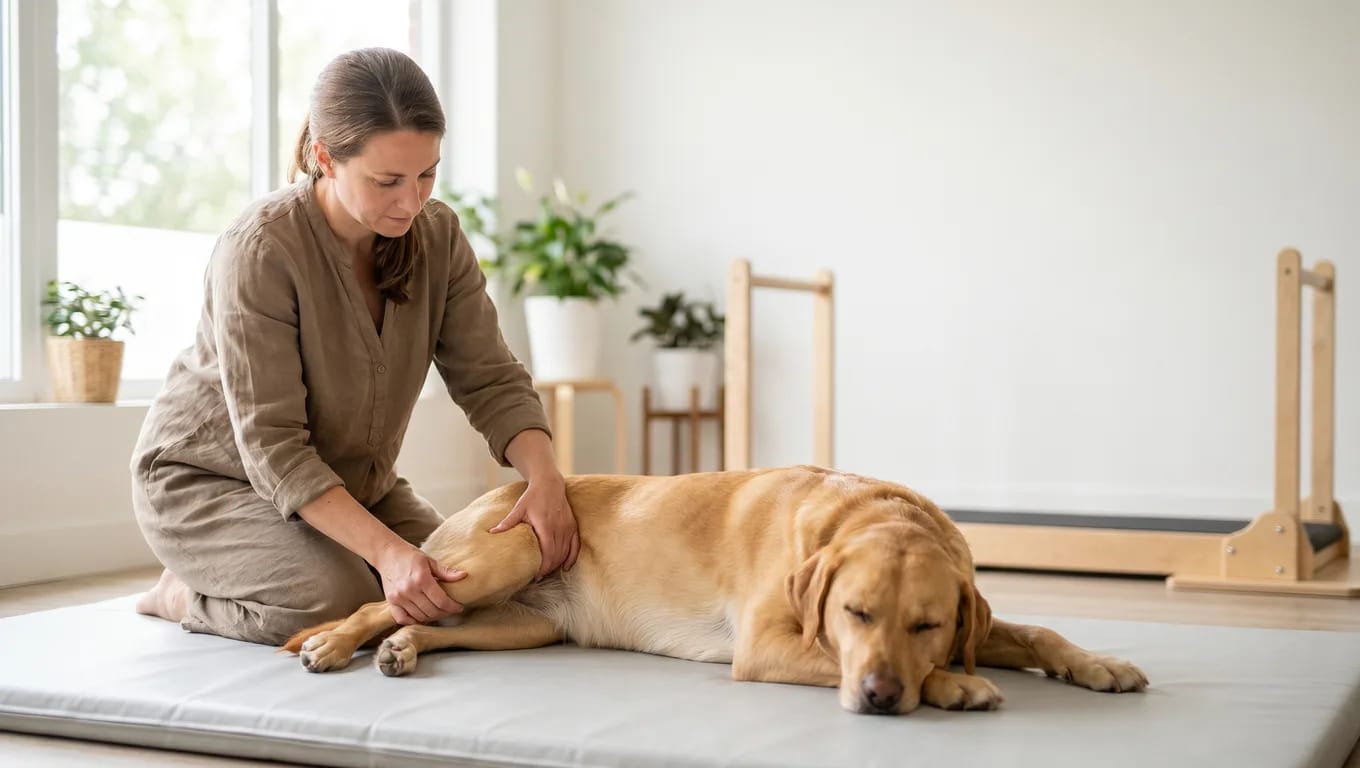
Once the acute phase has passed (usually after 48-72 hours and once swelling is gone), gentle warmth and easy, controlled movement support healing by improving blood flow. Short, slow lead walks on flat ground are ideal early rehab. For dogs returning to sport or hard exercise, building a proper warm-up and cool-down routine into every session is one of the best ways to prevent the next strain.
A note on prevention: Most pulled muscles in active dogs trace back to cold muscles asked to perform suddenly, or fitness that has not kept pace with ambition. A few minutes of brisk walking and gentle range-of-motion movement before intense activity, plus steady conditioning over time, dramatically lowers the risk.
When a pulled muscle needs a vet
This is the part to take seriously. A muscle strain is a reasonable working assumption for a mild limp after a clear, one-off incident in an otherwise healthy dog, and short home rest is sensible. But several signs mean you should stop guessing and get a professional assessment.
See your vet promptly if you notice any of the following:
- The limp is severe, or your dog will not bear any weight on the leg
- There is significant swelling, heat, or an obvious deformity, or a visible dent in the muscle
- Your dog is in obvious pain, crying out, or cannot get comfortable
- There is no improvement after 48-72 hours of rest, or things are getting worse
- You hear or saw a pop or snap at the time of injury
- Your dog is dragging a paw, knuckling over, or losing balance
That last point matters. Dog losing balance in hind legs, wobbling, crossing the back paws, or scuffing the tops of the toes is not typical of a simple muscle pull. Those signs can indicate a problem with the spine or nervous system rather than the muscle itself, and they need a vet's evaluation rather than a wait-and-see approach at home. The same goes for any weakness that affects both back legs at once, or a limp that appeared with no incident at all.
This article is general educational information for dog owners, not veterinary advice. It cannot diagnose your individual dog. If you are worried, if symptoms are severe, or if anything is getting worse rather than better, contact your veterinarian or an emergency clinic. You know your dog best, and trusting that instinct is never wrong.
Helping your dog bounce back stronger
A pulled muscle is frustrating, but for most dogs it is a temporary setback rather than a lasting problem. Stop the activity early, give real rest, reintroduce movement slowly, and stay alert to the warning signs that mean more than a strain. Get those four things right and most dogs recover fully and get back to the activities they love.
The longer-term answer is fitness. A dog who is conditioned for what you ask of him, who warms up before hard work and builds intensity gradually, is far less likely to end up sore on the kitchen floor. Structured canine fitness and conditioning work, guided by someone who knows how to load a body safely, does more to prevent repeat strains than anything you can do after the damage is done.
Ready to build a stronger, more resilient dog? Find and book a canine fitness or conditioning class near you on Canlyo, and connect with trainers who can help your dog move well, recover smarter, and stay off the injury list.