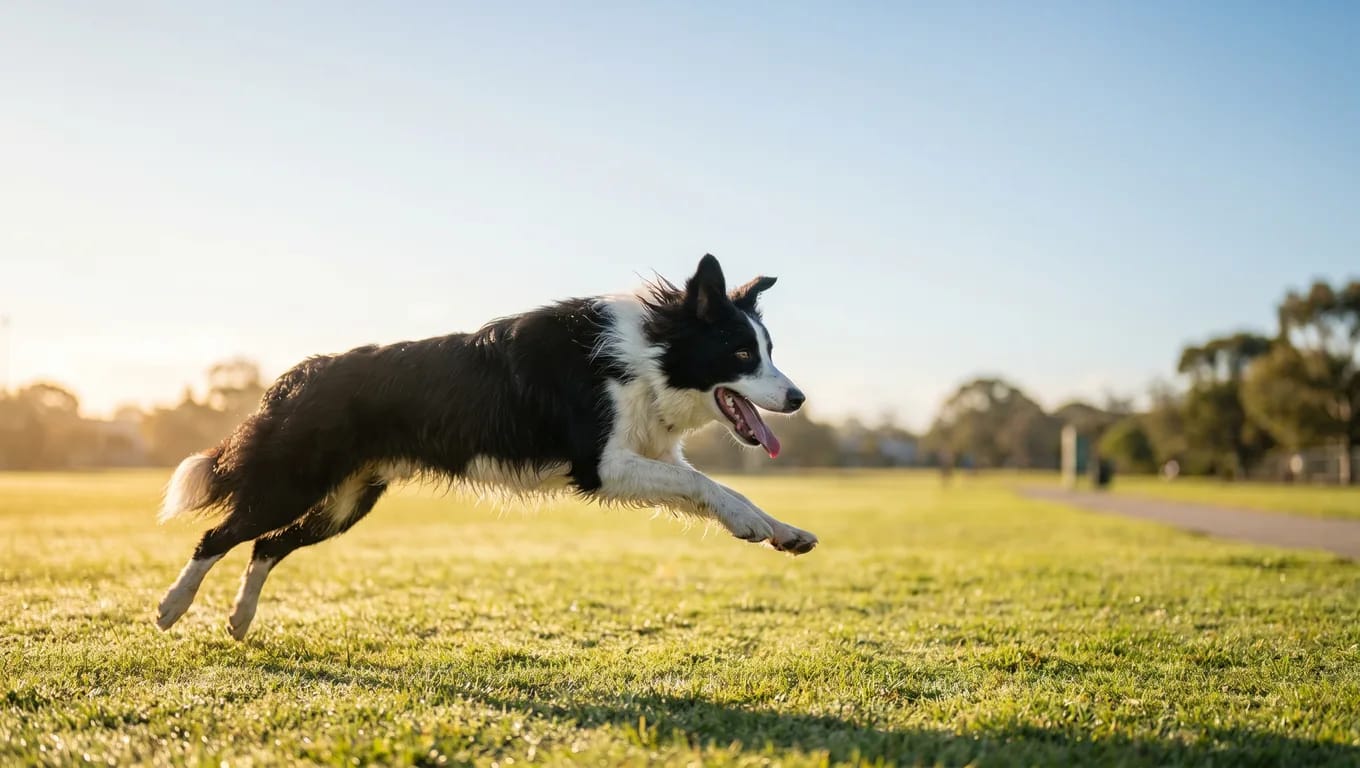
A squirrel breaks across the path, your dog's head snaps up, and in half a second you are shouting a name into the wind while a furry blur disappears into the bushes. Every owner who has lived that moment knows the cold drop in the stomach that follows. The good news is that coming back to you is not a personality trait some dogs are born with and others are not. It is a skill, and like any skill it can be taught, rewarded, and made dependable.
This guide walks you through dog recall training the way a professional trainer would coach you through it in person: starting easy, raising the bar one small step at a time, and building toward a dog who turns on a dime even with a rabbit in the hedge and another dog twenty meters away.
What Is Recall in Dog Training?
If you have searched what is recall in dog training, here is the plain answer. Recall is your dog's response to a cue, usually a word like "come" or "here," that means "stop what you are doing and return to me right now." A reliable recall is the single most valuable behavior you can teach, because it is the one that keeps your dog safe near roads, livestock, other dogs, and anything else that might tempt them away.
What recall is not is obedience for its own sake. Coming when called should never feel to your dog like the end of fun. The entire goal of recall dog training is to make returning to you the best decision your dog can make in any given moment, more rewarding than the squirrel, the smell, or the other dog.
A recall is only as strong as its weakest rehearsal. Every time your dog ignores the cue and nothing happens, the word gets a little weaker. Early on, set things up so your dog almost cannot fail.
Before You Start: Get the Foundations Right
A few decisions up front will save you weeks of frustration.
- Pick one cue and protect it. Choose a single word, say it once, and never use it for anything unpleasant. If "come" sometimes means a bath, nail trims, or the end of a walk, your dog learns that "come" is a gamble.
- Choose rewards that actually motivate. Dry biscuits will not compete with a rabbit. Use small, soft, high-value treats such as chicken, cheese, or liver, and keep a special "jackpot" reward in reserve for big wins.
- Use a long line for safety. A 5-10 meter training line lets your dog feel free while you stay connected. It is your safety net, not a tool for dragging the dog in.
- Train when your dog is a little hungry and not exhausted. A tired or overfed dog has no reason to work for you.
How Long Does Recall Training Take?
Owners always want a timeline, so here is an honest one. The early stages move quickly; reliability around real distractions is the long game.
| Stage | Typical timeframe | What "done" looks like |
|---|---|---|
| Charging the cue | 2-4 days | Dog whips around at the word indoors |
| Short-distance recall | 1-2 weeks | Reliable across a room or hallway |
| Outdoor on a long line | 3-6 weeks | Comes from across the yard or park |
| Proofing with distractions | 2-6 months | Comes past dogs, people, and smells |
Treat these as rough guides, not deadlines. A confident adult dog and a fearful rescue will not move at the same pace, and that is completely normal.
How to Train a Dog to Come When Called, Step by Step
This is the core of the guide. Work through the steps in order, and do not advance until your dog is succeeding roughly nine times out of ten at the current level.
1Charge the Cue Indoors
Start in the most boring room in your home with zero distractions. Say your dog's recall word once in a bright, happy tone, and the instant your dog looks at you or steps toward you, mark it ("yes!") and pay generously. Repeat ten to fifteen times across short sessions.
You are not really testing recall yet. You are teaching your dog that the word predicts something wonderful. This association is the engine that powers everything else.
2Add a Little Distance
Once the word reliably gets your dog's attention, begin calling from a few steps away. Toss a treat to send your dog away, then call them back. Reward as they arrive, then send them off again with another tossed treat so the game resets. Coming to you should feel like a fun loop, not a dead end.
Reward your dog at your legs or feet, not at arm's length. You want your dog driving all the way in and staying close, not screeching to a halt a meter away. Where you feed is where your dog will aim.
3Build a Recall Game
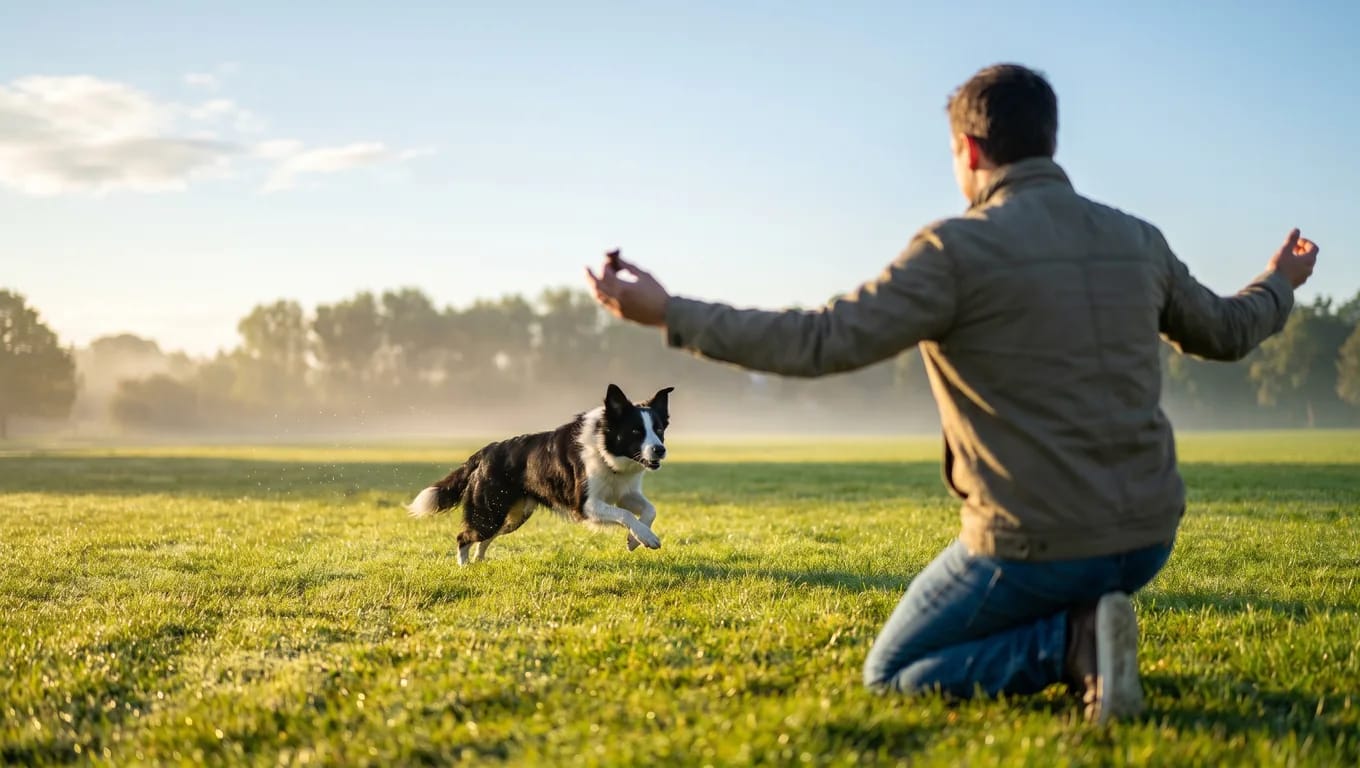
Two-person recalls are one of the best tools to teach a dog to come with real enthusiasm. Stand ten or fifteen steps apart, take turns calling your dog, and reward every arrival. Your dog learns to sprint between you, building speed and joy into the behavior. Training solo? Roll a treat away to send your dog off, then call as it swallows the last crumb, so the chase resets each time.
The aim of this stage is emotional, not mechanical. You want your dog to love the sound of the cue, so that the word itself becomes a promise of something good rather than an order to obey.
4Take It Outside on a Long Line
Now move to a quiet outdoor space with the long line attached. Let your dog sniff and explore, then call once. If your dog comes, throw a party and send them straight back to exploring, which is a reward in itself. If your dog ignores you, do not repeat the word. Stay cheerful, gently gather in the line, and reward the arrival anyway. Then read it as feedback: this spot was simply too distracting, so drop back to an easier one next time and rebuild.
The line guarantees your dog cannot self-reward by sprinting off after something better, which is exactly what protects the strength of the cue while it is still fragile.
5Generalize to New Places
Dogs do not generalize the way we do. A perfect recall in your garden does not automatically transfer to the park, the beach, or a friend's house. Practice the cue in as many different locations as you can, always starting easy in each new place. Every fresh environment is a mini reset, so be patient and pay well.
Proofing Recall Against Distractions
This is where most recalls fall apart, and where the work really pays off. Proofing means deliberately practicing around the things that normally pull your dog away, building from mild to extreme.
Rank your dog's distractions from easiest to hardest. For most dogs the ladder looks something like this:
- A scattered handful of food on the ground
- A familiar person walking past
- A toy being thrown
- Another calm dog at a distance
- Wildlife, scent trails, or dogs playing
Work each rung at a distance where your dog can still succeed, then gradually move closer. Keep the long line on for anything involving other animals. When you call your dog away from something tempting and pay with a genuine jackpot, you are teaching the single most important lesson in recall: coming back is more rewarding than whatever I left behind.
Never punish a dog that comes back slowly or after ignoring you the first time. From your dog's point of view, they are being scolded for arriving. Punish the return even once and you teach your dog that coming to you is risky. Reward every recall, every time, no matter how long it took.
Common Recall Mistakes That Quietly Sabotage You
Even motivated owners trip over the same handful of errors. Watch for these.
- Calling only to end the fun. If "come" reliably means the leash goes on and the walk is over, your dog learns to avoid it. Call your dog frequently during walks just to reward and release them again.
- Repeating the cue. Saying "come, come, come, COME" teaches your dog that the word is background noise. Say it once, then help your dog succeed with the long line.
- Fading the rewards too soon. Recall is a behavior you reward for life, at least intermittently. The day you stop paying is the day reliability starts to slip.
- Going off-leash too early. Dropping the long line before the behavior is solid hands your dog a string of failed recalls, and every failure weakens the cue.
- Training only in easy places. A dog that recalls perfectly in the kitchen but never in the park has not actually learned recall in the situations that matter.
What If My Dog Already Ignores Me?
If your current cue is poisoned by months of being ignored or used before unpleasant events, do not try to rehabilitate it. Pick a brand new word, charge it from scratch using Step 1, and treat it as a fresh start. A clean cue with a clean reward history is far easier than fighting an old one.
Keeping Recall Strong for Life
A reliable recall is not a box you tick once. Sprinkle a few surprise recalls into ordinary walks, keep the rewards varied and occasionally generous, and revisit the distraction ladder whenever you notice your dog getting sticky about coming back. Maintained well, recall stops being a chore and becomes the freedom that lets your dog run, sniff, and explore while you stay quietly confident they will turn back the moment you call.
Proofing around other dogs is also where a good obedience class earns its keep. A class gives you a controlled space full of calm, distance-managed dogs to practice around, plus a trainer who can spot the split-second timing slips that quietly erode a recall at home. That is precisely the distraction your dog needs, served at a level you can actually win at.
Want a trainer in your corner while you build a rock-solid recall? Find and book an obedience or recall class near you on Canlyo, track your dog's progress between sessions, and turn "come when called" into something you can actually rely on.