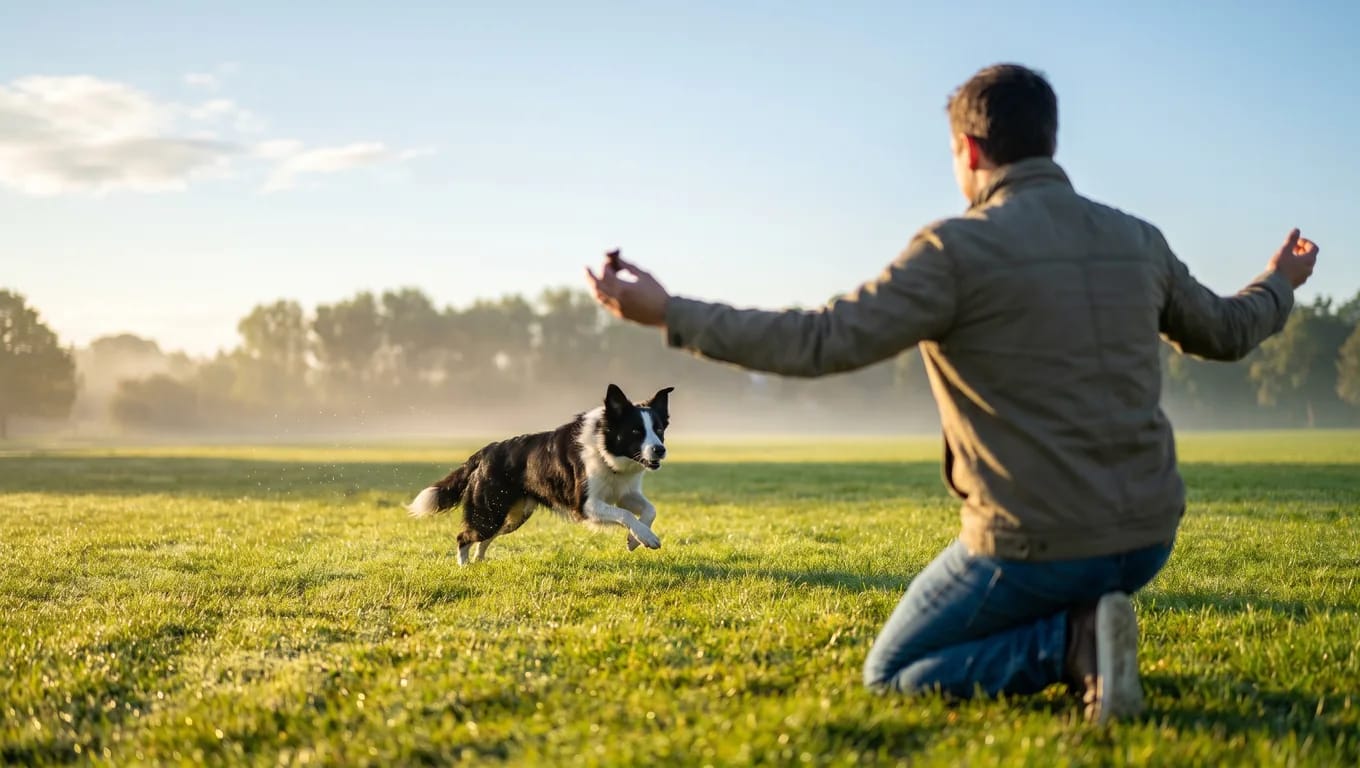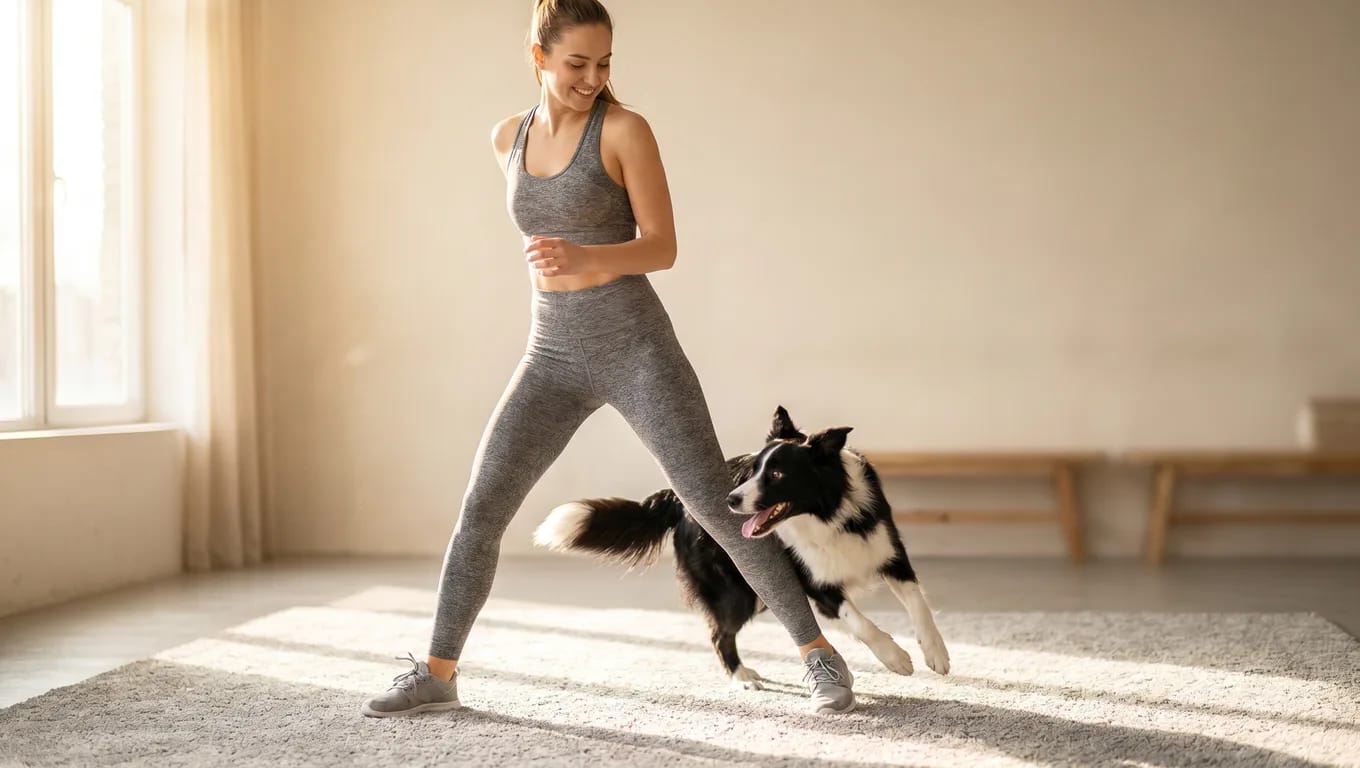
A handler walks into the ring, music starts, and the dog beside her seems to read her mind. A pivot here, a leg weave there, a spin that lands right on the beat, the two of them circling each other like they have done it a thousand times. They have. What looks like a dog who simply feels the music is really a stack of tiny behaviors, taught one rep at a time on a kitchen floor, then strung together until the seams disappear.
If you have ever watched a clip like that and thought "my dog could never do that," I want to gently disagree. Dog dancing is one of the most beginner-friendly dog sports there is, because it is built entirely from small tricks any dog can learn. This guide covers what canine freestyle actually is, the foundation moves that make up almost every routine, and how to teach your dog to dance starting today.
What Is Dog Dancing (Canine Freestyle)?
Dog dancing, more formally called canine freestyle, is a sport where a handler and dog perform a choreographed routine to music. Think of it as obedience and trick training set to a soundtrack, with the handler's footwork and the dog's movements woven together into something that genuinely looks like a dance.
It grew out of competitive obedience in the late 1980s and 1990s, when trainers began adding music and a bit of theater to precise heelwork. Today the sport has two main flavors:
- Heelwork to Music (HTM). The dog stays in close, varied heel positions throughout, moving with the handler around the body in a polished, technical style.
- Musical Freestyle. Far more open and creative. The dog can work at a distance, weave through legs, spin, bow, roll over, and move to the music with much more variety.
You will see both at competitions, but here is the part that matters for you: you do not need to compete to enjoy any of this. The same foundation moves that build a titled freestyle dog also make a wonderful rainy-day activity, a great way to tire out a clever brain, and a bonding game you can play in a small living room.
A common question from owners is simply: can dogs dance? Not in the human sense of feeling a rhythm, no. A trained dog is performing learned cues on the handler's signal, timed to land with the music. That is not a knock on the sport. It is the whole craft of it, and watching a dog do it well is no less delightful for knowing how it works.
Why Canine Freestyle Suits Almost Any Dog
People assume dog dancing to music is reserved for Border Collies and other flashy herding breeds. Those dogs do excel at it, but freestyle welcomes just about everyone. Because a routine is only a chain of small tricks, you can tailor every move to the dog in front of you:
- Older or stiff dogs shine in a slow, elegant routine of spins, nose touches, and gentle position changes, no jumping required.
- Small dogs look spectacular weaving figure-eights through your legs and pivoting in tight circles.
- Big, bouncy dogs get a real physical and mental workout from distance work and bigger movements.
- Shy or nervous dogs often blossom, because the training is reward-based and the dog sets the pace.
What freestyle really asks for is not athleticism but engagement: a dog who enjoys working with you. If your dog will happily take a treat and try things to earn another one, you have a freestyle dog in the making.
The Foundation Moves Every Routine Is Built From
Before any choreography, you teach the vocabulary. Almost every freestyle routine is assembled from a small library of foundation behaviors, so learn a handful and you can already build a short dance. Here are the building blocks I teach first, roughly from easiest to hardest:
| Move | What it looks like | Why it earns its place |
|---|---|---|
| Spin / Twist | Dog turns a full circle in each direction | Eye-catching, easy, works on the spot |
| Leg weave | Dog figures-eights through your legs as you step | The signature freestyle look |
| Pivot | Dog keeps front feet planted and walks the back end around | Builds rear-end awareness and tight heelwork |
| Bow | Front down, back end up, like a play bow | A natural, crowd-pleasing finish |
| Back up | Dog walks backward on cue | Adds direction and contrast to a routine |
| Through / under | Dog passes between or under your legs | Great transition move, flashy and simple |
| Hand touch | Dog touches its nose to your palm | The glue that links moves together smoothly |
You do not need all of these to start. Spin, leg weave, and a bow alone are enough to put together a charming thirty-second routine. Everything else you add over time.
The unsung hero on that list is the hand touch (also called a nose target). It seems too simple to matter, but it becomes the invisible thread of a routine: a way to draw your dog into position, reset between tricks, and move smoothly from one move to the next without it looking like you are luring with food.
How to Teach a Dog to Dance, Step by Step
Here is the progression I use with students who are completely new to the sport. The key principle for how to teach a dog to dance is to separate the skills: teach the moves first, add the music second, and only chain them into a routine once each piece is solid and fun on its own.
Work in short sessions, two or three minutes at a time, a few times a day. Reward generously and stop while your dog is still keen.
1Build a clear marker and reward habit
Before any tricks, your dog needs a marker: a word like "yes" or a clicker that means "that exact thing earned a reward." Say it the instant your dog does what you want, then deliver a treat. This precision is what lets you capture and shape movement later. Spend a day or two charging the marker so it clearly predicts good things.
2Teach your first move with a lure
Pick the spin, because it is the easiest early win. Hold a treat at your dog's nose and slowly draw a circle in the air; most dogs follow the treat all the way around. The moment they complete the turn, mark and reward.
Once the dog circles reliably, fade the lure. Make the same motion with an empty hand, reward from the other hand, then gradually shrink the gesture into a small cue. Add a word ("spin") just before the movement. Faded lures are the difference between a dog chasing food and a dog performing a cue.
3Add a second move and put it on cue
Now teach the leg weave. With a dog on your left, hold a treat in your right hand, pass it between your legs from behind, and lure the dog through as you take a step. Mark and reward on the other side, then repeat with the other leg to build a figure-eight. Add a cue word once the pattern is smooth, and fade the lure exactly as you did with the spin.
Repeat this same teach-then-fade process for a third move, such as a bow or a hand touch. You now have a small vocabulary of behaviors, each on its own cue.
4Choose your music and find the tempo
This is where dog dancing to music comes alive. Pick a track you genuinely enjoy that matches your dog's natural pace: a small, quick dog suits faster music, a large or mellow dog suits something slower and more deliberate.
To find the right tempo, walk your dog through a spin or two with the music playing and watch where the movement wants to land. If you keep rushing the dog to catch up, the track is too fast; if the moves feel like they drag, it is too slow. You are not trying to hit every beat like a metronome. You are looking for a rhythm that flatters how your dog already moves, so the tricks fall near the beat on their own.
5Chain moves into a short routine
Now connect three or four moves into a tiny sequence: hand touch, spin, leg weave, bow. Practice the transitions, not just the tricks, because the smoothness between moves is what makes it look like dancing. Use your hand touch to glue the pieces together.
Keep your first routine short, around thirty seconds. A clean, confident half-minute beats a sloppy three-minute marathon every time.
Skip the jumping, weaving, and tight pivots with puppies whose growth plates have not closed, and with senior or stiff dogs. Freestyle should never strain a body. Keep early sessions on a non-slip surface, never a slick wood or tile floor where a dog can splay and injure a leg.
Common Beginner Mistakes (and Easy Fixes)
Almost every newcomer to canine freestyle hits the same few snags. None are serious, and all have simple fixes.
- Luring forever. If your hand always holds food, your dog follows food, not cues. Fade the lure within the first several reps of a new move.
- Sessions that run too long. A bored or frustrated dog learns to dread training. End on a win, while your dog still wants more.
- Chaining moves too soon. String tricks together before each one is solid and the whole routine wobbles. Get every move clean in isolation first.
- Choosing music for you, not your dog. A track that fights your dog's natural rhythm makes everything harder. Let your dog's pace lead the choice.
- Training on slippery floors. A dog that cannot grip will not move confidently, and risks injury. Lay down a rug or yoga mat.
Fix these and progress comes quickly, because freestyle rewards consistency far more than talent.
A Realistic Timeline for Your First Routine
Every dog learns at its own speed, but here is roughly how it unfolds for a keen dog working in short daily sessions.
| Phase | What you are working on | Typical timeframe |
|---|---|---|
| Foundation | Marker training, first lured move (spin) | Week 1 |
| Building vocabulary | Two or three moves on cue, lures faded | Weeks 1-3 |
| Adding music | Choosing a track, matching tempo to your dog | Weeks 2-4 |
| First routine | Chaining moves, polishing transitions | Month 2 and beyond |
If you stall, the answer is almost always to make it easier: go back to one move, shorten the session, raise the value of your rewards, and rebuild confidence before you ask for more.
Where to Take It Next
You can absolutely teach the basics of dog dancing at home, and many people happily keep it as a living-room hobby forever. But if you catch the bug, the fastest way to improve is to train with people who already know the craft. A beginner canine freestyle class gives you something a video never can: an experienced eye on your timing and footwork, help untangling a move your dog finds confusing, and the gentle structure of showing up each week. It is also a friendly, low-pressure corner of the dog world, full of handlers who light up when a newcomer's dog nails its first leg weave.
Ready to turn those kitchen-floor spins into a real routine? Find and book a beginner canine freestyle class near you on Canlyo, get matched with a trainer who can guide your first steps, and track your dog's progress as your dance comes together one move at a time.
Canine freestyle looks like magic and is really just patience set to music. Teach the small moves well, fade your lures, let your dog's pace choose the song, and string it all together slowly. Do that, and one ordinary evening the music will start, your dog will turn toward you ready to work, and the two of you will move together in a way that genuinely looks like dancing.