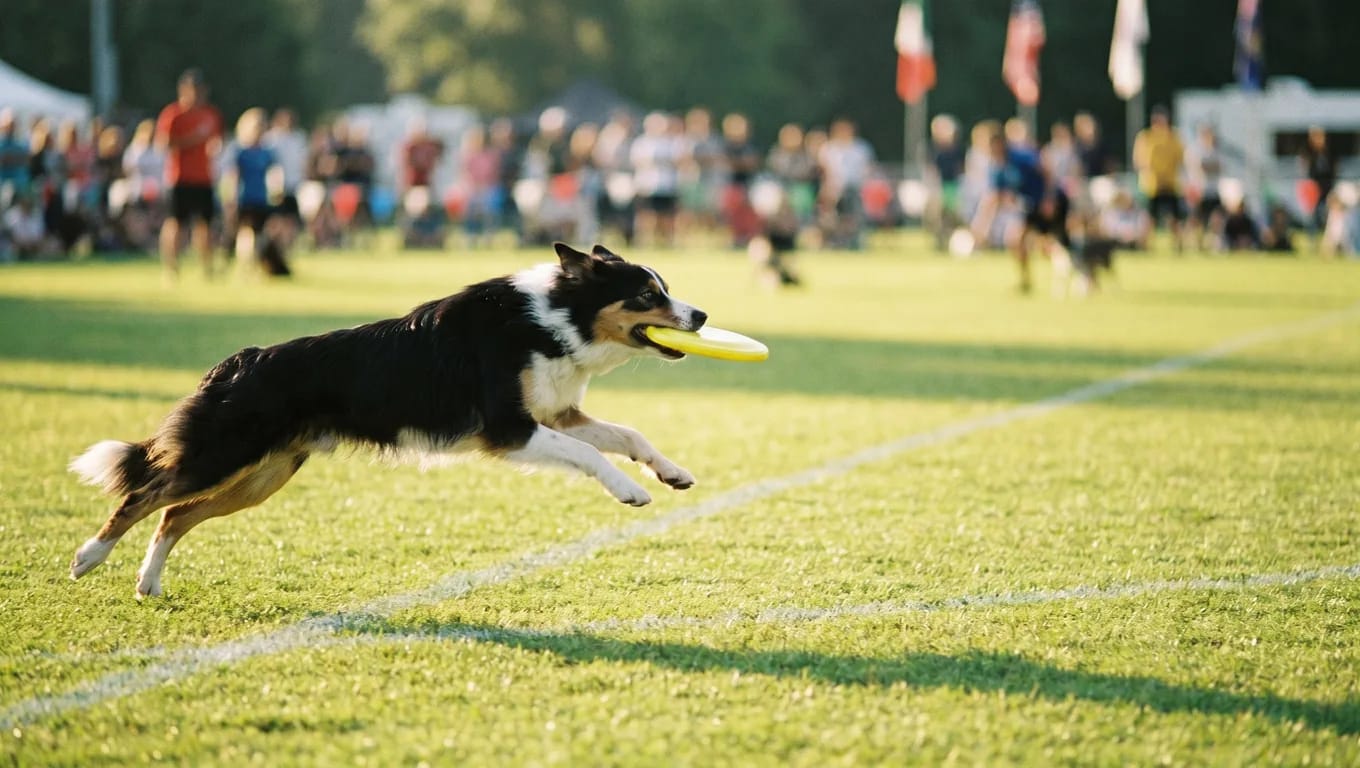
Picture a 70-meter field, a judge with a stopwatch, and a Border Collie crouched flat in the grass while its handler cocks an arm back. Sixty seconds later the dog has sprinted out and back five times, snatching discs at full stride, and the scorecard reads like a math problem. That is disc dog as a competitive sport, and it is a very different animal from the relaxed game of fetch you might play in the park. The throws are measured, the catches are scored, and the best teams make rehearsed routines look like improvisation.
If you have already taught your dog the basics and you are wondering what a real competition actually looks like, which breeds tend to dominate the leaderboards, and what gear separates a backyard toy from a tournament-legal disc, this guide is for you. We will walk through the formats judges use, the traits that make the best frisbee dogs, and how to choose discs that keep your athlete sound for years.
New to discs entirely? This article covers the sport. If your dog cannot yet catch a flying disc reliably, start with our step-by-step beginner guide, How to Teach Your Dog to Catch a Frisbee, and come back here when you are ready to compete.
What disc dog competition actually involves
Strip away the spectacle and disc dog is simple to define: a handler throws flying discs, a dog catches and brings them back, and judges put a number on the result. What gets measured is where the difference lies. Depending on the event, disc dogs earn points for accuracy, distance, difficulty, and showmanship, and most clubs and federations build those points into two core formats. Almost every event you enter is a version of one or both.
The sport is welcoming in a way agility or competitive obedience often are not. There are usually no breed restrictions, mixed breeds are common on the podium, and many organizations run beginner and "non-competitive" divisions specifically so new teams can step onto the field without pressure. You do not need a pedigree or a club membership to start. You need a sound dog, a few good discs, and a willingness to learn the rhythm of timed play.
Toss-and-fetch (distance and accuracy)
Toss-and-fetch, sometimes called "throw and catch" or "mini-distance," is the entry point for most teams and the easiest format to grasp.
- You get a fixed time, usually 60 seconds, to complete as many throws and catches as possible.
- The field is marked with zones at increasing distances. A catch farther from the throwing line scores more points.
- Bonus points are awarded when the dog has all four feet off the ground at the moment of the catch.
- You typically use a single disc, so your dog must bring it back quickly for the next throw. Speed of return becomes part of your score.
Toss-and-fetch rewards a fast retrieve, a reliable catch, and your own ability to throw far and accurately under a ticking clock. It is the format I steer every new student toward first, because it isolates the two skills that matter most before you add choreography.
Freestyle (the choreographed routine)
Freestyle is the format that draws crowds. You and your dog perform a routine, usually 90 seconds to two minutes, set to music, using multiple discs and a deliberate sequence of tricks.
Judges score freestyle on several axes that vary slightly by organization but generally include:
- Difficulty: how technically demanding the throws and catches are.
- Execution: clean catches, controlled landings, and few drops.
- Showmanship and flow: how well the routine entertains and how seamlessly tricks connect.
- Dog and team: the dog's drive, athleticism, and the partnership between you.
Freestyle includes signature moves you have probably seen in highlight reels: vaults, where the dog launches off the handler's body to catch a disc in the air; flips, where the dog rotates to take a throw; and multiples, rapid sequences of several catches in a row. It is athletic, creative, and genuinely hard. Most teams spend months building a single polished minute.
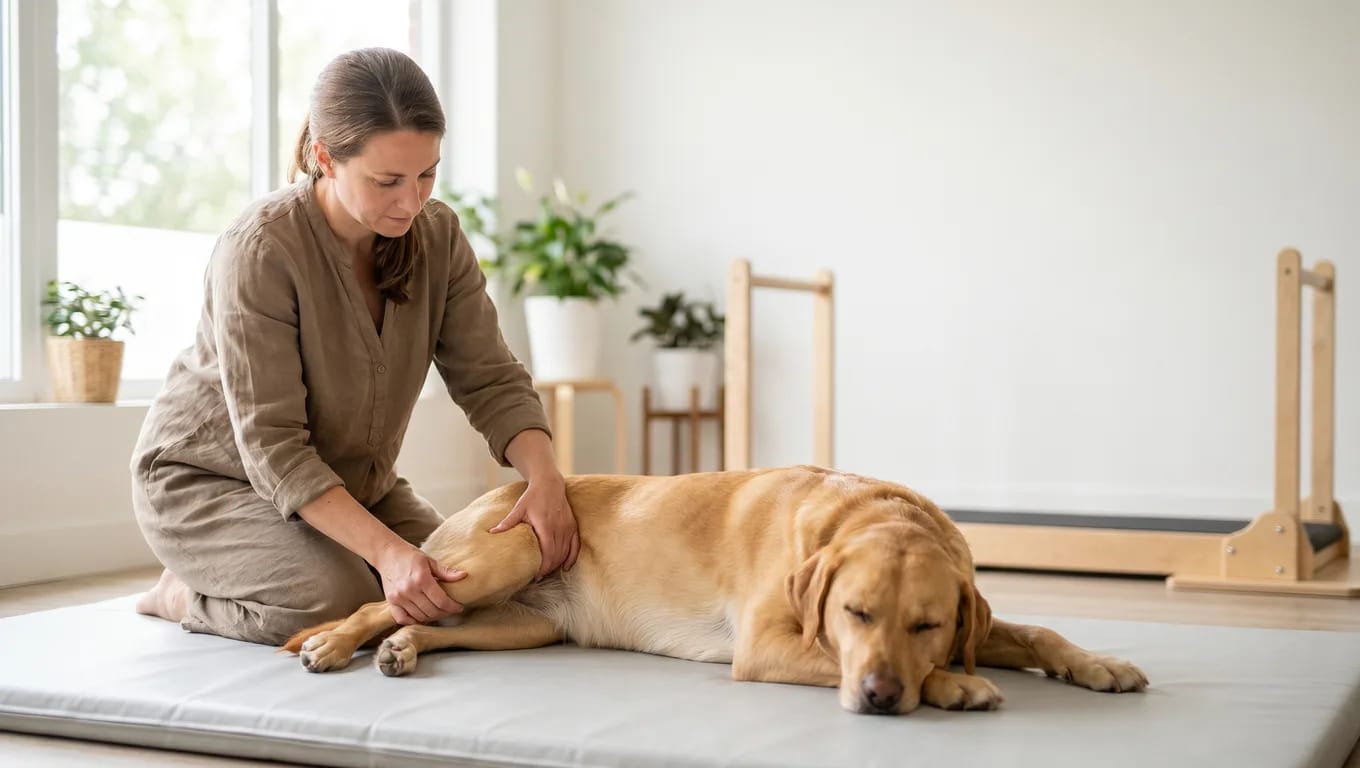
Freestyle vaults and high catches put serious force through a dog's spine, shoulders, and the long bones of the legs on landing. Do not teach vaults to a puppy whose growth plates have not closed, usually around 12-18 months and later in large breeds. Get a vet or canine physio to clear your dog, build a real warm-up routine, and keep early training on forgiving surfaces. The sport is only fun if your dog stays sound.
What makes the best frisbee dogs
There is no single "disc breed," and one of the joys of the sport is how many different dogs succeed at it. That said, the dogs that consistently reach the top of dog frisbee competition leaderboards share a recognizable set of traits rather than a single pedigree.
The best frisbee dogs tend to combine:
- High toy drive. The disc has to be the best thing in the world. A dog that will work all day for a thrown toy has the engine the sport runs on.
- Athleticism and body awareness. Mid-air catches, twisting flips, and clean landings demand a dog that knows where its feet are.
- Trainability and focus. Freestyle is choreography. The dog has to learn sequences and hold attention on you in a noisy, distracting environment.
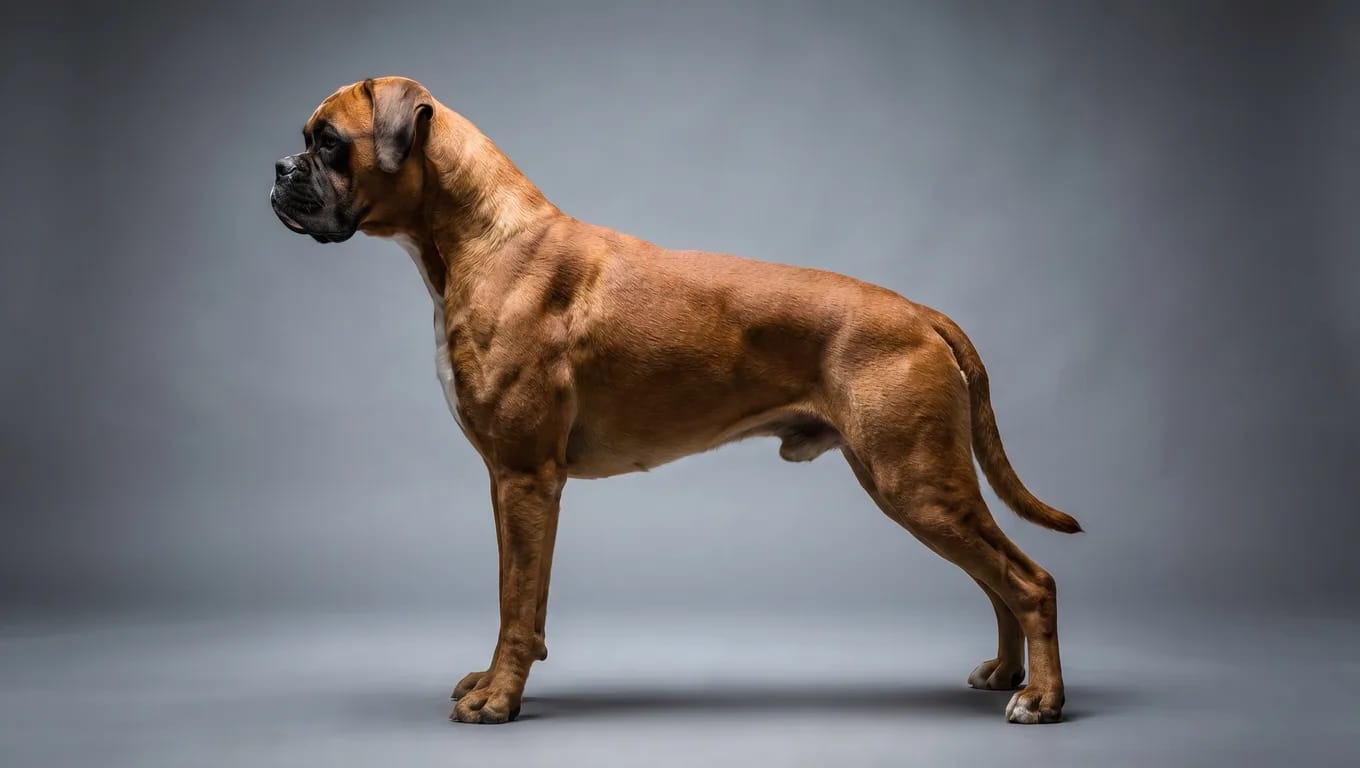
- A medium, agile build. Most elite disc dogs weigh roughly 13-23 kilograms (about 30-50 pounds), light enough to be quick and to land safely, sturdy enough to absorb the impact.
- Sound structure. Good joints and a moderate frame matter more than any breed label, because this is a high-impact sport.
Breeds and types that tend to excel
| Breed or type | Why it suits the sport | Watch for |
|---|---|---|
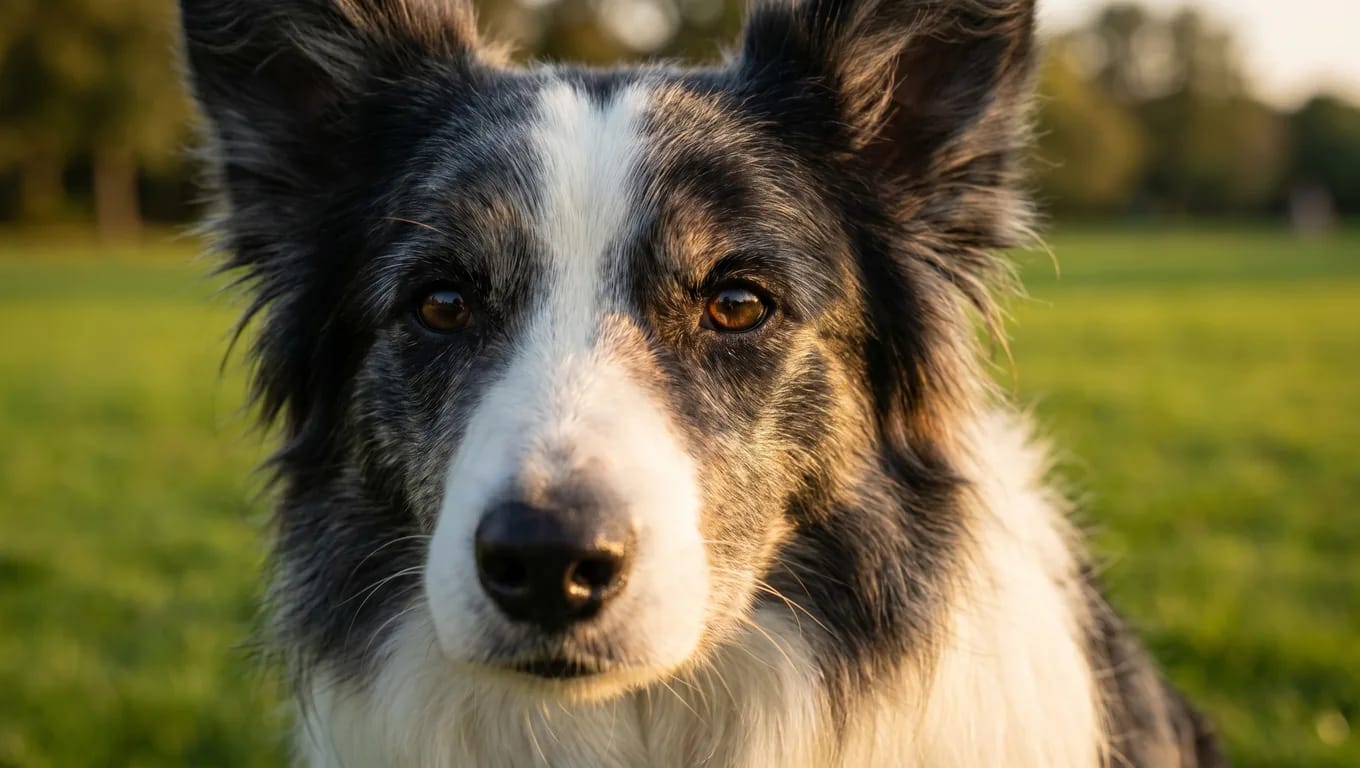
| Border Collie | Elite drive, agility, and trainability; the classic disc dog | Can be intense; needs an off switch |
| Australian Shepherd | Athletic, biddable, strong work ethic | Manage shoulder and joint stress |
| Whippet and lurcher types | Blazing speed and natural air for big catches | Lower retrieve drive; thin-skinned on hard ground |
| Working-line Labrador / retriever crosses | Love of carrying, sound build, willing nature | Watch weight; heavier dogs land harder |
| Mixed-breed "all-American" sport dogs | Often the best of several worlds; very common on podiums | Assess the individual, not the label |
The honest takeaway is that frisbee dogs are made far more by temperament and conditioning than by breed. I have seen scruffy shelter mixes outscore textbook Border Collies simply because they wanted it more and were kept fitter. Choose drive, soundness, and a dog that loves to chase, and you have your raw material.
Flat-faced breeds such as Bulldogs and Pugs, and giant breeds prone to joint issues, are poorly suited to the impact and stamina of competitive disc work. They can absolutely enjoy gentle rollers and low catches for fun, but the high-flying sport is not a kind fit for their bodies.
How to choose safe flying discs for the sport
At a competitive level, your disc is athletic equipment, not a toy, and the wrong choice will either lose you points or hurt your dog. There is a real tension here: discs soft enough to be gentle on a dog's mouth often do not fly far or true, while rigid, long-flying discs can chip teeth and bruise gums. Serious handlers manage that tension deliberately.
Match the disc to the job
Most competitive teams carry several disc types and use them for different purposes:
- Training and warm-up discs: softer, more flexible models that are kind on the mouth for the dozens of repetitions you do before and outside competition.
- Distance and competition discs: firmer, often weighted around 100-120 grams for predictable, long, flat flight in toss-and-fetch. These fly true but demand a confident, well-conditioned catcher.
- Lightweight freestyle discs: lighter and floatier, easier for the dog to read and grab during rapid multiples and flips where flight time matters more than distance.
What to look for, and what to avoid
When you are choosing dog frisbee equipment for the sport, prioritize the following:
- Purpose-built canine discs. Use discs made for dogs or recognized competition models. A rigid disc-golf driver or a hard beach frisbee is built for a human grip and a long throw, and that same stiffness chips teeth on the catch.
- A bite-friendly rim. Look for a slightly flexible edge or a softer plastic blend that gives a little against teeth on the catch.
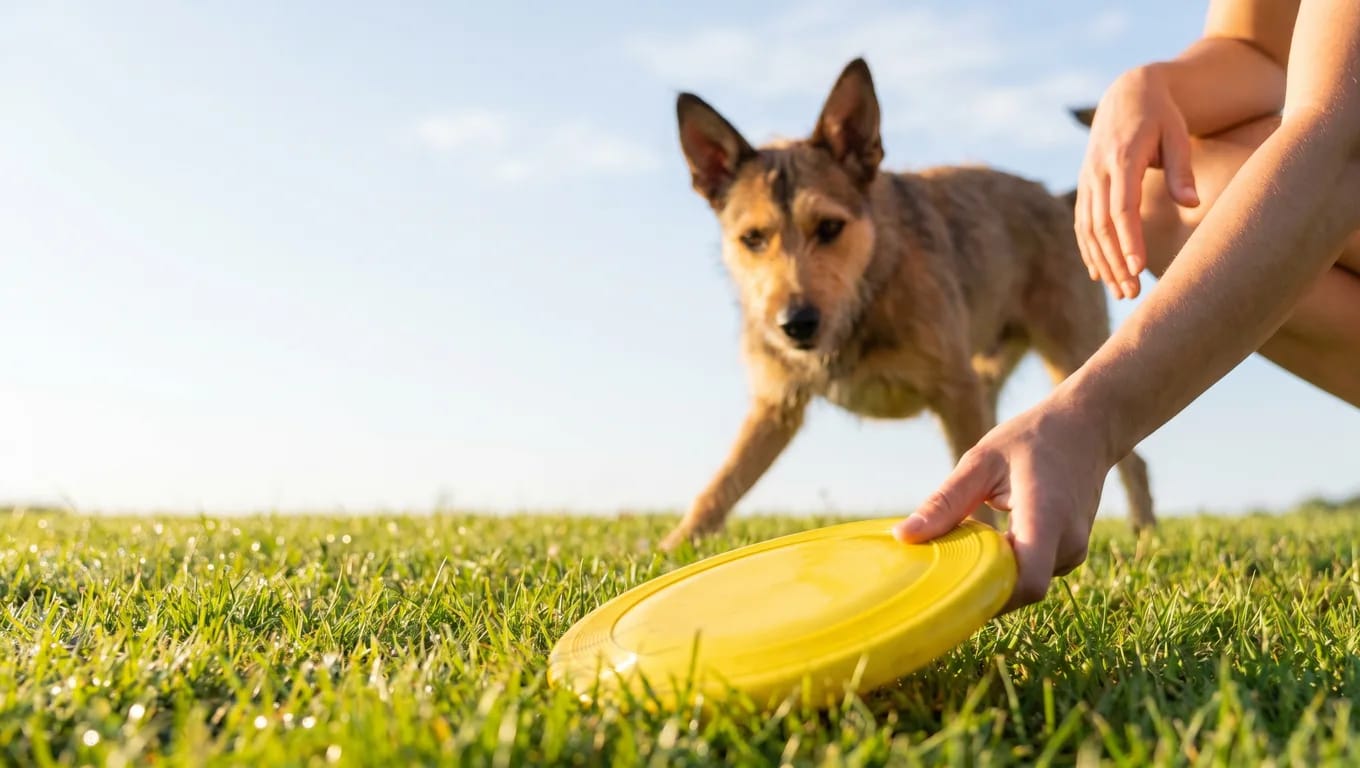
- Visibility. Dogs see blue and yellow most clearly. A bright disc against grass or sky helps your dog track and time the catch.
- Federation legality. If you plan to compete, check your organization's approved disc list before buying. Rules on size, weight, and approved models vary between federations.
- Condition. Retire any disc with cracks, sharp chips, or warping. A damaged rim is both a flight problem and an injury risk.
Keep a rotation of matched discs in your bag so a worn one never forces you to use a sharp one, and so you can train multiples without stopping. The disc that wins distance points is rarely the disc you want for a hundred warm-up catches.
Getting started in the sport
If the formats and the gear have you hooked, the path in is more gradual than the highlight videos suggest. A sensible progression:
- Confirm the foundation. Your dog should catch flat throws reliably, retrieve at speed, and release the disc on cue before you add any pressure.
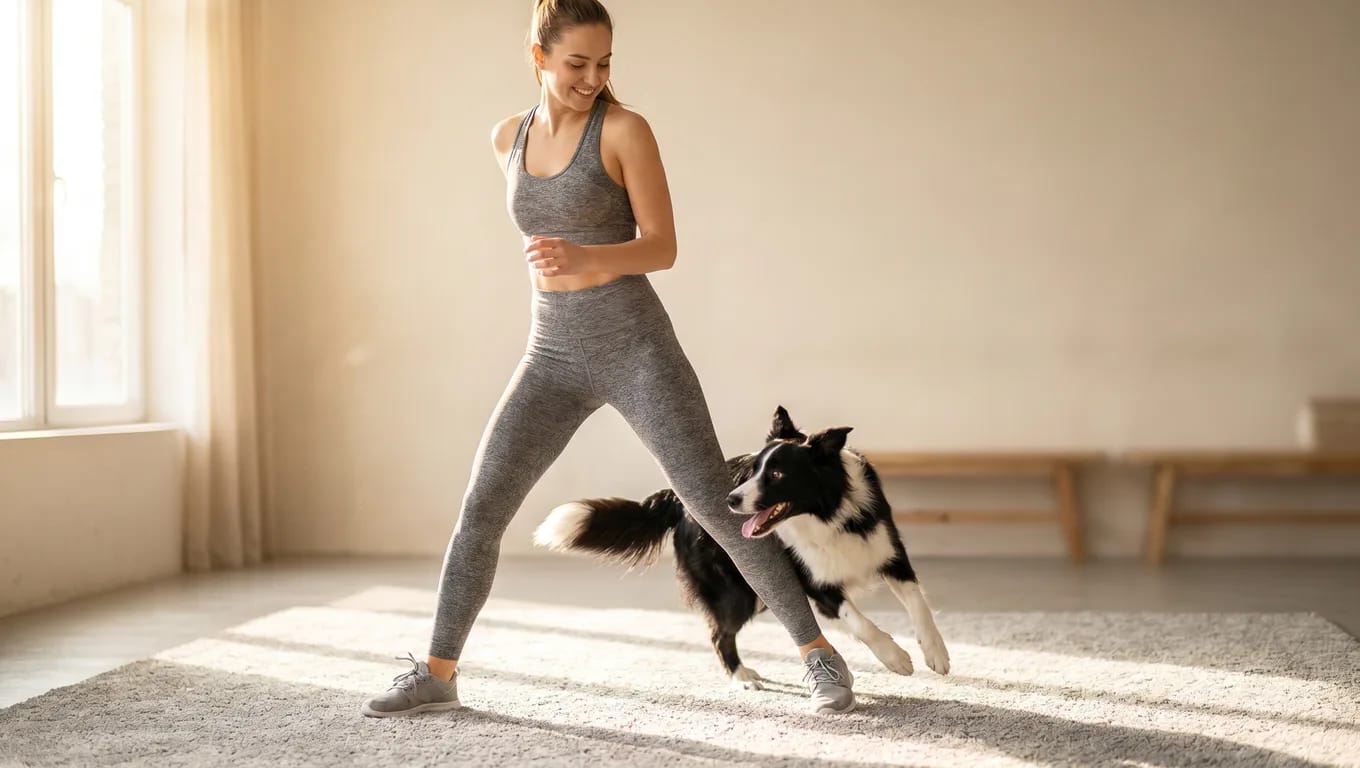
- Build fitness first. Conditioning, core strength, and a proper warm-up protect the joints that the sport will load. This comes before vaults, not after.
- Learn toss-and-fetch. Practice timed sets at marked distances so both your throwing and your dog's return get sharper under a clock.
- Find a club or class. Disc dog is a community sport. Experienced handlers will fix your throwing mechanics in an afternoon and keep your dog's training safe.
- Enter a beginner division. Most events have low-pressure classes built for exactly this moment. Your first competition is about learning the rhythm, not winning.
The leap from a backyard catch to a scored routine is mostly about structure, safety, and reps. Done patiently, disc dog training gives your dog a real job, serious exercise, and a sport the two of you build together over years.
Ready to turn catches into competition? Training under an experienced coach is the fastest way to sharpen your throws, keep your dog sound, and learn the formats from people who compete. Find and book a disc dog class near you on Canlyo, track your dog's progress between sessions, and step onto the field with a partner who is genuinely ready.