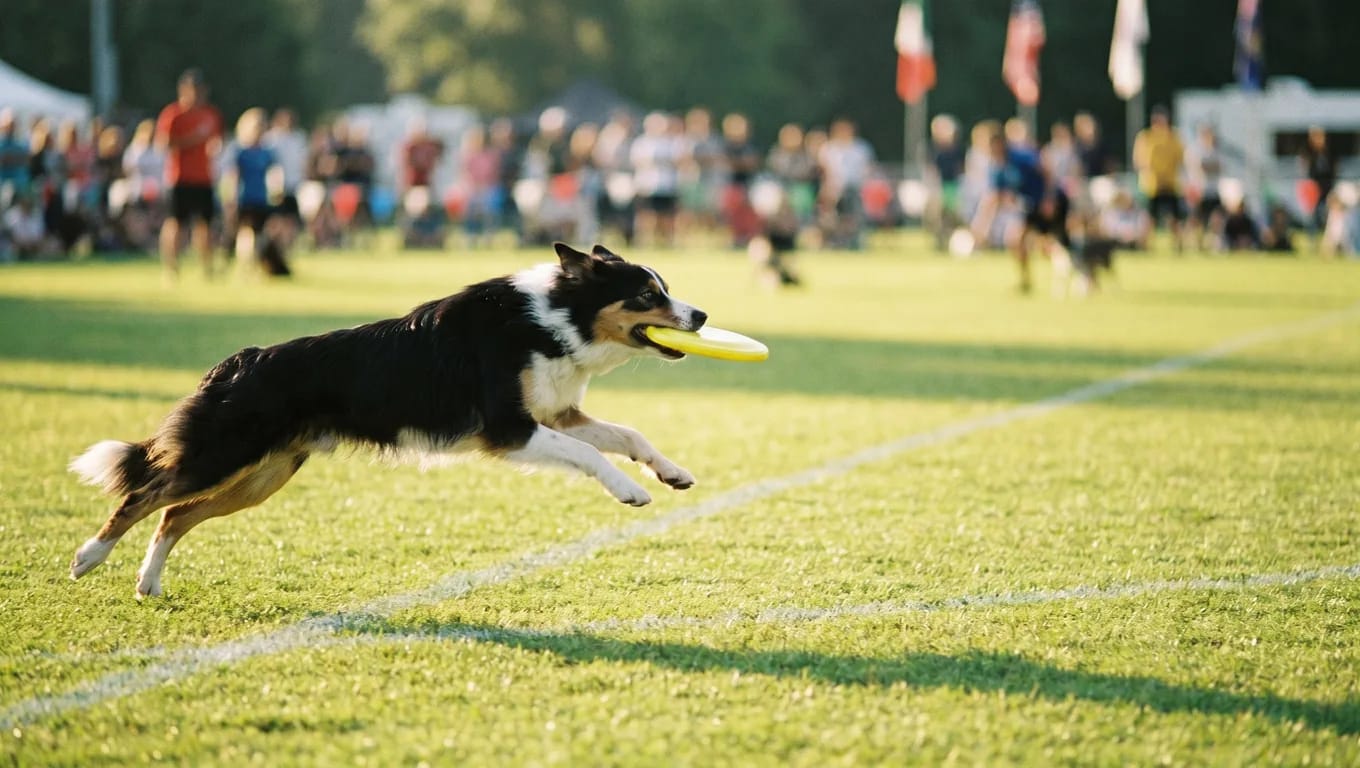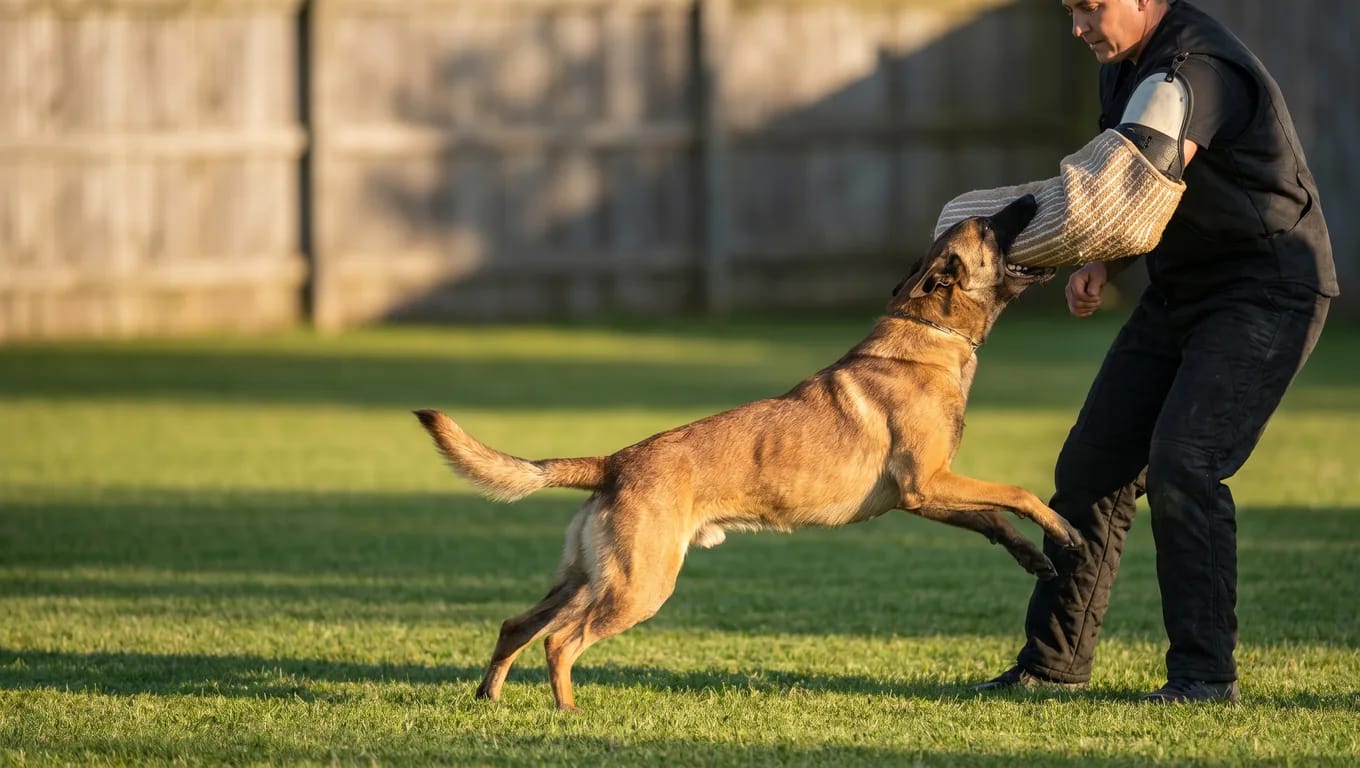
Watch a good protection dog and the bite is almost the least interesting part. A Malinois flies down the field, locks onto a padded sleeve with a full, calm grip, and hangs there breathing steadily while a decoy works it. Then the handler says one quiet word and the dog lets go, spins back into a clean heel, and waits. The crowd remembers the flight and the grip. Trainers remember the release. That single moment, a dog at full intensity switching off on cue, is what bite work training is really about, and it is the opposite of what most people picture.
If you have watched IGP or a French Ring trial and wondered how a dog learns to bite hard and let go on command, this guide is for you. We will cover what dog bite work really is, why the decoy matters more than almost anything else, the bite work equipment you will see on the field, and the safety rules that hold the whole thing together. This is the protection phase up close, so if you are still fuzzy on the sport itself, start with our explainers on what Schutzhund and IGP are and on how the three phases are trained, then come back here.
What is bite work in protection sports?
Bite work is the trained, rule-bound part of protection sports where a dog grips a target on cue, holds with control, and releases instantly when its handler commands. In IGP it is the third phase, alongside tracking and obedience. In ring sports such as French Ring, Mondioring, and Belgian Ring, it forms the bulk of the competition. Different rule sets, same core skill: a dog using its mouth as a precise tool, under complete control, against a person trained to receive that bite safely.
The thing newcomers consistently get wrong is the goal. Bite work does not train a dog to be dangerous. It trains a dog to be clear. A sport dog learns that the bite is a game with strict rules: grip the equipment, never the person; grip full and calm, not frantic and shallow; and out the instant you are told. A dog that bites out of fear, targets skin instead of equipment, or will not release is not an advanced dog, it is a failed one, and judges penalize exactly those faults.
Sport bite versus real aggression
It helps to separate two things people lump together.
- A sport bite is driven by prey and play. The dog sees the sleeve or suit as a target to chase, catch, and possess, like a tug toy taken to its athletic extreme. It is confident and switchable.
- Genuine aggression is driven by fear or conflict. It is defensive, erratic, hard to control, and has no place in the sport.
Good dog bite work is built almost entirely on the first. A skilled decoy spends years learning to bring out clean, confident prey-driven grips and to keep stress out of the picture, because a stressed dog bites worse, not better. If you want to understand the engine underneath all of this, our piece on prey drive in dogs explains the instinct the sport channels.
Bite sports and "guard dog" or personal-protection training are not the same activity and should never be confused. Sport bite work is a controlled game with a willing, trained decoy and a referee's rulebook. It is not a method for making a dog protect a house or a person, and treating it that way is how dogs and people get hurt.
What does the decoy do, and why does it matter so much?
If there is one person who makes or breaks a protection dog, it is not the handler. It is the decoy. In IGP this person is usually called the helper; in ring sports the term is decoy; some clubs say agitator or catcher. Whatever the label, this is the trained individual who wears the equipment, presents the bite, and shapes the dog's grip, drive, and confidence session by session.
People assume the decoy's job is to get bitten. That is the easy part. The real job is reading the dog in real time and adjusting pressure so the dog always succeeds at the right level.
Reading and building the dog
A good dog decoy is constantly asking what this dog needs in this moment. Push a green dog too hard and you teach it that biting is frightening. Let a confident dog win too easily forever and you never build the depth of grip the sport rewards. The decoy's craft is calibrating that pressure:
- Building drive in a young or soft dog by being prey: moving away, making the sleeve exciting, letting the dog chase and win.
- Building confidence by letting the dog win the equipment and carry it off as a prize, so it learns the bite always pays.
- Adding controlled pressure for a mature dog by facing it and applying stick taps or verbal intensity, so it grips calmly even when the picture turns serious.
- Shaping the grip itself, rewarding a full, deep, calm mouth and quietly refusing a shallow, chewy one.
This is why you cannot learn the sport, and absolutely cannot train bite work, from videos at home. The decoy's read of the dog is a skill built over years, and the wrong read at the wrong moment can damage a dog's confidence for good. Beginners always start by handling their dog while an experienced helper does the catching, never the reverse.
Never let an untrained friend "play decoy" with a sleeve in the backyard. A clumsy catch can hurt the dog's mouth, teeth, or neck, frighten it off biting entirely, or teach shallow and dangerous gripping habits. Decoy work is a trained role for a reason. Learn it only under a qualified club and an experienced helper.
What bite work equipment is used?
Part of what keeps bite sports safe is the gear. The bite work equipment is engineered so the dog always bites a designed target and never the person underneath, and so the decoy can take hundreds of bites a year without injury. You will progress through different pieces as the dog matures.
From puppy rag to trial sleeve
Equipment scales with the dog. A young puppy never starts on a hard sleeve; it starts on something soft and easy to grip, and the gear gets more demanding as the dog's mouth, drive, and confidence develop.
| Equipment | What it is | Typical stage |
|---|---|---|
| Rag / tug | A soft cloth or burlap roll the puppy chases and wins | Foundation, building prey drive |
| Puppy sleeve | A light, soft sleeve for a young dog's first real grips | Early development |
| Bite pillow / bite wedge | A padded cushion held in the hands, easy to target | Transition, shaping a full grip |
| Trial / hard sleeve | The firm padded sleeve used in IGP, with a defined bite bar | Advanced and competition |
| Hidden sleeve | A sleeve worn under clothing, so the dog bites a normal-looking arm | Higher-level and ring work |
| Bite suit | A full padded suit allowing bites to legs, arms, and body | French Ring, Mondioring, advanced |
The other essential piece is the soft stick or padded clatter stick, which the decoy uses to apply light taps and noise as controlled pressure. It is never used to hurt the dog; it tests whether the dog can keep a calm, full grip while something busy and slightly threatening happens nearby. A confident sport dog ignores it completely.
Why the gear keeps everyone safe
The point of all this equipment is simple: the dog learns from day one to bite the thing, not the person. A trial sleeve has a clear bite bar to target, a suit gives padded zones across the body, and even the hidden sleeve, which looks like a bare arm, is solid protection underneath. Combined with a decoy who knows how to present and absorb a bite, this is why a well-run bite session is far safer than it looks from the sidelines.
A reliable out, the release on command, is the single most important behavior in the entire sport, and it is trained with as much care as the bite itself. A dog that grips beautifully but will not let go is a serious problem, not an impressive one. Good clubs build the out early and never compromise on it.
How is bite work trained safely, and where do you start?
The training arc runs in one direction: build a confident, drivey, clear-headed bite first, then layer control on top. Reverse that, or rush it, and you get a dog that is either frantic or shut down. None of the steps below are things you teach alone; they are here so you know what good club training looks like from the outside.
1Foundation in drive and play
Long before any sleeve, the work is engagement, tug, and play. You build a dog that loves to chase, grip, and possess a toy, and that loves working with you. This is ordinary, joyful training, and it is the bedrock the entire bite is built on.
2First grips on soft equipment
With an experienced helper, the dog takes its first real bites on a rag, puppy sleeve, or bite pillow. The decoy plays prey, lets the dog win, and rewards a full, calm grip. The aim at this stage is pure confidence: biting the equipment is safe, fun, and always pays off.
3Building grip, targeting, and the out
As the dog matures, the decoy shapes a deeper, fuller grip and clean targeting of the bite bar or suit zone, while the handler builds a rock-solid out and the bark-and-hold. Control and intensity grow together here, each kept in balance with the other.
4Adding pressure and proofing
Only with a mature, confident dog does the decoy introduce real pressure: facing the dog, stick taps on the equipment, more serious body language. The dog learns to stay calm and full under that picture while still obeying the handler. This stage separates a finished protection dog from a promising young one, and it can take years.
Finding the right club and helper
Because every step depends on a skilled decoy reading your dog correctly, finding the right people matters more than any technique. When you visit a club, watch for:
- A helper who adjusts to each dog rather than putting every dog under the same pressure.
- Confident, happy dogs that grip full and calm and out cleanly on the first command.
- A foundation built on drive and reward, not on intimidating or "toughening up" the dog.
- A welcoming, patient approach to beginners and a clear sense of when a dog is, and is not, ready for the next step.
The bite that looks so dramatic in a trial is, underneath, one of the most controlled things a dog ever learns to do. It is built slowly, by a skilled decoy, on good equipment, with the release trained as carefully as the grip. Done right, it produces a confident, clear-headed, deeply trained dog, never a dangerous one.
Want to see real bite work up close and learn it the right way? You cannot teach this at home, so find and book a beginner IGP, Schutzhund, or ring-sport class near you on Canlyo, meet a qualified helper, and watch how a controlled sport bite is actually built before you decide if it is for you and your dog.