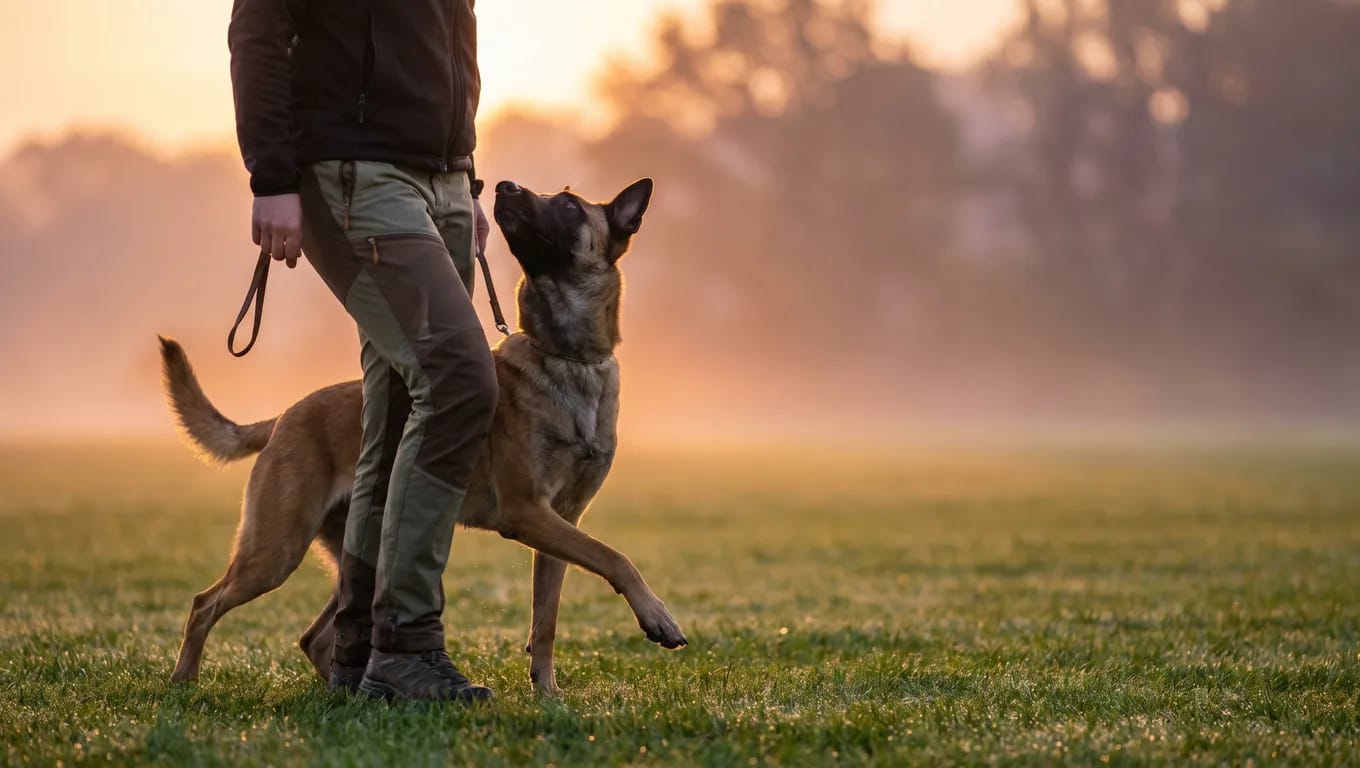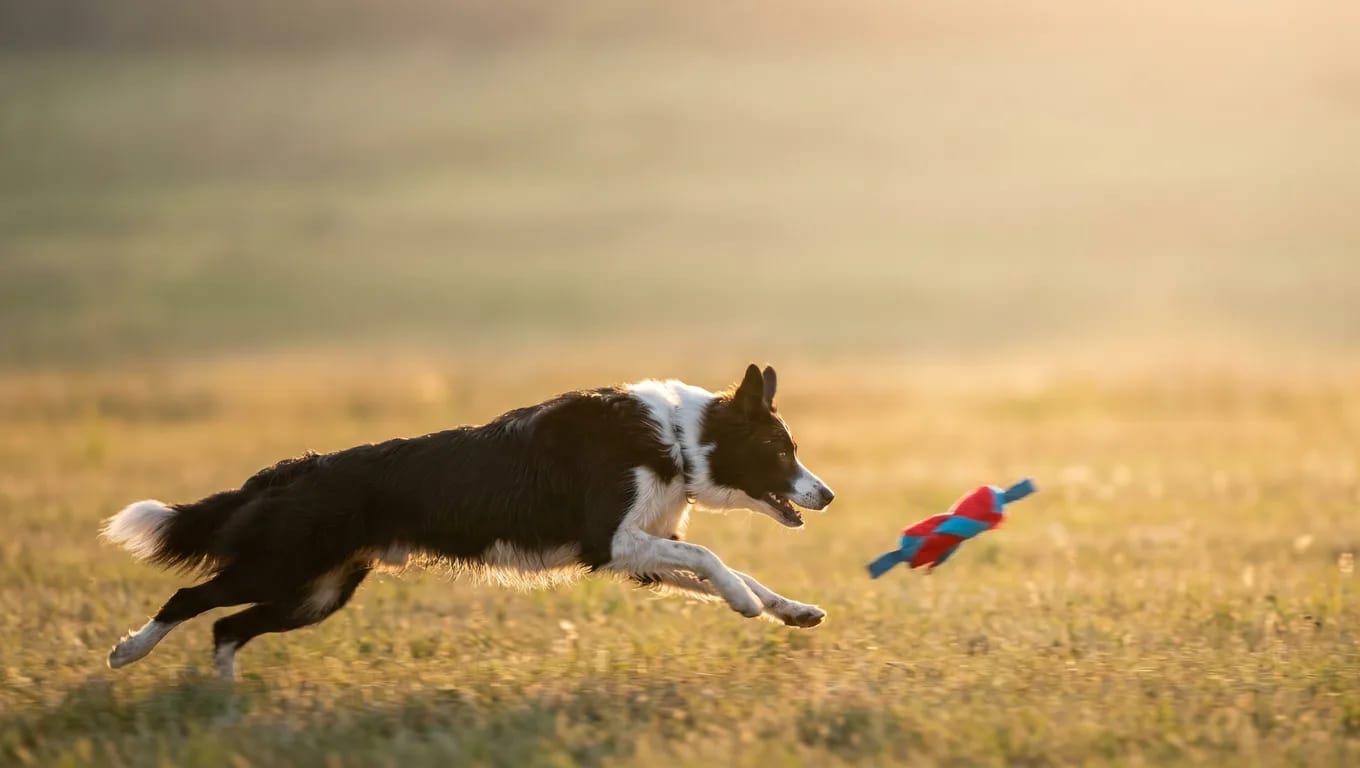
Picture your dog dozing on the sofa, completely at ease, until a pigeon lands on the lawn. In a heartbeat the body stiffens, the ears swivel forward, the weight shifts to the front legs, and the soft companion you knew a second ago is gone. What you are watching is not bad behavior or a lapse in training. It is an ancient piece of wiring switching on, the same instinct that kept your dog's ancestors fed. That instinct is prey drive, and understanding it changes how you live with the dog at the other end of the leash.
This guide explains what prey drive actually is, why some dogs have buckets of it and others barely any, and how to manage it without trying to erase a part of who your dog is. The goal is not a dog that feels nothing. It is a dog who can feel the pull and still listen to you.
What is prey drive in dogs?
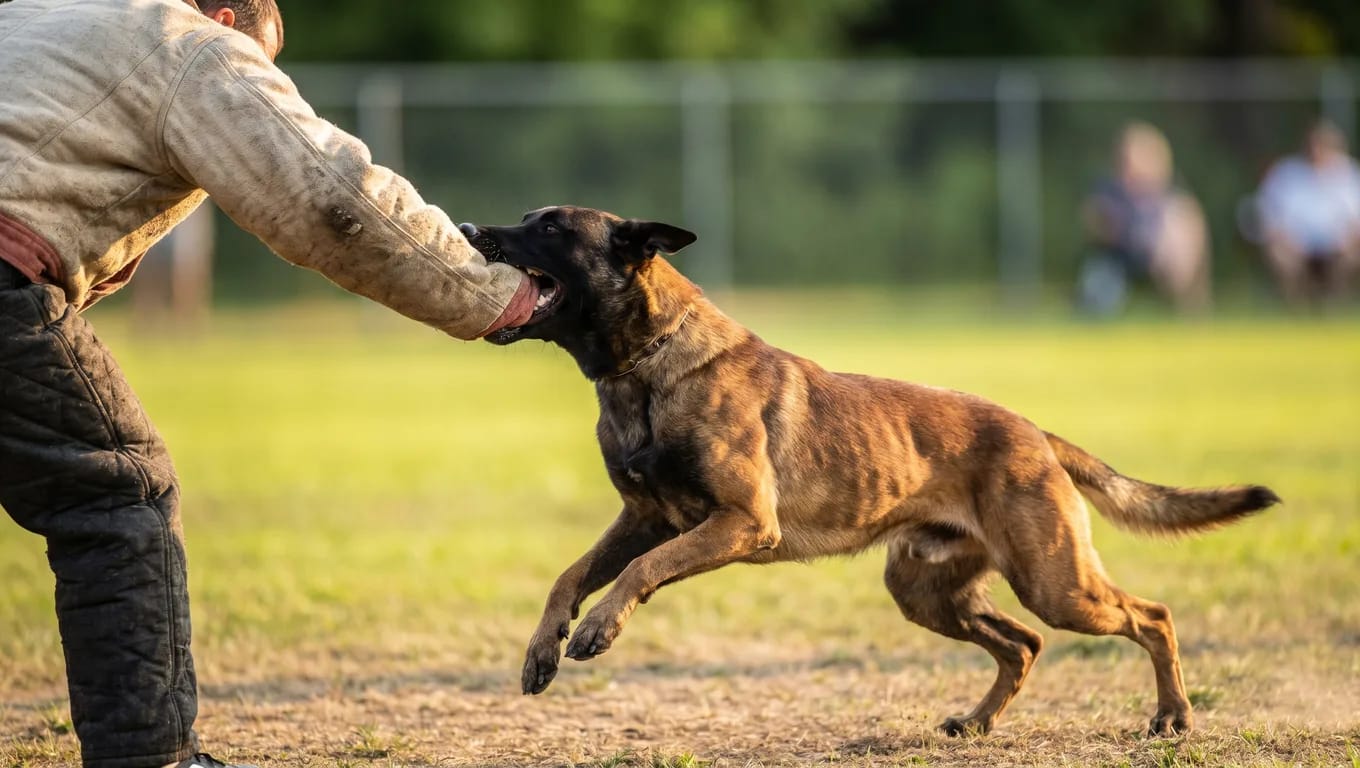
Prey drive is the instinctive motivation to find, chase, catch, and sometimes kill moving things. It is a survival behavior, hardwired long before dogs shared our homes, and every dog has some version of it. What varies is the intensity and which parts of the sequence light up most strongly.
Trainers usually break the instinct into a chain of distinct stages, often called the predatory sequence:
- Orient: the dog notices movement and locks on.
- Eye / stalk: a fixed stare and a low, creeping approach.
- Chase: the explosive pursuit, the part owners see most often.
- Grab-bite: seizing the target with the mouth.
- Kill-bite and consume: the final stages, largely bred out of most companion dogs.
Selective breeding has amplified some links in this chain and muted others depending on the job a breed was built for. A Border Collie's famous stalk-and-stare is the eye and chase stages turned up loud with the bite turned down. A terrier carries the whole sequence through to the grab. Recognizing which stages dominate in your own dog tells you a great deal about what you are managing.
Prey drive is not the same as aggression. A dog chasing a squirrel is not angry at the squirrel. The behavior is appetitive, meaning the dog wants to do it because it feels good, which is exactly why it is so self-reinforcing and so hard to call your dog off once it starts.
Why a dog chasing a squirrel is so hard to interrupt
That moment of a dog chasing a squirrel is the clearest window into prey drive most owners ever get. The chase is intrinsically rewarding. Your dog gets a flood of feel-good chemistry simply from running the pattern, whether or not they ever catch anything. Nothing you carry in your treat pouch competes easily with a reward the brain manufactures for free.
This is why "he just won't listen when he sees a rabbit" is so common. Your dog is not being defiant. They are deep inside a behavior that, in evolutionary terms, was once a matter of life and death. Management and training work with that reality rather than pretending it away.
Which dogs have high prey drive?
Almost any dog can show strong prey drive, but breeding stacks the deck. A high prey drive dog is usually one bred for a job that involved chasing, catching, or controlling moving animals. If you are choosing a dog or trying to understand the one you have, breed history is the single best predictor.
| Breed group | Typical drive expression | Examples |
|---|---|---|
| Sighthounds | Pure chase, triggered by movement at distance | Greyhound, Whippet, Saluki |
| Terriers | Full sequence including grab and dig | Jack Russell, Border Terrier, Patterdale |
| Herding breeds | Eye, stalk, and chase; bite suppressed | Border Collie, Australian Shepherd, Kelpie |
| Scent and gun dogs | Tracking, flushing, retrieving | Beagle, Pointer, Spaniel |
| Northern / spitz breeds | Independent chasing, strong pursuit | Husky, Malamute, Akita |
Mixed-breed dogs inherit whatever their ancestors carried, which is why a shelter dog of unknown background can surprise you the first time a cat bolts.
Herding behavior is prey drive in a costume
People often treat herding behavior in dogs as something separate from prey drive, but it is really the predatory sequence with the editing turned way up. A working sheepdog uses the eye, the stalk, and the controlled chase to move a flock, while the grab-and-kill ending is deliberately bred out. That is why a Collie at home will circle and "gather" children, joggers, or cars, and nip at heels that move too fast. With no flock to work, the instinct to control movement simply latches onto whatever is moving nearby.
Understanding this matters because the fix is the same whether your dog wants to chase a squirrel or herd the family. You are giving a strong instinct a legitimate place to go.
How to manage prey drive
Here is the honest framing: you cannot train prey drive out of a dog, and trying to suppress it entirely usually backfires into frustration or obsessive behavior. How to manage prey drive is really a question of three things working together: managing the environment so your dog cannot rehearse the chase, teaching genuine impulse control, and giving the instinct an approved outlet. Skip any one of the three and the other two struggle.
1Manage the environment first
Every successful chase makes the next one more likely, so your first job is simply preventing rehearsal while you build skills.
- Use a long line in open spaces. A 5-10 meter line lets your dog explore while guaranteeing they cannot launch into a full sprint after wildlife.
- Know your dog's triggers and the distance at which they can still think. Squirrels at fifty meters may be workable; a cat at three meters may not be.
- Choose your timing and routes. Early-morning fields full of rabbits are a setup for failure while you are still training. Pick quieter moments to practice.
Management is not the whole answer, but it buys you the room to teach everything else.
2Build real impulse control
Impulse control is your dog's ability to pause and choose, rather than act on the first urge. It is a muscle, and you build it with short, frequent reps in low-stakes situations long before you need it near a real rabbit.
A few foundation games carry most of the load:
- "Leave it" taught with food, then generalized to toys, then to moving objects.
- An emergency stop or sit that freezes your dog mid-stride on cue.
- A rock-solid recall, because calling your dog off a chase is the behavior that genuinely keeps them safe.
- Engagement work, rewarding your dog for checking in with you in the presence of mild distractions.
Do not test these skills against your dog's strongest trigger on day one. If you call your dog off a squirrel and they ignore you, you have just taught them that the cue is optional in exactly the moment it matters most. Build up the difficulty gradually and keep the long line on until the behavior is genuinely reliable.
3Give the drive a job
This is the piece most owners miss. A high prey drive dog with no outlet is a dog who will find their own, usually one you dislike. Channeling the instinct into structured activity is not a luxury; for these dogs it is the difference between a happy companion and a frustrated one.
The key is to offer a "fake" version of the predatory sequence that is fun, controlled, and ends with you. Flirt poles, structured fetch with rules, and tug played with clear start and stop cues all let your dog chase and grab in a way you control. Even a simple "find it" scatter in the grass scratches the searching itch.
For dogs with serious drive, organized dog sports are the most satisfying outlet of all, because they turn the very instinct you are managing into a partnership.
Dog sports that channel prey drive
Sports work because they take the chase, the focus, and the intensity your dog already has and put a structure around them. Your dog gets to run the pattern; you get a dog who looks to you for permission to do it. Most of these are taught in group classes, which adds the bonus of practicing focus around the ultimate distraction: other dogs.
- Agility rewards an explosive, fast-moving dog for racing a course under your direction, turning raw chase energy into precision and teamwork.
- Flyball and fetch sports give the retrieve-and-chase dogs a clear target and a job with a finish line.
- Lure coursing is purpose-built for sighthounds, letting them chase a mechanical lure across a field at full tilt, safely and legally.
- Herding lets eligible breeds do the real thing under guidance, the cleanest possible outlet for that stalk-and-gather instinct.
- Scent work and tracking channel the searching stages of the sequence into nose games that tire a dog out mentally as much as physically.
A dog who gets to chase the "right" things several times a week is far less interested in self-employing on the local wildlife. The instinct does not vanish, but it finds a home.
You do not need a competition dog to benefit. Most owners join a class purely for the outlet and the focus work, and never set foot in a ring. The structure alone does the job.
Living with a high prey drive dog
Managing prey drive is a long game, not a problem you solve once. The dogs who thrive are the ones whose owners stop fighting the instinct and start working with it: preventing the chases that would set training back, drilling impulse control until it holds under pressure, and making sure the drive gets a regular, legitimate workout. Do that consistently and the stiffening body and locked-on stare stop being something you dread and become something you can read, redirect, and even enjoy.
If your dog's drive feels bigger than what you can shape on your own walks, that is exactly when a good class earns its place. A trainer can read the split-second timing that makes or breaks an interruption, and a structured sport gives the instinct somewhere real to go.
Ready to turn that chase instinct into something you can both enjoy? Find and book an agility, scent work, or sports class near you on Canlyo, track your dog's progress between sessions, and give your high prey drive dog the outlet it has been asking for.