It is raining, the walk is cancelled, and your dog is already pacing the hallway with that look that says the next hour could go badly for your shoes. Before you reach for another chew, try this: drop a handful of kibble onto a kitchen towel, scrunch it up, and set it on the floor. Watch what happens. The head goes down, the breathing changes, and a bored, restless dog turns into a calm, focused one in about thirty seconds. That is the quiet power of scent work games for dogs, and the best ones cost you nothing but a few treats and the contents of your recycling bin.
This is a hands-on list of the easiest nose work games for dogs you can set up at home today. No special gear, no training background, no big space required. Just simple dog scent training games that any dog of any age or breed can play, and that genuinely tire them out.
Why scent work games tire your dog out so fast
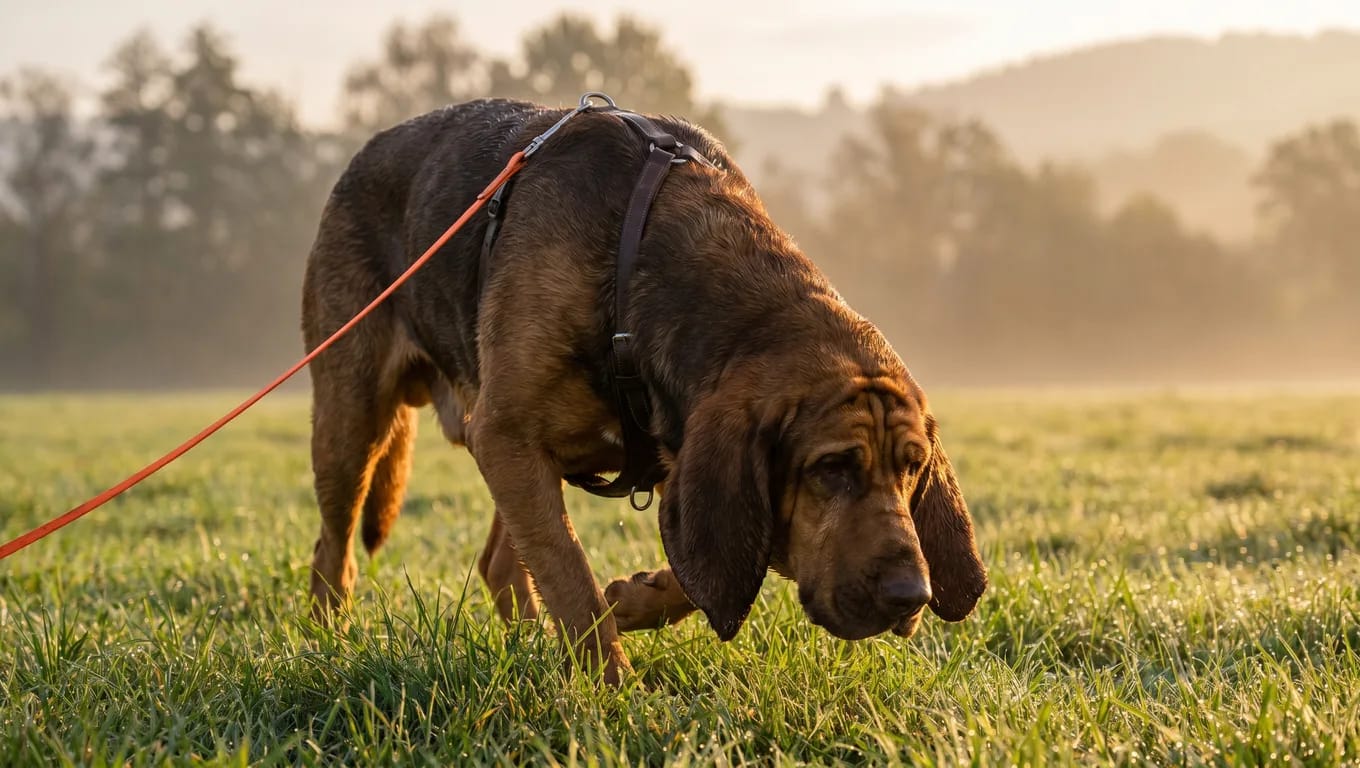
A short sniffing session does something a long walk often does not: it drains mental energy. Dogs experience the world through their nose first, and processing scent is hard, satisfying work for the brain. Ten to fifteen minutes of searching can leave a dog more settled than a fast half-hour walk, because you are working the part of them that craves a job.
That makes scent work at home ideal for:
- Rainy days and small flats where a proper walk is not happening
- Puppies and seniors who cannot handle long physical exercise yet
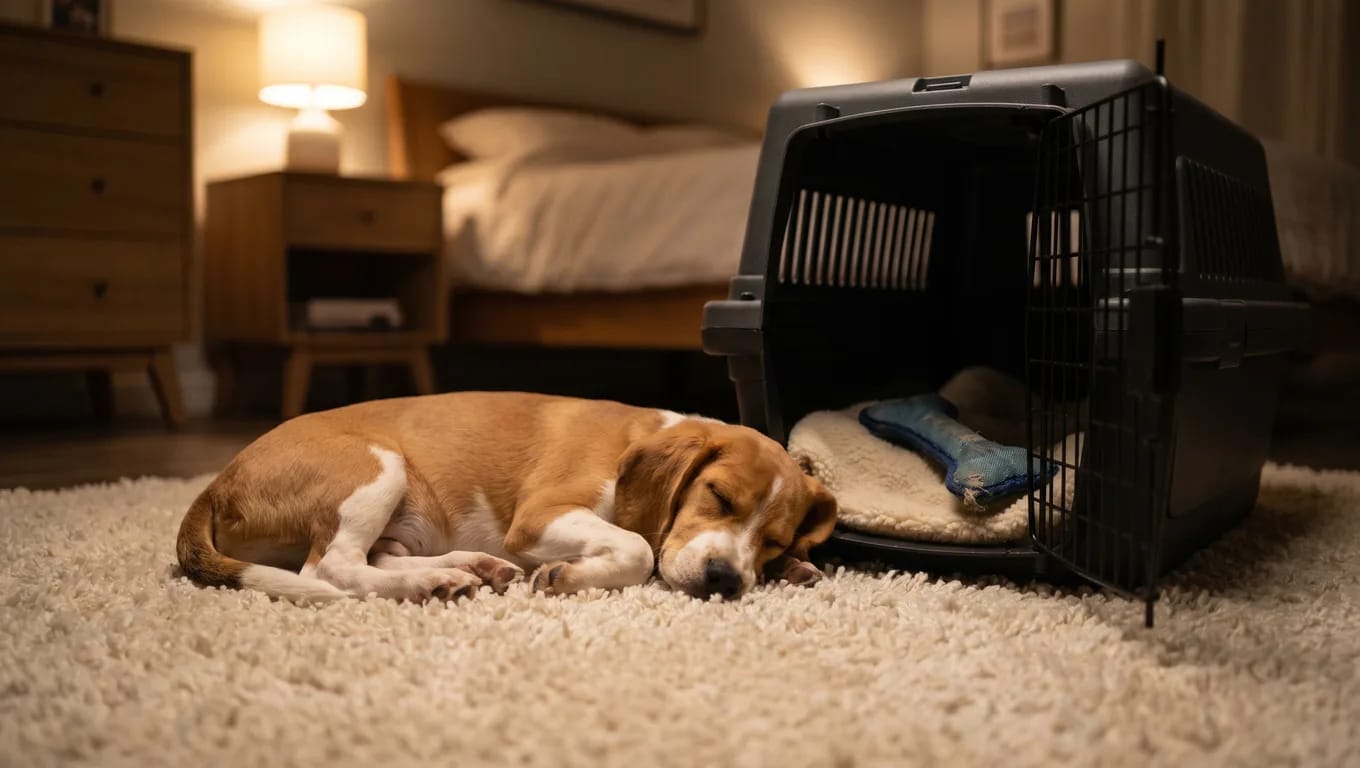
- Recovering dogs on crate rest who still need to use their brain
- Anxious or reactive dogs who find sniffing genuinely calming
- High-energy breeds that never seem to switch off
You are not teaching a competition skill here. You are giving your dog permission to do the thing it is already brilliant at. If you want the bigger picture on the discipline, how it progresses, and where it can lead, read our beginner's guide to scent work for dogs. This post stays focused on the games.
Use part of your dog's normal daily food for these games rather than piling on extra treats. Working for breakfast is more fun than eating it from a bowl, and it keeps the calories in check.
The one cue that ties every game together
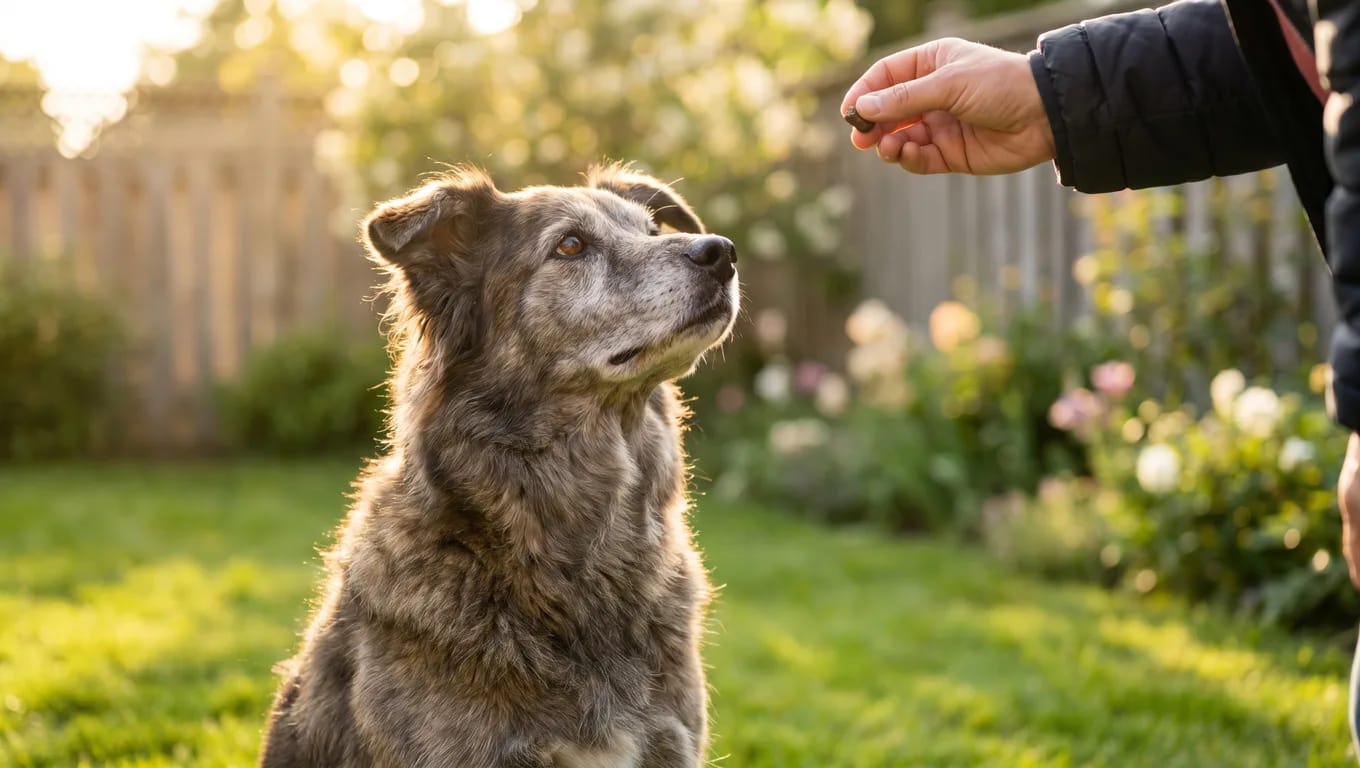
Before the games, teach a single search cue so your dog knows the nose is now "on duty." Pick a word like "find it" or "search."
Toss a treat where your dog can clearly see it land and say your cue as they go to get it. Repeat a handful of times. Within a few minutes most dogs connect the word with "go hunt for food." That is the entire foundation. Every game below is just a harder, more interesting version of that one cue.
7 easy scent work games to play at home
Start with the first game and only move on when your dog is searching happily and confidently. There is no rush. A dog that succeeds easily stays in the game; a dog that gets stuck gets frustrated.
1The classic find-it scatter
The simplest beginner scent work game there is. Scatter ten to fifteen pieces of kibble across a small patch of floor, carpet, or grass and give your cue. Your dog hoovers up each piece using its nose.
Once that is easy, make it harder:
- Scatter into longer grass or a textured rug so treats are not visible
- Spread the search over a wider area
- Tuck a few pieces under the edge of a mat or cushion
This is the perfect warm-up before every other game on the list.
2The muffin tin puzzle
A metal muffin tin is one of the best free nose work toys in your kitchen. Drop a treat into a few of the cups, then cover every cup with a tennis ball, a scrunched sock, or a small toy.
Your dog has to nose and paw the balls aside to find which cups hide food and which are empty. Start with treats under most balls so the game pays off quickly, then reduce to just two or three "hot" cups as your dog gets sharper. It is a genuine puzzle: they have to use their nose to decide where to dig.
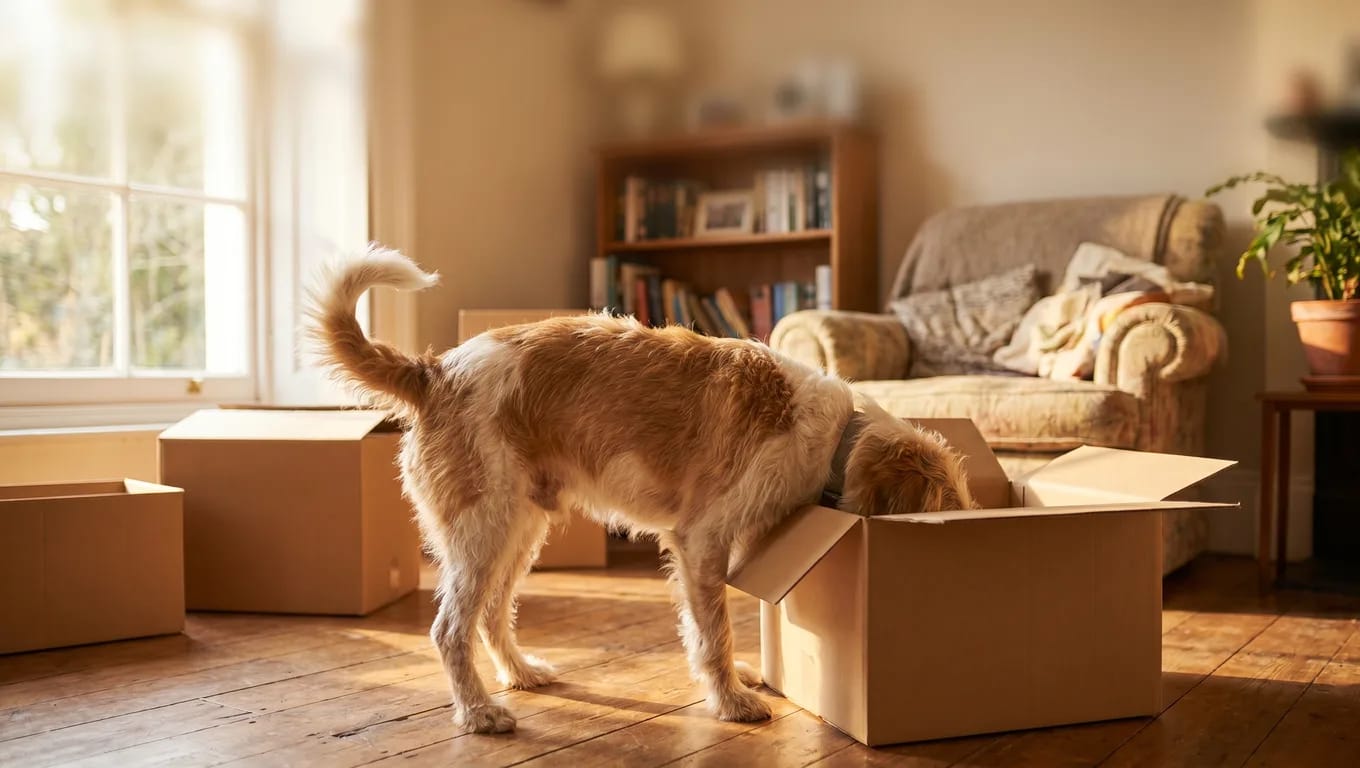
3The box search
This is the game competitive nose work is built on, and your delivery boxes are perfect for it.
- Line up three or four open cardboard boxes on the floor.
- While your dog watches, drop treats into one box.
- Give your search cue and let them find it.
- Once they understand the game, place the treats while they are out of the room so they have to sniff out the right box.
Progress by adding more boxes, using boxes of different sizes, or loosely closing the flaps so your dog has to work to get in. The moment a dog realizes it has to choose the correct box by smell alone is the moment scent work clicks.
Always supervise box and muffin tin games, and skip them with dogs that swallow cardboard, plastic, or fabric. If your dog is a chewer, stick to scatter games and snuffle mats where there is nothing risky to eat.
4The snuffle mat
A snuffle mat is a fabric mat full of fingers and folds that you hide food inside. You can buy one cheaply or make your own by knotting strips of fleece through a rubber sink mat.
Sprinkle kibble deep into the folds, shake it so the food settles down, and let your dog work every piece out. Snuffle mats are brilliant for slowing down fast eaters and turning a meal into a ten-minute sniffing session. They are also the gentlest option for nervous dogs, because nothing moves, falls, or makes noise.
5Which hand?
A pocket-sized game with no setup at all. Put a treat in one closed fist, hold both hands out, and let your dog sniff. When they nudge or paw the correct hand, open it and let them have the treat. If they go for the empty hand, stay relaxed: open both, show them nothing was missed, and try again.
This one teaches your dog to commit to a decision based on scent, and it travels anywhere, so it is perfect for waiting rooms, car journeys, or any spare two minutes.
6The towel roll
Lay a hand towel flat, sprinkle treats along it, then roll it up loosely. Your dog has to unroll and dig through the towel to free every piece. Roll it tighter or use a larger towel to raise the difficulty. It packs flat in a bag, which makes it a great travel version of a snuffle mat.
7The around-the-room hunt
Once your dog reliably searches on cue, turn the whole room into the game. Put your dog behind a closed door, hide five or six treats around the room (on a low shelf, behind a chair leg, beside the sofa), then release them with your cue.
Keep the hides easy and at nose height at first. As your dog improves, hide fewer treats in trickier spots and let them search the whole flat. This is the game that scales endlessly and tires dogs out the most.
How to keep every game fair and fun
A few rules keep scent games rewarding instead of frustrating, especially while your dog is learning.
| Do this | Avoid this |
|---|---|
| Start easy and build up slowly | Making the first hide too hard |
| Let your dog use its nose, not your pointing | "Helping" so much they stop sniffing |
| End while your dog still wants more | Dragging a session out until they quit |
| Use smelly, high-value treats early on | Bland kibble for a brand-new, harder game |
| Keep sessions to 5-15 minutes | Marathon sessions that drain motivation |
How often should you play?
Little and often beats one long session. Once or twice a day is plenty, and even five minutes counts. Many owners use a quick scatter or snuffle-mat feed as a daily ritual: it is enrichment, mental exercise, and a calm pre-bedtime activity rolled into one.
When your dog is ready for more
If your dog devours these games and you find yourself wanting structure, harder searches, or the buzz of working alongside other handlers, that is the natural pull toward formal nose work. A class introduces specific target scents, proper search areas, and the option to work toward titles, with an instructor who can read your dog and stretch them in ways a kitchen floor cannot.
Your dog clearly loves using its nose, so give it the real thing. On Canlyo you can find and book a beginner scent work or nose work class near you, matched to a trainer who suits your dog. Then keep every session and milestone in one place as your dog grows from kitchen-floor games to confident searching.