It is a damp morning and your young dog is dragging you toward the field, whining at the end of the lead, because it already knows what is coming. Forty-five minutes later that same dog has worked a scent track nose-down across wet grass, heeled through a tight obedience pattern with its eyes locked on your face, and barked to hold a helper in a padded sleeve before releasing the instant you said the word. Getting a dog there is not luck or breeding alone. It is schutzhund training: months of patient, structured work across three very different jobs, learned step by step alongside people who know the sport.
This guide is the practical companion to the basics. If you are still asking what the sport actually is and how a trial is scored, start with our explainer on what Schutzhund and IGP are. Here we get into the doing: how each phase is trained, the commands you will use, the right age to begin, and how to find a club and a helper so you start in the right place.
How schutzhund training is structured across the three phases
The sport tests your dog in three disciplines on one day: tracking, obedience, and protection. You do not train them in sequence, finishing one before starting the next. From early on you work all three in parallel, in short, separate sessions, because each builds a different part of the dog. Tracking grows calm, methodical focus. Obedience builds precision and engagement. Protection builds confident, controllable drive.
These are the schutzhund training phases, and the order in which a dog matures into them matters. Tracking and obedience foundations come first and continue for life. Protection is layered in gradually, under a qualified helper, only once the dog can handle it. A good club tells you plainly when your dog is ready for each step, and when it is not.
1Training the track
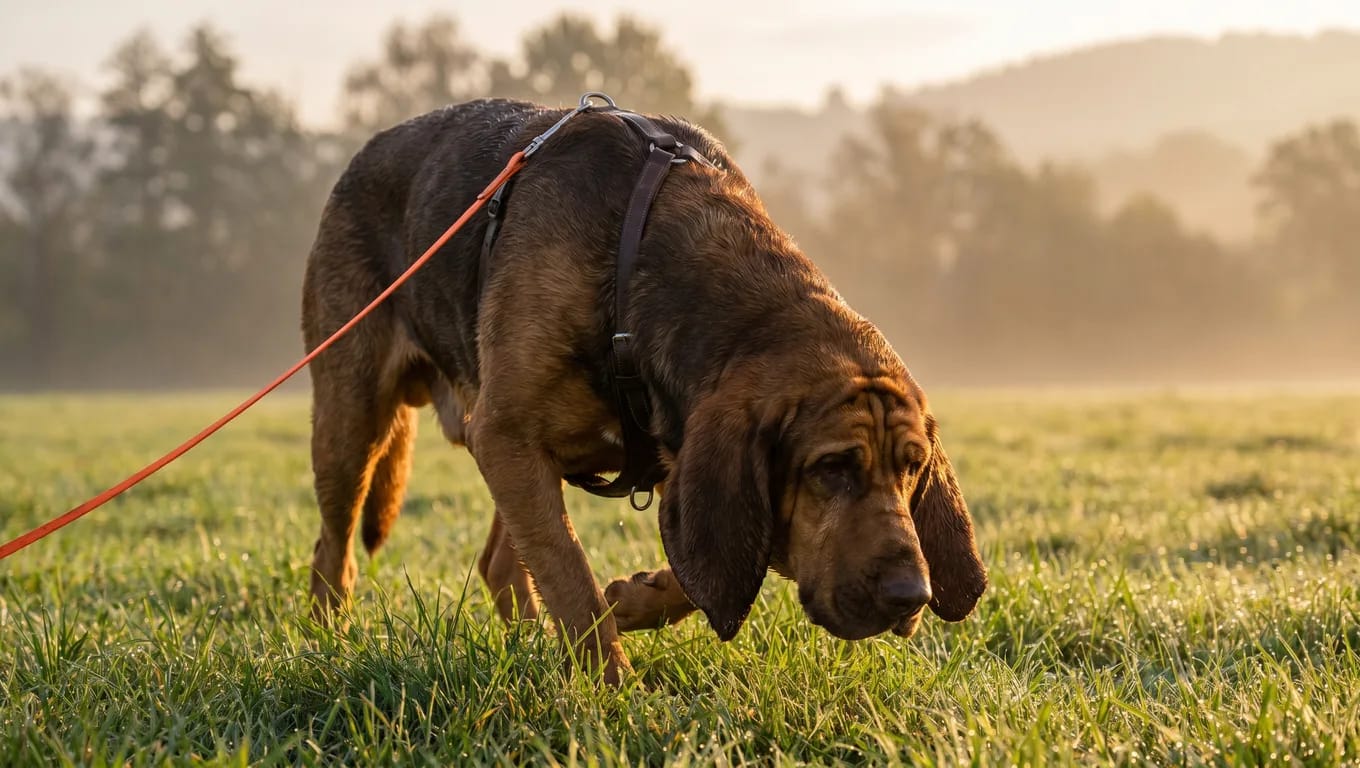
Tracking is usually the first real discipline a young dog learns, because it suits a puppy's natural urge to use its nose and asks for very little obedience. You teach the dog to follow a human scent trail laid across a field, working slowly and deliberately with its nose down, and to indicate small dropped articles, often by lying down at each one.
Early training is built on food and patience. Many handlers start by walking a short, straight track and dropping tiny pieces of food into each footprint, so the dog learns that following the scent step by step pays. Over weeks and months you fade the food, lengthen the track, let it age before the dog starts, and add turns and articles. What you are really building is a slow, careful, committed search, not speed.
- Start short and straight, on familiar ground, with the wind and surface in your favor.
- Lay the track yourself at first so you can read whether your dog is right.
- Build difficulty one variable at a time: length, then age, then turns, then surface. Never all at once.
- Reward the indication clearly so the down at each article stays reliable.
2Training obedience
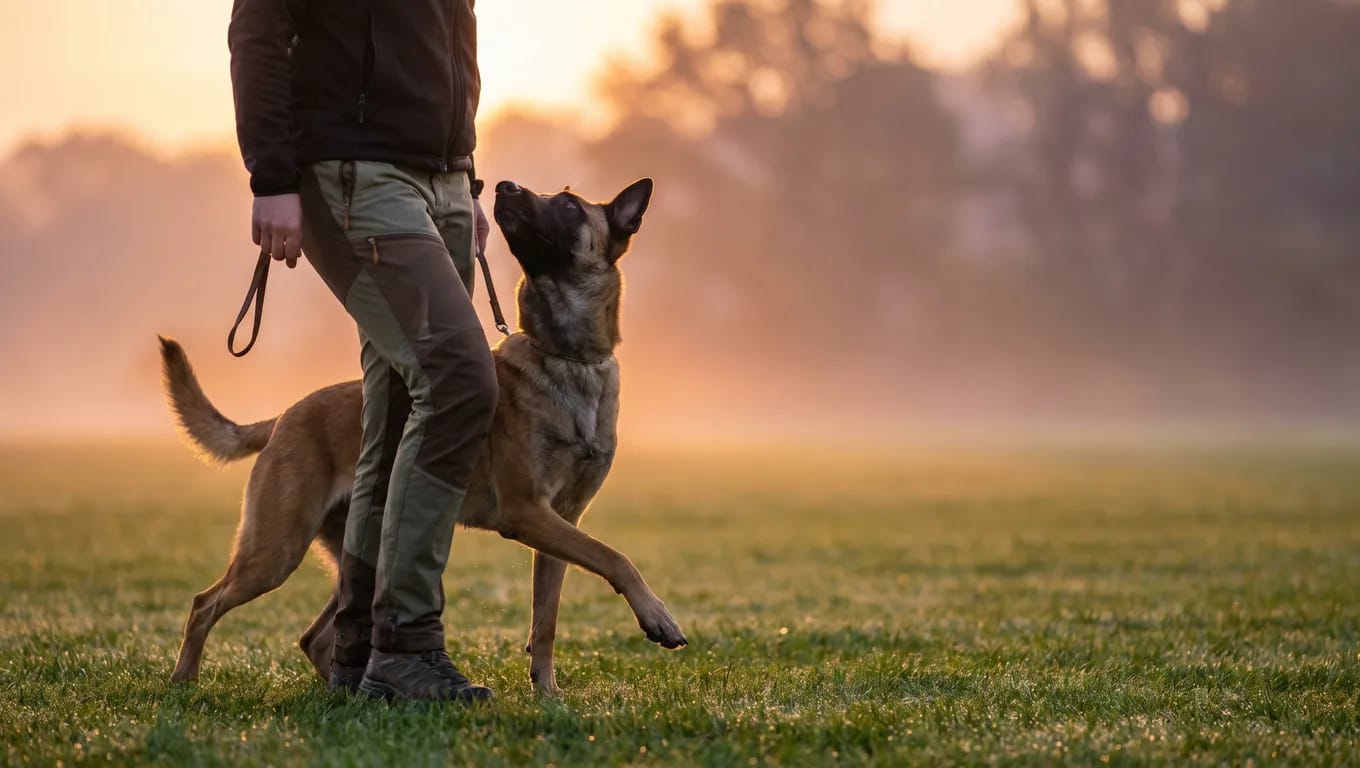
Obedience is the phase that ties the whole dog together, and it is where most of your daily training time goes. You are working toward a dog that heels close and attentive through changes of pace, sits, downs, and stands from movement, retrieves a dumbbell over a jump and a climbing wall, and holds a long down while another dog works nearby.
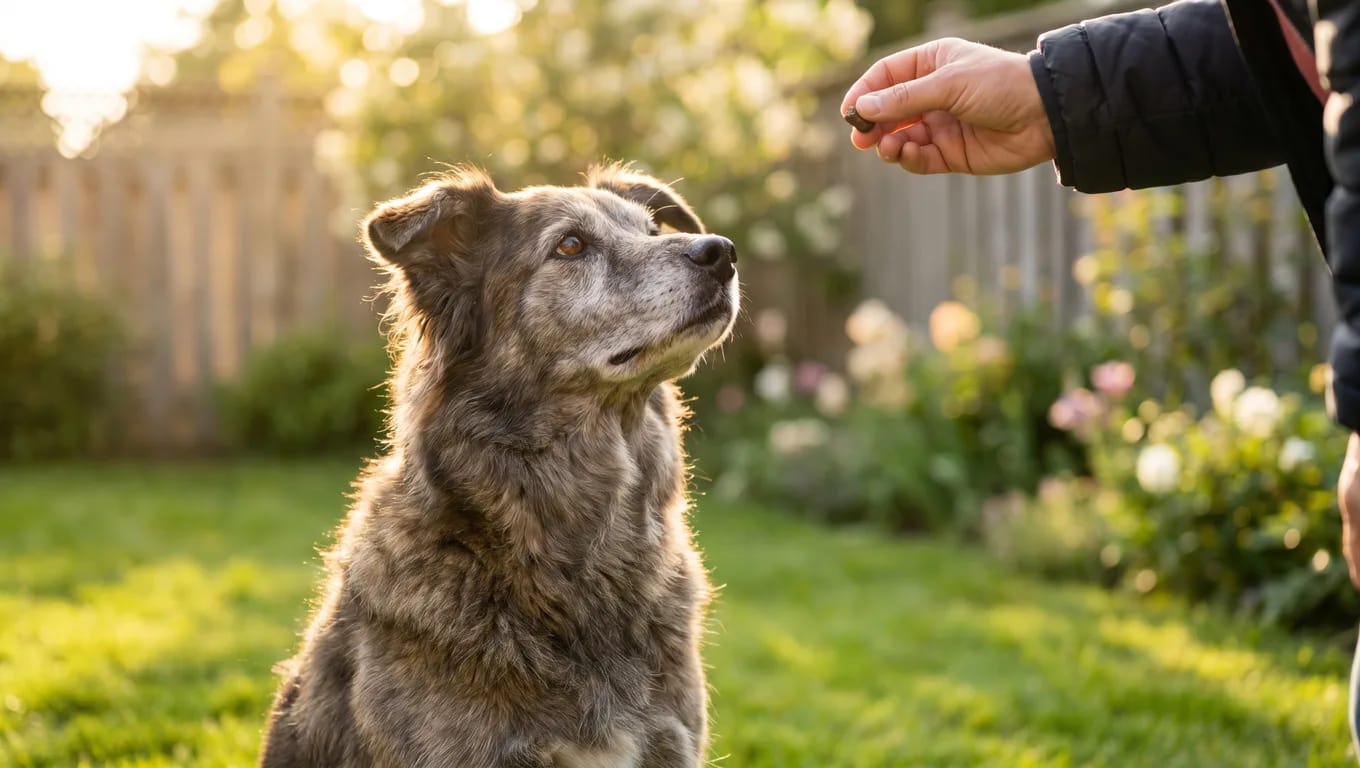
The modern approach is built on engagement and marker training, not corrections. Before any formal exercise, you spend weeks building the dog's desire to work with you through play and food, and teaching a marker (a clicker or a word) that pinpoints the instant it earned a reward. Only then do you shape the exercises piece by piece, rewarding precision and a willing attitude. Judges score attitude as much as accuracy, so a dog that works fast and looks delighted to be doing it beats a mechanically correct but flat performer.
3Training protection (only with a qualified helper)
Protection is the phase that draws attention and the one most misunderstood, and it is the one you never start alone or from videos. Working with the helper, the trained decoy in the padded sleeve, the dog learns to pair a confident, full bite with an immediate, clean release the instant you command it.
The entire phase is built on control, not aggression. The dog that scores well shows confident drive that switches off on cue; a dog that will not release, bites out of fear, or cannot be controlled fails. Protection foundations are trained by an experienced helper who reads the dog and shapes the work safely, and they begin only when your dog is mentally ready.
Protection work is a precise sport discipline performed with trained helpers under strict rules. It is not a method for teaching a dog to "guard the house," and it has nothing in common with encouraging real aggression. Done properly it produces a more confident, more controllable dog, never a more dangerous one. Train it only under qualified club supervision.
What schutzhund commands will I actually use?
One thing that surprises newcomers is how short the working vocabulary is. The sport rewards clarity, so each behavior gets one cue, given the same way every time. Many clubs use the traditional German words because they are crisp and distinct, but the language matters far less than your consistency. Pick a set, write it down, and never drift.
These are the core schutzhund commands you will build, with the German terms you will commonly hear at a club:
| Behavior | Common German cue | Phase |
|---|---|---|
| Heel | Fuss | Obedience |
| Sit | Sitz | Obedience |
| Down | Platz | Obedience, tracking indication |
| Stand | Steh | Obedience |
| Recall / come | Hier | Obedience |
| Retrieve / bring | Bring | Obedience |
| Send away / go out | Voraus | Obedience |
| Track / search | Such | Tracking |
| Bark and hold | Stell or Revier | Protection |
| Bite / grip | Fass | Protection |
| Release / out | Aus | Protection |
Two cues deserve a special note. The down, Platz, does double duty: it is an obedience exercise and the indication your dog gives at each article on the track. And the release, Aus, is the single most important command in the entire sport. A reliable, immediate Aus is the foundation of safe protection work, and a club will not progress a dog that does not have it solid. Do not invent protection cues like Fass and Aus at home, either: they are taught in context on the field, with a helper, so the dog learns exactly what they mean.
What age should I start schutzhund training?
There is no single start line, because the three phases enter the picture at different ages. The short version: foundation work begins in puppyhood, and the physically demanding parts wait for a mature body and mind.
Puppyhood (roughly 8 weeks to 6 months)
This is pure foundation, much like raising any well-socialized dog with a job. You build engagement and play, introduce marker or clicker basics, start gentle tracking, and develop focus. No formal routines, no jumping, no bite work. You are growing a dog that loves to work with you.
Adolescence (roughly 6 to 18 months)
Obedience exercises take real shape, tracking gets longer and more structured, and protection foundations may begin under a helper as the dog matures. Physical exercises are introduced thoughtfully, because growing joints are not ready for repeated impact. This is where a good club's guidance matters most.
Maturity (roughly 18 months and up)
Full, athletic obedience including jumps and the climbing wall, advanced tracking, and the complete protection routine come together. This is when many dogs are ready to chase their first IGP1 title, though there is no rush. Timelines vary widely by breed and individual, and it is never too late to start the foundations: older dogs learn tracking, obedience, and engagement and enjoy the work enormously, whether or not they ever compete.
How do I find a club and a helper?
Here is the part that matters more than any technique in this guide: you cannot learn this sport well, or train protection safely, on your own. The single most important step is to find a club and learn from experienced people in person, with a qualified helper for the protection phase. A helper is the trained decoy who works the dog on the sleeve, reads its drives and nerve, and shapes bite work correctly. Access to a good helper is the main reason club training is non-negotiable.
If you have not yet watched the sport in person or you are unsure where to begin, our beginner's guide to Schutzhund and IGP covers how to visit a club and what your first months will look like. Once you are choosing where to train, judge a club on how it works its dogs:
- A focus on engagement and reward-based methods, with calm, confident dogs that clearly enjoy the work.
- An experienced, attentive helper who adjusts the work to each dog rather than overfacing it.
- A welcoming attitude to beginners and a clear explanation of how they bring a young dog along.
- Sound, healthy dogs that release cleanly and switch off on cue, the surest sign of good training.
A good club brings a young dog along in the right order, foundations first and protection only once the dog has the maturity and control to handle it. That structure is exactly what produces the dog from the opening scene: nose down on a track, locked on in heelwork, and switching off the moment you ask.
Ready to see schutzhund training up close and find people to learn from? Find and book a beginner Schutzhund or IGP class near you on Canlyo, meet a local club and its helper, and start your dog's foundations in the right place, with the right guidance.