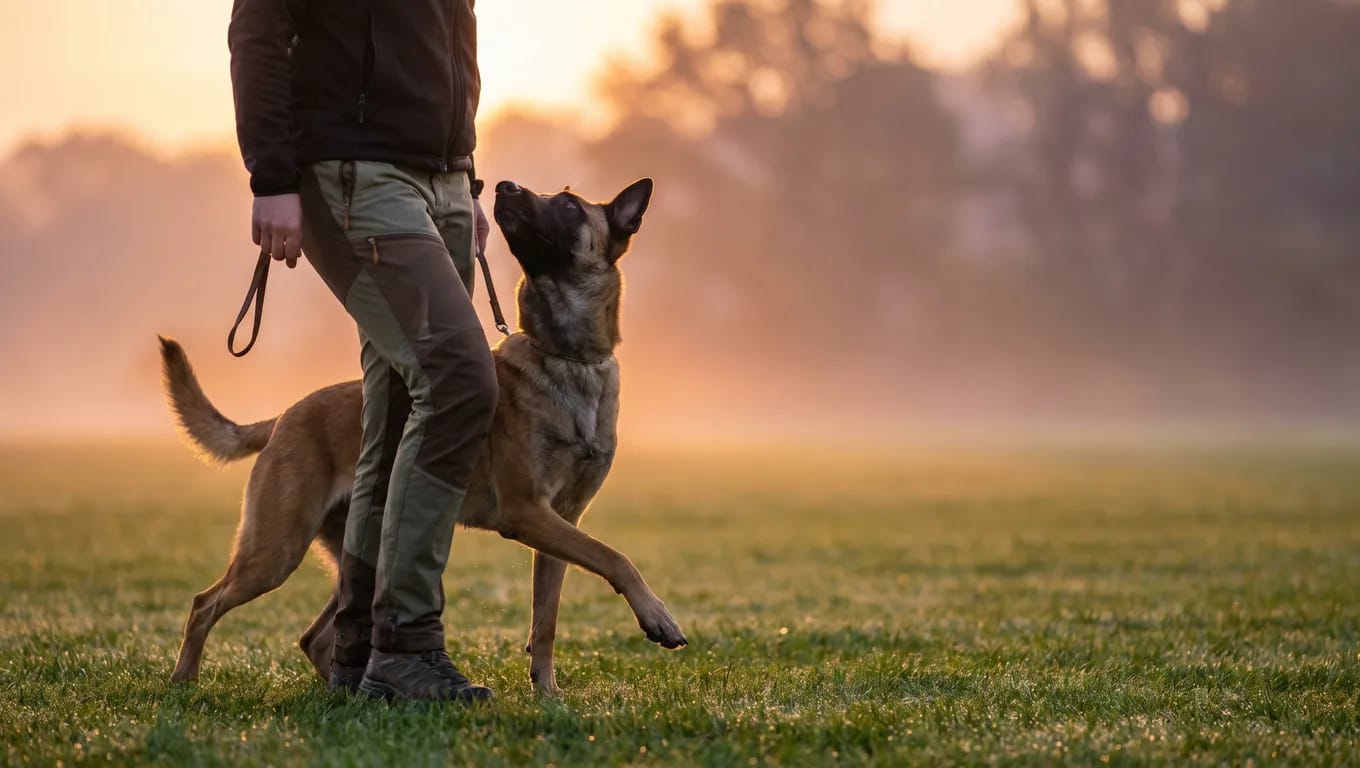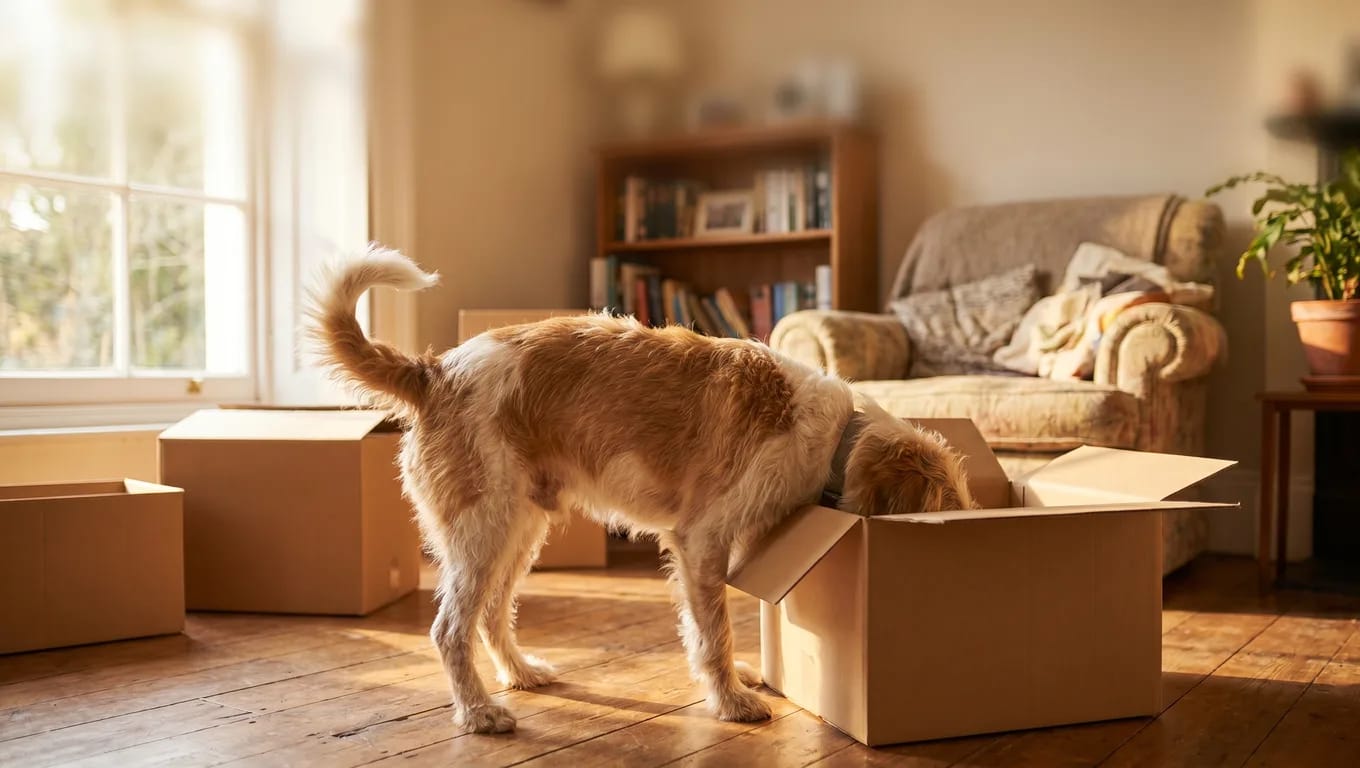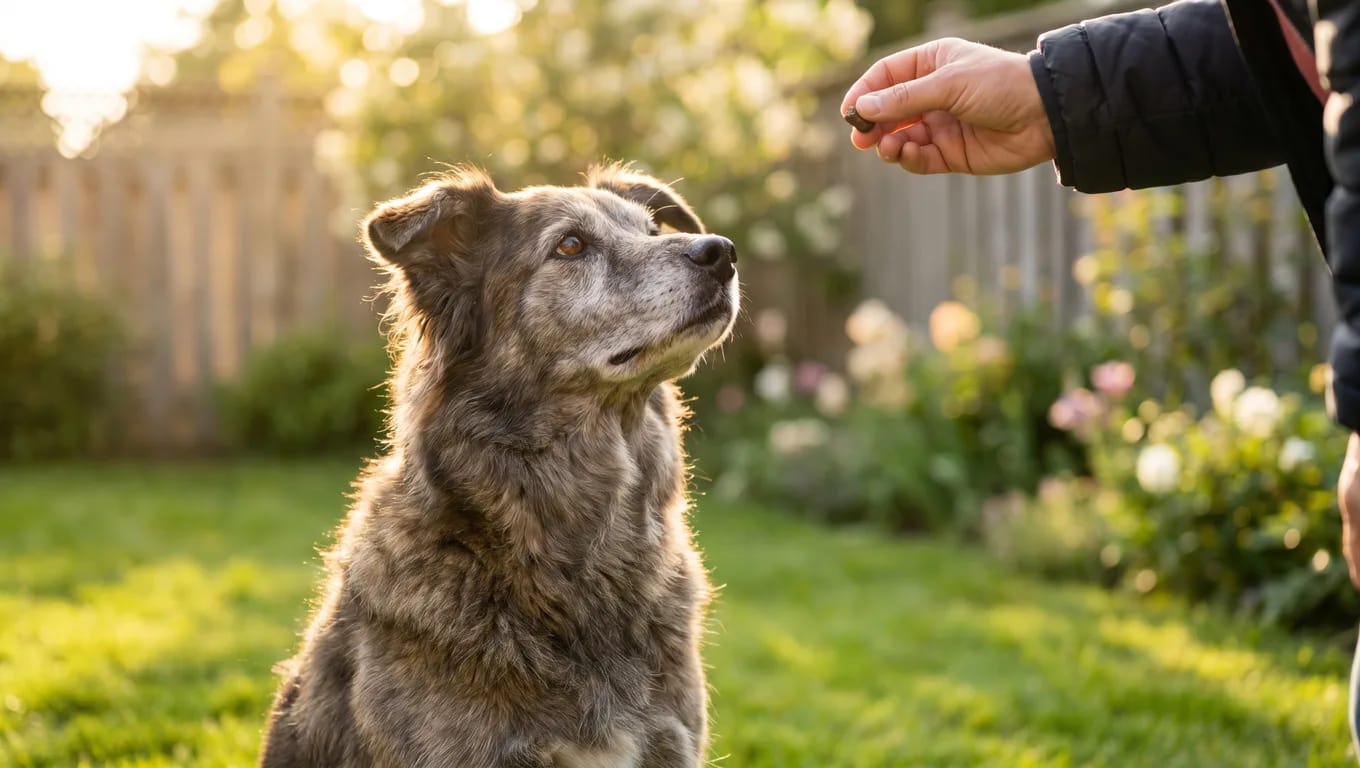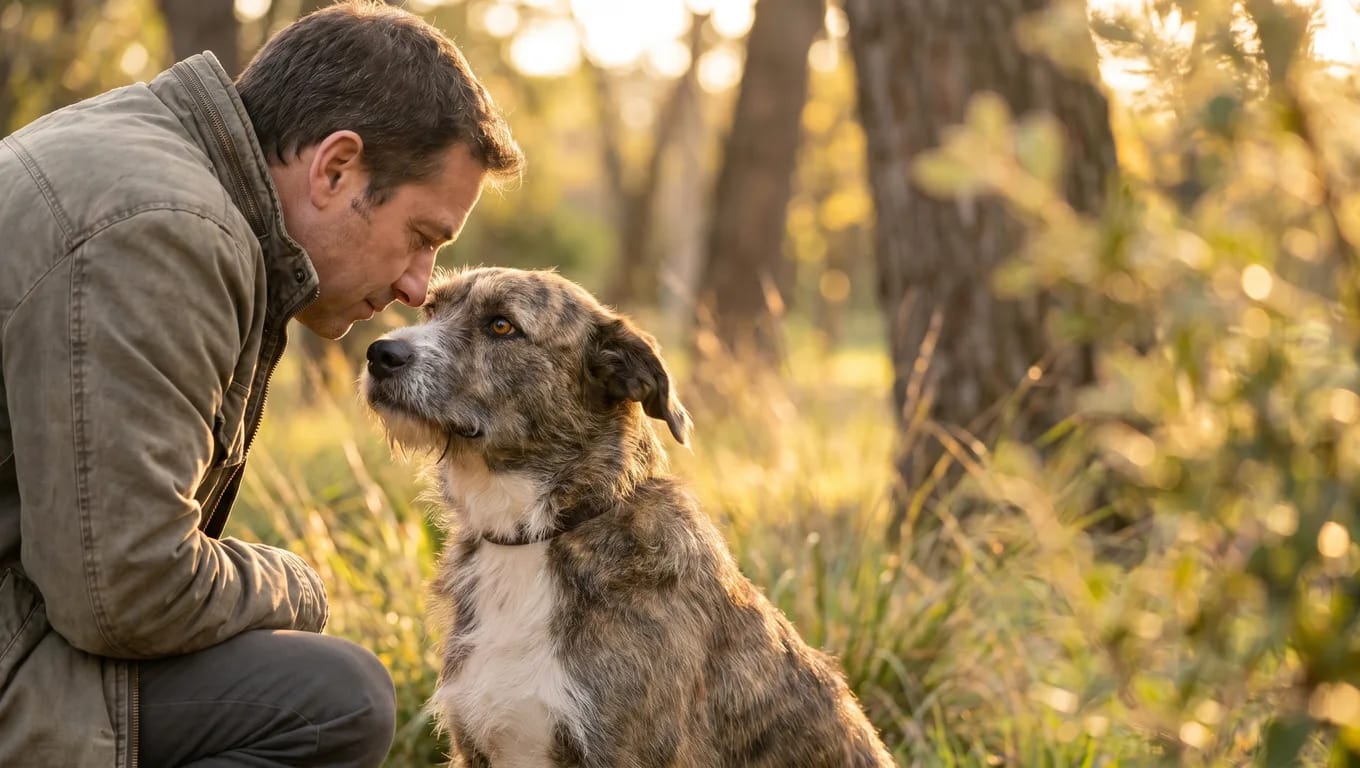
A wounded deer crosses a stream, doubles back through bramble, and vanishes into thick timber as the light fails. Six hours later a Bavarian Mountain Hound lowers its head over a single spot of dried blood, leans into the harness, and works that hours-old trail to a deer no human eye could have found. Watch a dog do that once and you understand why certain breeds have been shaped over centuries for one job above all: following scent we cannot detect, to a place we would never reach.
If you are weighing up the best tracking dog breeds, this guide is written from the field: what makes a dog good at tracking, the standout breeds for hunting recovery and for sport, how blood and deer tracking differ from the scent games pet dogs play, and the training basics and gear that get any keen-nosed dog started.
What makes a great tracking dog?
A great tracking dog is not just a good nose on legs. The job blends three things, and the best tracking dog for you balances them.
- Scent ability. Every dog out-smells us by a mile, but scenthounds and many gundogs are built around the nose, with deep muzzles, loose flews, and long ears that waft scent upward.
- Trailing drive and persistence. A trail goes cold, crosses water, and bends back on itself. The dog you want keeps problem-solving a difficult line long after a busier dog has quit.
- Biddability and nerve. A tracking dog works methodically, often slowly and in the dark, while staying connected to you on a long line. Steady temperament matters as much as raw nose.
It also helps to know that ground or trailing dogs keep the nose low and follow scent the quarry left behind, the style used in blood tracking dog work and deer recovery, while air-scenting dogs lift the head and work scent on the wind. Most tracking breeds do both, but their default hints at the work they were bred for.
Which are the best tracking dog breeds for hunting and recovery?
When the job is recovering wounded game, the gene pool narrows fast. These breeds have been refined for cold, difficult blood lines and remain the gold standard for hunters who need to find what they shoot.
Bavarian Mountain Hound
Bred in the German Alps for tracking wounded game across steep ground, the Bavarian Mountain Hound is many hunters' idea of the ideal blood tracking dog. Calm at home, intensely focused on a line, and built for endurance rather than speed, it commits to an aged trail for hours and bonds tightly to one handler, which suits the slow, quiet partnership recovery work demands.
Hanoverian Scenthound
The older, heavier cousin of the Bavarian, the Hanoverian Scenthound was developed by gamekeepers for exactly this work. It is a serious, powerful dog with extraordinary trailing accuracy on cold lines. This is a working hunter's dog rather than a pet, and it needs both a real job and an experienced handler.
Bloodhound
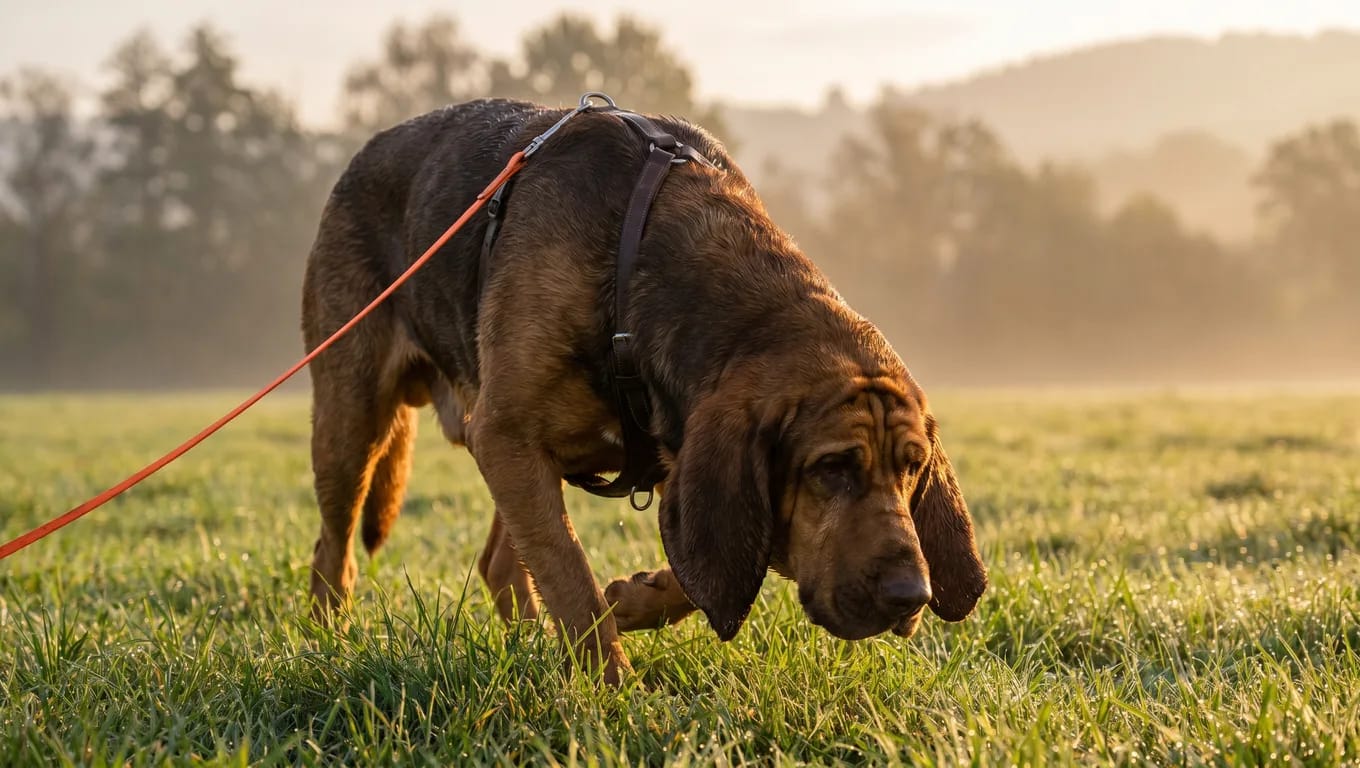
No list of tracking breeds is complete without the Bloodhound, whose name says it all. With more scent receptors than almost any other breed and a famous ability to hold a trail over long distances, it is used in human search work as much as game recovery. The trade-offs are size and stubbornness, but few dogs are its equal on a difficult trail.
Versatile hunting breeds
Plenty of all-round gundogs make excellent recovery dogs as part of a wider hunting role:
- German Shorthaired Pointer and other HPR breeds combine pointing, retrieving, and a reliable nose for tracking wounded game.
- Labrador Retriever is widely trained for blood tracking alongside retrieving, prized for its biddability with novice handlers.
- Teckel (Dachshund) is small but a hunting tracker by heritage, used across Europe for blood trailing in dense cover where a low, methodical dog excels.
Deer tracking dog work is regulated, and the rules vary widely by country, region, and season. Many places require leashed tracking, specific permissions, or a certified dog and handler before you may follow up wounded game. Always check the law where you hunt before carrying out any recovery work.
The best tracking dog breeds for sport and family life
You do not need a wounded deer to enjoy your dog's nose. For sport, scent games, or recreational mantrailing, the field opens right up.
Breeds that shine in scent sport
- German Shepherd is a fixture of competitive tracking, combining a strong nose with the focus to follow a precise footstep trail.
- Beagle is a small, cheerful scenthound that lives through its nose, brilliant for hobby tracking if you can match its enthusiasm.
- Belgian Malinois brings intensity and drive that suit serious sport handlers, though it needs a job and clear direction.
- Springer and Cocker Spaniels are tireless, biddable, and naturally happy to put their nose down, which makes them lovely all-round scent-sport dogs.
What about mixed breeds and "ordinary" pets?
Here is the encouraging part. For recreational tracking, and especially mantrailing, breed barely matters. Every dog already has a nose far beyond anything we can imagine, and crossbreeds, terriers, small dogs, and seniors all do beautifully at scent work. Pedigree counts when you need a specialist for cold game recovery; for fun and a tired, satisfied dog, what matters is motivation and a handler willing to follow the nose.
The word "tracking" hides very different jobs: blood and deer tracking follow a wounded animal to recover game, competitive tracking follows the exact footstep path a person walked, and mantrailing has the dog single out one person's scent from an article and find them. If you are curious about scent work but do not hunt, mantrailing is almost always the right on-ramp: no quarry, no blood, no permissions, just your dog using its strongest sense. Our separate guide on what mantrailing is goes deeper into the sport.
Tracking dog training basics
Whatever your goal, early tracking dog training follows the same principles. The aim is simple: teach the dog that following a scent pays off, and build that into a confident habit before you make anything hard.
1Pick the right gear and a clean start
Sort the equipment first, then start somewhere boring and scent-free so the only interesting smell is the trail you lay. A quiet field with short grass and no foot traffic is ideal.
2Lay short, easy, fresh trails
Walk a straight line of a few meters, shuffling your feet to crush the grass, and drop a small reward every step or two with a jackpot at the end. A fresh, short, straight trail is something almost any dog can nail on day one, and success is the whole point.
3Cue the dog and let the nose lead
Bring your dog to the start on a harness and long line, give a consistent cue such as "track" or "find," and let it work down to the reward. Stay quiet, keep light tension on the line, and resist the urge to steer. Your job is to follow the nose, not direct it.
4Build difficulty slowly
Once the dog is keen and confident, add one element at a time:
- Distance, lengthening the trail gradually.
- Age, letting the trail sit longer before you run it.
- Turns, introducing gentle corners, then sharper ones.
- Surfaces and distractions, moving onto harder ground and trails that cross other scent.
If the dog struggles, you have made too big a jump; go back to where it succeeded and rebuild.
Tracking is mentally exhausting in the best way. A few short, successful trails tire a dog more thoroughly than a long walk, which is why scent work suits high-energy and reactive dogs so well. Stop while your dog is still keen, not when it is flat.
The two most common beginner mistakes are going too hard too soon, piling on distance, age, and turns before the dog is ready, and over-handling the line, which teaches the dog to look to you instead of trusting its nose. Both kill confidence fast.
What gear does a tracking dog need?
Tracking needs little equipment, and most of it lasts for years.
- A well-fitted tracking harness. The dog works in a harness, never a collar, so it can lean into the trail without anything pressing on its throat.
- A long line. Usually 5-10 meters of biothane or webbing. Biothane sheds mud and wipes clean.
- High-value rewards. Whatever your dog loves most, saved for tracking so it stays exciting.
- A scent article. A glove, sock, or cloth carrying a target scent is the starting point for mantrailing.
- For night and field work, add a headlamp, sturdy boots, and high-visibility clothing for both of you.
You do not need everything at once. A harness, a long line, and a pocket of great treats are enough to start, and a good class will often lend the rest.
Getting started with the right dog and the right help
Choosing among tracking dog breeds comes down to honesty about your goal. If you hunt and need cold-trail game recovery, invest in a proven specialist like a Bavarian Mountain Hound or Teckel and learn from experienced trackers near you. If you simply want to enjoy your dog's nose, almost any motivated dog will thrive.
Either way, the fastest, kindest way to progress is alongside someone who knows what a working dog looks like, lays safe trails, and scales difficulty so your dog keeps winning. Watching your own dog untangle a trail you cannot even perceive, and pull you to the end of it, is one of the most thrilling things you can do together, and that partnership, more than any pedigree, is what turns a good nose into a real tracking dog.
Want to put your dog's nose to work, whatever its breed? Find and book a beginner mantrailing or scent-work class near you on Canlyo, and let your dog discover the job it was built for.