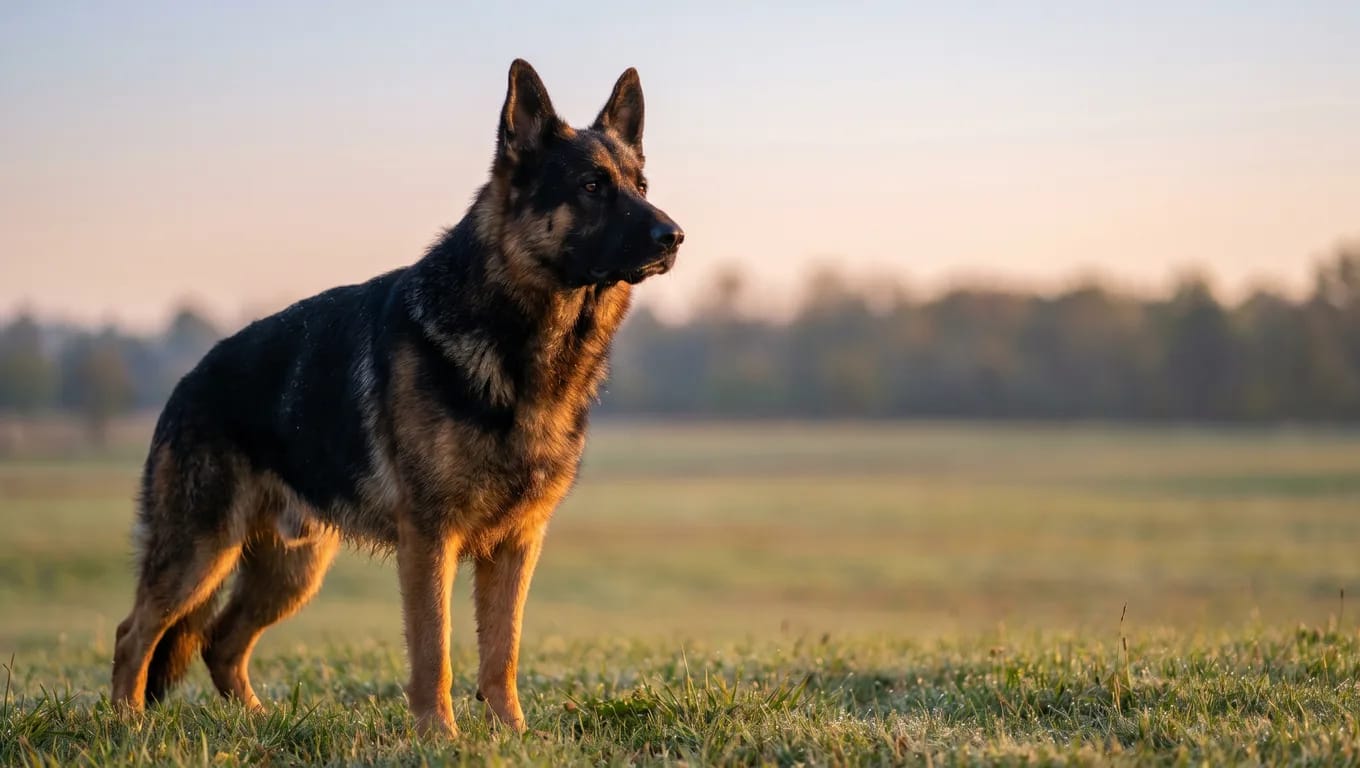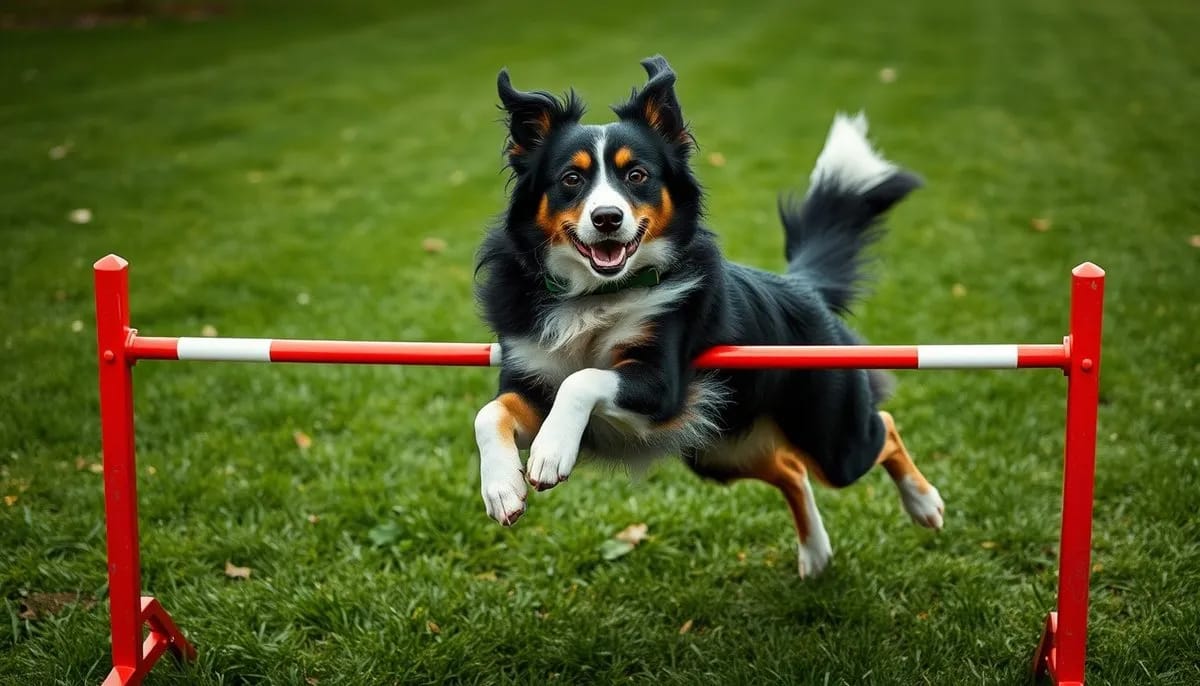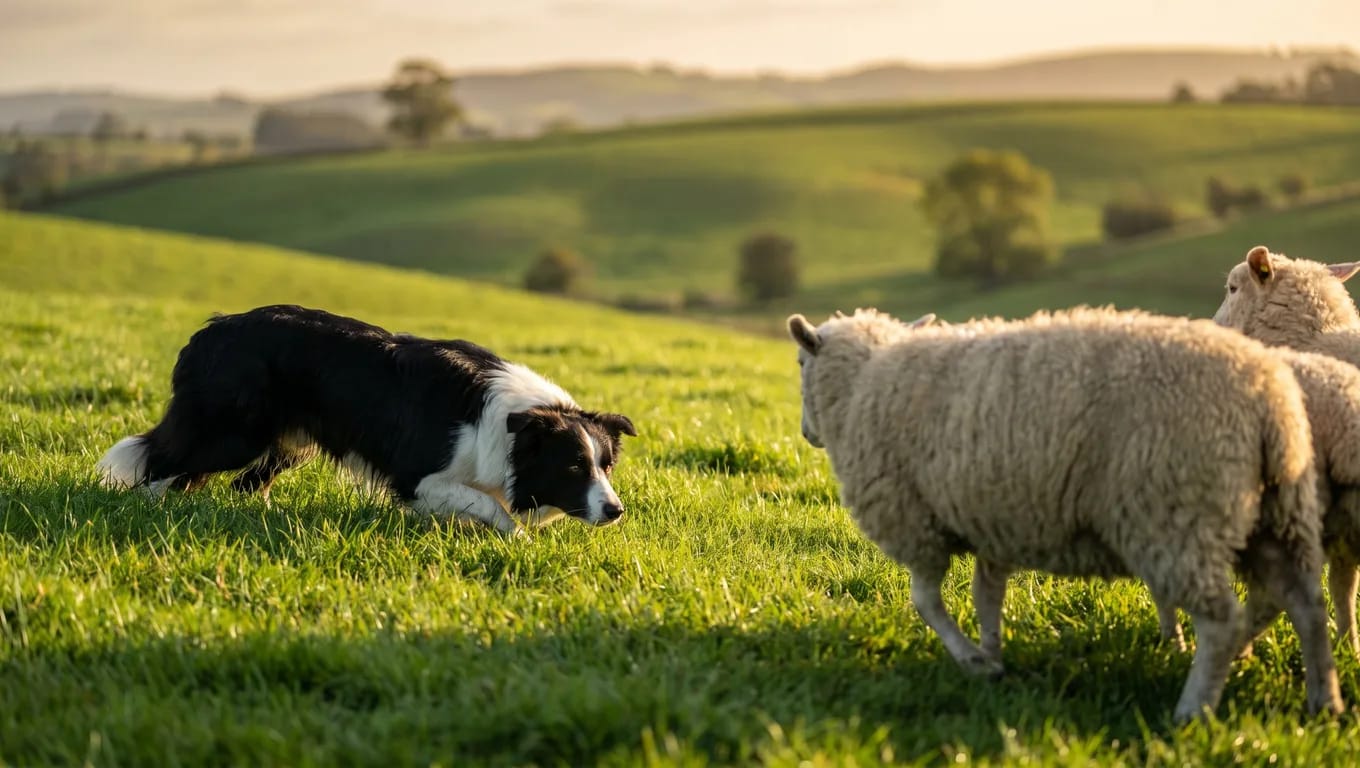
There is a moment, the first time a young dog meets livestock, that you never forget. The dog goes still. The ears come forward, the body drops a little lower, and a switch you did not know existed flips on. Some dogs circle wide and quiet. Others charge in barking. That raw, ancient pull is the heart of herding, and learning to shape it into real, useful work is one of the most rewarding things you can do with a dog.
If you have ever watched a Border Collie move a flock of sheep across a hillside and wondered whether your own dog could do that, this guide is for you. We will cover what herding actually is as a sport, how a herding instinct test works, what early training looks like, and how to take a sensible first step.
What is herding, really?
At its simplest, herding is the controlled movement of livestock by a dog working in partnership with a person. The dog uses pressure, position, and movement, not aggression, to gather animals, move them in a direction, and hold them where the handler wants them. Done well, it looks effortless. Getting to that point is anything but.
As a modern activity, herding lives in two overlapping worlds: working herding, where dogs do a real job on farms moving sheep, cattle, ducks, or goats, and herding as a sport, where handlers and dogs train and compete in trials that recreate those practical tasks under judged conditions.
For most pet owners, the entry point is the sport and the recreational side. You do not need a farm, a flock, or a working pedigree to start. You need a dog with some instinct, a safe place to train, and a willingness to learn a new language together.
What makes herding so different from other dog sports is the third party in the room. In agility or obedience, the conversation is between you and your dog. In herding, you are both reading and responding to a flighty, opinionated group of animals at the same time. It is a genuine three-way partnership, and the livestock do not care about your plans.
Herding is an instinct-driven activity, but instinct is not the same as skill. A dog can have enormous drive and still need months of patient work to become safe and useful around stock. Drive gets you started. Training is what keeps everyone, including the sheep, safe.
Which dogs can herd?
The honest answer is more dogs than you might expect, but not all of them, and not all in the same way.
Herding breeds were shaped over centuries for this exact work, and they tend to carry the strongest, most trainable instinct. Herding dog training is generally most straightforward with the classic working breeds, though the style of work varies enormously. Some dogs cast out wide and use a quiet, hypnotic stare to move stock. Others work close and push with body and voice.
This post is about the activity itself rather than the breeds, so if you want to know which breeds excel and how their styles differ, we have a dedicated guide: Herding Dog Breeds: The Complete Guide to Types of Sheepdogs.
What matters here is this: even within the herding breeds, individual dogs vary wildly. One Border Collie littermate may switch on at the first sight of sheep while another shrugs and walks off, and plenty of mixed-breed dogs surprise everyone with real, workable instinct. The only way to know what your specific dog brings to the field is to test it.
What is a herding instinct test?
A herding instinct test is a short, controlled, low-pressure introduction to livestock, supervised by an experienced instructor, designed to reveal whether your dog has the natural drive to herd and how it expresses that drive.
Think of it as an audition rather than an exam. Nobody expects the dog to move the stock correctly. The instructor is watching for the spark and, just as importantly, for how that spark shows up.
What happens during an instinct test
A typical test runs only a few minutes and unfolds something like this:
- You bring your dog, usually on a long line, into a round pen or small enclosure with a few calm, dog-experienced sheep or ducks.
- The instructor takes the lead, or works closely alongside you, while your dog is allowed to approach the stock under control.
- They watch your dog's reaction and gradually give it a little more freedom if it is showing safe, promising interest.
- After a short window, the dog comes back out before it gets overstimulated or exhausted.
Sessions are kept deliberately brief. A dog buzzing with adrenaline cannot learn, and a bad first experience, getting butted by a ewe or being allowed to chase wildly, can teach habits that take ages to undo.
What the instructor is looking for
A good evaluator is reading a whole cluster of signals, not just "does the dog chase." They will be watching for:
- Interest and focus. Does the dog lock on to the stock, or ignore them entirely?
- Style of approach. Does it circle and gather, or run straight in? Does it work wide or tight?
- Eye. That intense, controlling stare some herders use to move animals.
- Balance. A natural instinct to position itself opposite the handler, keeping the stock between you.
- Biddability. Will the dog take any direction from you, even in the grip of excitement?
- Off switch. Can it calm down, or does it tip straight into frantic, mindless chasing?
An instinct test is not a place for a dog with no recall or no impulse control to "just try it." Loose stock and an out-of-control dog is how animals get hurt. A reliable recall and basic self-control are the real prerequisites, and a responsible instructor will tell you if your dog is not ready yet.
What if my dog does not "pass"?
First, instinct tests are rarely pass or fail in any strict sense. They are information. A dog that shows little interest on one day might come alive months later as it matures, or with a different type of stock. A dog that charges in wildly is not a failure either; it simply has drive that needs shaping rather than instinct that needs finding.
And if your dog genuinely has no interest in stock, that is fine too. It just means its talents lie elsewhere, whether that is agility, scent work, or being a wonderful companion on the sofa.
What does herding training actually look like?
Once a dog shows promising instinct, training a herding dog becomes a long, layered conversation. The goal is not to teach the dog to want to move livestock; it already wants that. The goal is to give you a steering wheel and brakes so that raw desire becomes controlled, useful work.
Training generally progresses through recognizable stages, though good trainers move between them fluidly.
| Stage | Focus | What it looks like |
|---|---|---|
| Foundation (off stock) | Control and relationship | Rock-solid recall, a reliable stop or "lie down," and impulse control practiced away from livestock |
| Introduction (on stock) | Confidence and balance | Short sessions letting the dog feel the stock, learn to circle, and find its natural balance point |
| Basic control | Direction and pace | Teaching the dog to go left and right around the stock, to slow down, and above all to stop on command |
| Practical work | Real tasks | Gathering stock, driving them in a direction, moving them through gates and obstacles |
| Trialing (optional) | Precision under pressure | Refining the above to complete judged courses cleanly and calmly |
The single most important skill
If you take one thing from this section, take this: the most valuable command in herding is the stop. A dog that will instantly lie down or stand still on cue, even mid-chase with adrenaline pumping, is a safe dog and a trainable dog. Almost everything else is built on top of a reliable stop, and many instructors will not let a dog progress to real stock work until that stop is bombproof.
Herding also has its own working vocabulary, refined over generations. Come-bye and away send the dog circling clockwise or counter-clockwise, walk up asks it to move calmly into the stock, steady asks for less speed, and that'll do means "you are finished, come back to me." Watching an experienced handler use these with a trained dog is a quiet, almost telepathic conversation, every word built on hours of patient repetition.
How do I get started with herding?
Here is the practical part. Getting into herding is very doable, but the order in which you do things matters enormously, both for safety and for your dog's long-term enjoyment.
1Build control before you ever see a sheep
Before livestock enters the picture, invest in the foundation. Work on a reliable recall, a solid stop, and everyday impulse control. The more control you have off stock, the safer and more productive your first sessions will be. This work pays off no matter how far you take herding.
2Find an experienced instructor and facility
Herding is not a sport to teach yourself from videos, at least not at the start. You need real livestock, a safe enclosure, stock accustomed to green dogs, and an experienced trainer who can read both your dog and the animals in real time and step in before anything goes wrong. Look for a herding club, a working farm that offers lessons, or a dedicated training center near you.
3Book an instinct test
Start with an instinct test rather than committing to a course of lessons. It is the low-pressure way to discover what your dog brings to the field, and a good instructor will use it to recommend a realistic next step.
4Commit to short, consistent sessions
If your dog shows promise, progress comes from frequent short sessions rather than occasional marathon ones. A few focused minutes on stock, ending while the dog still wants more, beats an exhausting hour every time. Keep the dog under threshold, keep it succeeding, and let the skill build slowly.
5Protect the experience
Whatever happens, keep early stock work positive and safe. Do not let your dog chase wildly, do not push a frightened dog, and never let it learn that the stock are toys to be harassed. The dogs that go furthest in herding are the ones whose handlers were patient at the very beginning.
Curious whether your dog has the instinct? The best first step is a supervised session with a real instructor. You can find and book a herding class or instinct test near you on Canlyo, and discover what happens when your dog meets a flock for the first time.
Herding asks more of you than almost any other dog activity. It demands patience, timing, and a willingness to hold three minds in your head at once: yours, your dog's, and the livestock's. But when it clicks, when your dog casts out wide, drops to a stop on a single word, and brings a group of animals to you in a calm, balanced arc, you feel a connection that is impossible to forget. Start with a test, find a good teacher, and give that ancient instinct a job worthy of it.