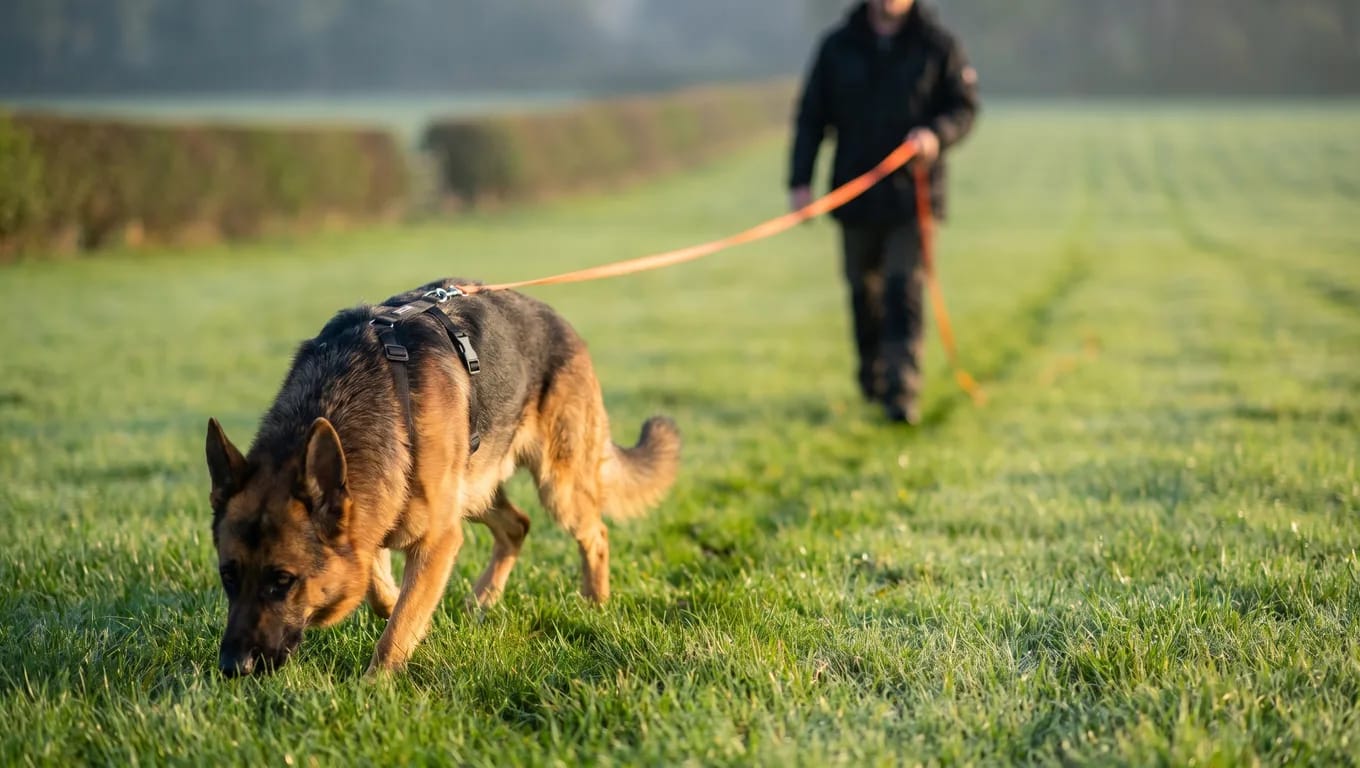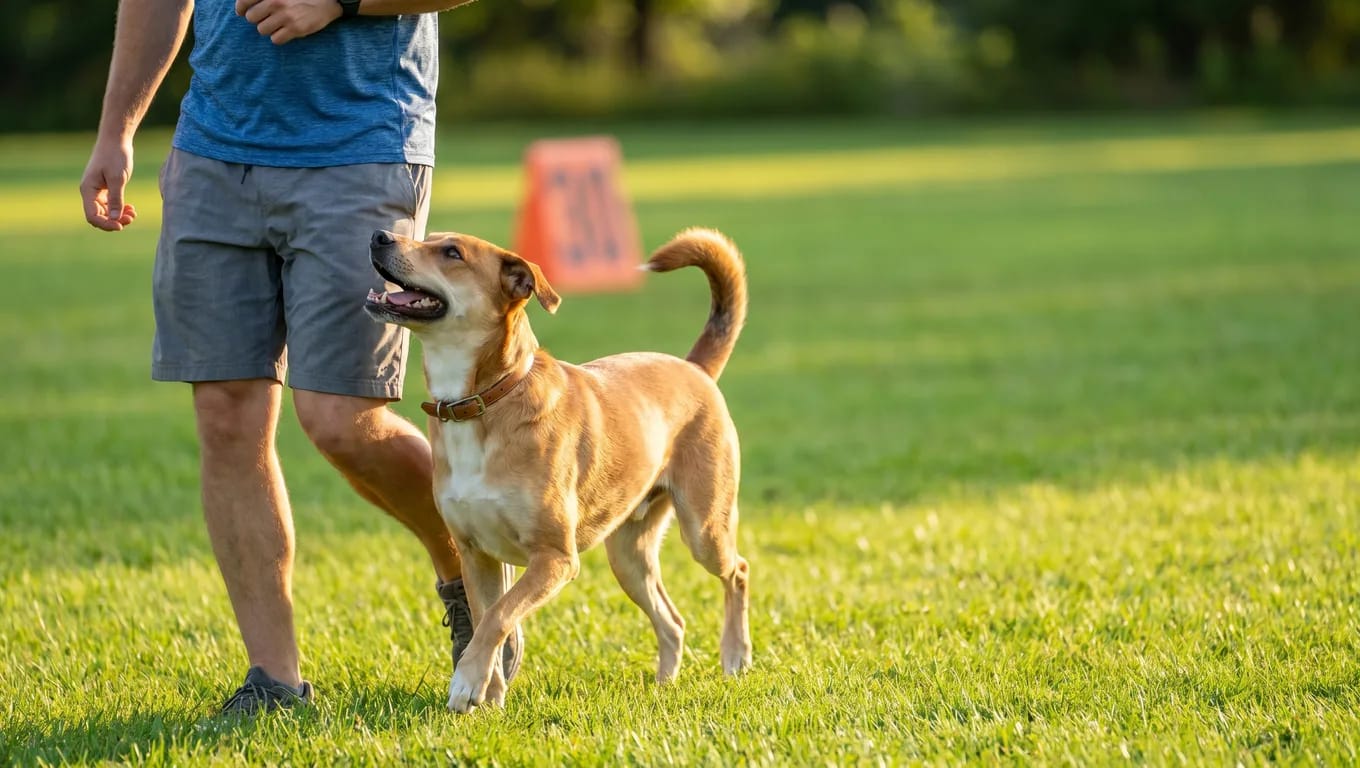
You walk up to a numbered cone, glance at the little sign clipped to it, and ask your dog to sit. At the next cone the sign tells you to walk a tight circle to the left, then a fast pace down the side of the ring, then a halt, then a 270-degree turn. Your dog reads your shoulders, your feet, and your voice, trotting beside you with ears up and tail wagging. No judge barks out commands and no stopwatch decides your fate. It is just the two of you, working your way around a course you read like a map. That, in a nutshell, is rally obedience.
If you have been wondering what is rally for dogs and whether it might suit your team, this guide explains what the sport is, how the rally obedience signs and stations work, the levels you climb, and how to get started.
What is rally obedience?
Rally obedience is a dog sport in which you and your dog navigate a numbered course of stations, performing the skill shown on a sign at each one. People often shorten the name to rally o, and you will also hear it called rally or, in some organizations, "rally-O." Think of it as obedience reimagined as a friendly, flowing course rather than a series of stiff, formal exercises.
The sport was created to bridge a gap. Traditional competitive obedience can feel rigid and intimidating, with long stays, precise heeling patterns, and judges who deduct points for the smallest wobble. Rally keeps the useful skills (sit, down, heel, turns, recalls) but wraps them in a format that is more relaxed, more conversational, and far more welcoming to beginners.
What makes the rally dog sport distinctive is how much you are allowed to communicate with your dog. Formal obedience keeps talking to a minimum; rally does the opposite, inviting you to praise, cue, and cheer your dog on from the first station to the last. You are an active partner in the run, not a silent statue beside it. For most owners, that is exactly what makes rally so enjoyable: it rewards the everyday teamwork you already do at home.
Where rally came from
Rally obedience grew out of traditional obedience in the early 2000s. It was popularized in the United States and then spread worldwide through kennel clubs and independent organizations. The core idea borrows from autocross in motorsport: a marked course you move through at your own rhythm, hitting each station in sequence. Today it is one of the most accessible competitive dog sports there is, with classes and titles available almost everywhere dog training centers operate.
Rally is often recommended as a first dog sport because the skills transfer straight into daily life. A dog that can heel past a distraction, sit at a curb, and turn with you on cue is simply easier and safer to live with, whether or not you ever set foot in a competition ring.
How do rally obedience signs and stations work?
The heart of the sport is the rally obedience signs. A course is a sequence of numbered stations, usually marked with cones, and beside each one sits a sign showing an illustrated exercise. You read the sign, perform that exercise with your dog, and move to the next number, flowing continuously from start to finish.
What a station asks for
Each sign describes a skill using a small diagram and a short label. The exercises range from simple to genuinely tricky, but they are all built from familiar obedience pieces. Common examples include:
- Halt, sit (or sit then down). Stop moving and have your dog sit, or sit then fold into a down.
- Turns. Right and left turns of 90 degrees, an about turn of 180, or a full 270-degree turn, with your dog staying in heel position.
- Circles and spirals. Walk a tight 360-degree circle, or weave a spiral around cones.
- Pace changes. Speed up to a fast pace, slow to a deliberate one, then return to normal.
- Call front, finish. Have your dog come and sit facing you, then return to heel position.
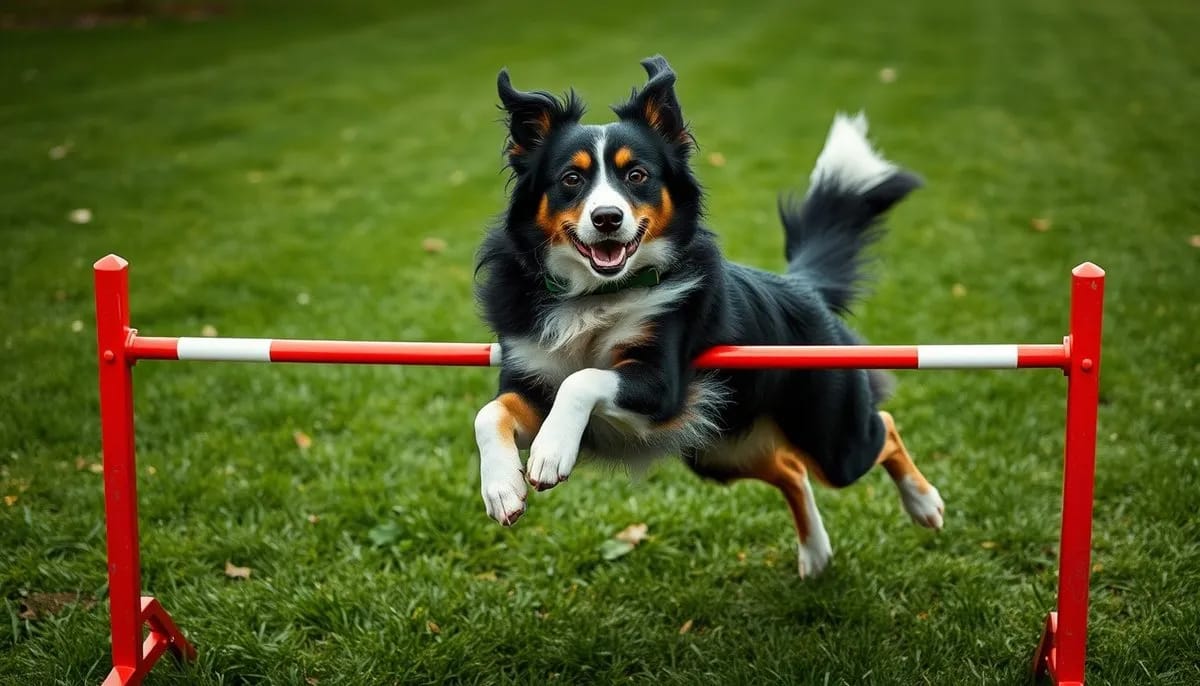
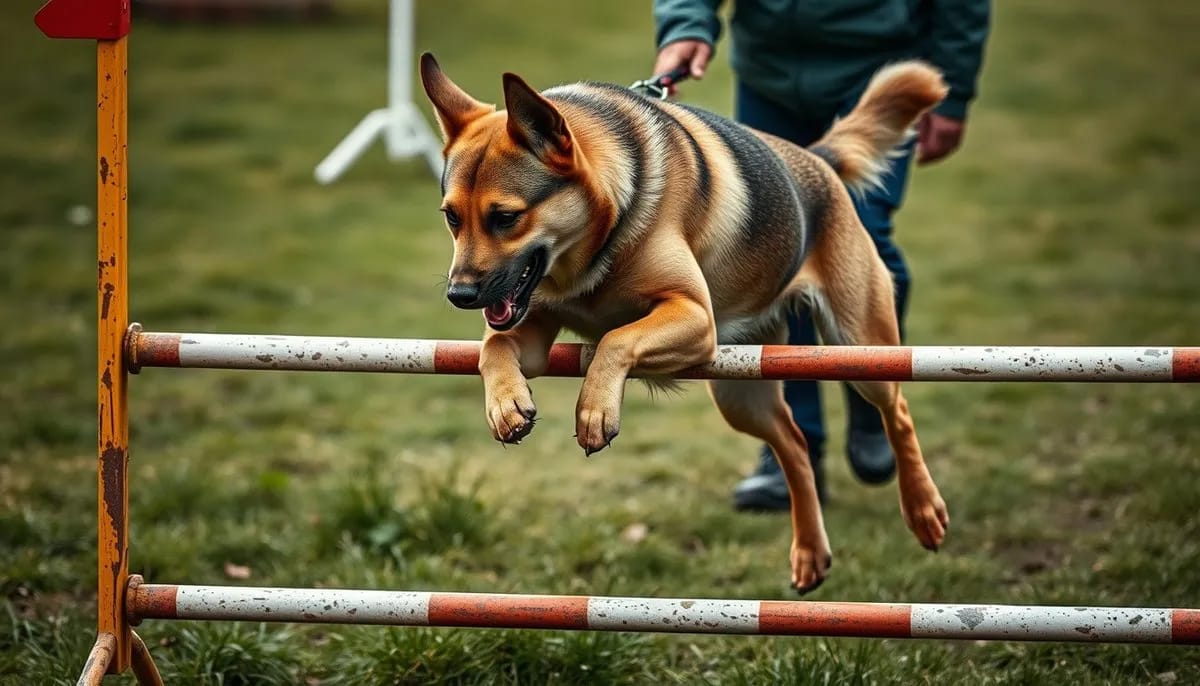
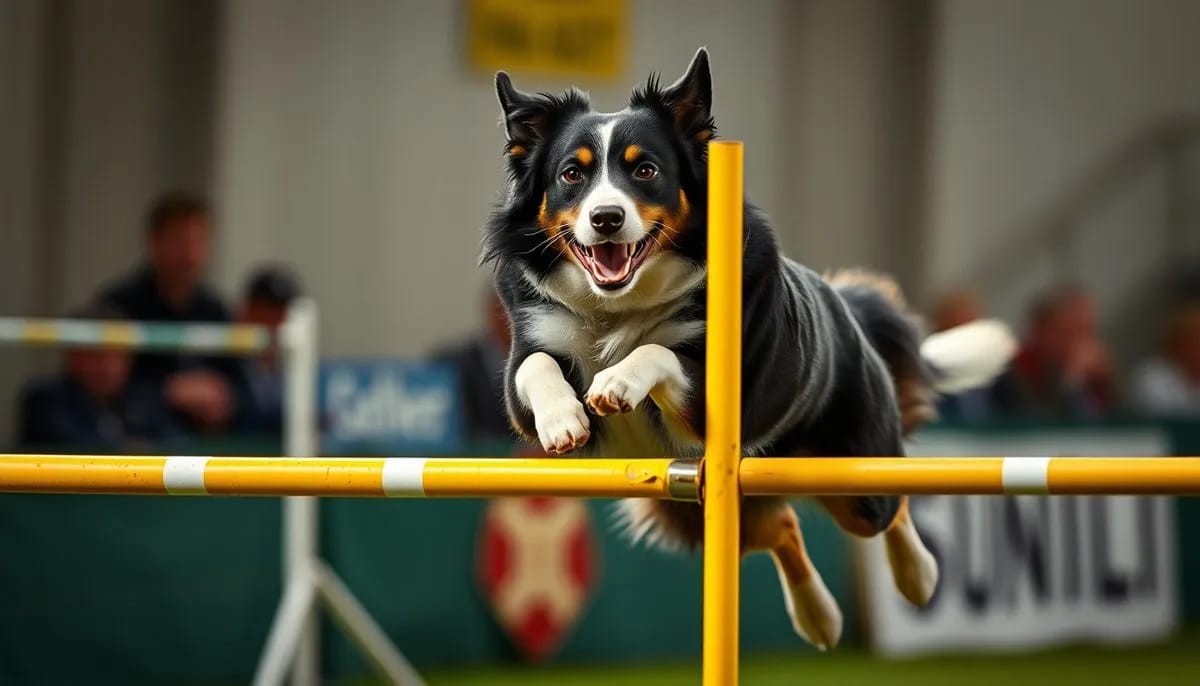
Higher up the sport you also meet jumps, stays at a distance, backing up, and sending your dog around a cone. Each organization publishes its own official set of signs, so part of preparing for a class is learning what the icons mean.
Reading the course and how it is judged
Here is a detail beginners love. Before your turn, you get a course walk-through, a few minutes to walk the numbered path yourself, without your dog, planning your footwork and memorizing the order before you run it for real. A judge then follows you around, but the atmosphere is relaxed: you start with a perfect score and lose small points for things like a tight leash, a crooked sit, or an extra cue, with time only counting as a tiebreaker. Crucially, you can talk to your dog the whole way around, which keeps the run feeling like cooperation rather than examination.
What are the rally obedience levels?
As your team improves, you climb through a series of levels, each harder than the last. The exact names and rules vary by organization, but the logic is the same: you start on leash with simple stations and work toward off-leash courses with more complex skills and tighter precision. Here is the typical shape of that journey.
| Level | Leash | Course feel | New challenges |
|---|---|---|---|
| Novice | On leash | Short, simple, lots of basic stations | Sits, downs, turns, pace changes, a slow recall |
| Intermediate | Off leash | Similar skills, more independence | The same exercises performed without a leash |
| Advanced | Off leash | Longer, with at least one jump | Jumps, more stations, more precise heeling |
| Excellent | Off leash | Demanding, more stations, distance work | Stays at a distance, backups, sends, less help allowed |
To earn a title at a level, you usually pass a course a set number of times under different judges, scoring above a minimum, then move up. Many organizations also offer a top "master" or "champion" tier and team or veteran classes, so there is always a next goal if you want one.
You do not have to compete at all. Plenty of owners train rally purely for the mental workout and the bonding, treating the levels as a fun curriculum rather than a ladder. The structure is there if you want it and easy to ignore if you do not.
Is rally obedience right for my dog?
One of the best things about rally is how inclusive it is. Because the exercises are built from ordinary obedience skills and the pace is set by you, almost any dog can take part.
Any breed, any size, any age
You will see Border Collies and Golden Retrievers in rally rings, but just as happily Chihuahuas, mixed-breed rescues, Bulldogs, and senior dogs. There are no height divisions to clear and no speed you must hit. The sport adapts to the dog in front of you:
- Puppies can learn the foundation skills (sit, down, attention, loose-leash walking) long before they ever see a course.
- Adult dogs of any background, including those new to training, pick rally up quickly because the pieces are so familiar.
- Senior dogs thrive in it, since the low-impact stations and gentle pace keep their minds busy without straining their bodies.
Especially good for nervous and reactive dogs
Because you work as a focused team, with only one dog in the ring, rally is often recommended for reactive or anxious dogs. The constant flow of cues gives a worried dog a clear job to concentrate on, and the steady praise builds confidence that spills over into calmer walks and better everyday behavior.
How do I get started with rally obedience?
You do not need a competition background, special equipment, or a perfectly trained dog, just a handful of basic skills and a willingness to practice in short, upbeat sessions. Working with an experienced instructor early on makes a real difference, because clean footwork and good timing are hard to teach yourself.
1Build the foundation skills
Before any signs come into play, get comfortable with the building blocks: sit, down, stay, a reliable recall, and walking in heel position on a loose leash. If your dog can do these in a calm room, you already have most of what a Novice course asks for.
2Learn to read the signs
Find your chosen organization's official set of rally obedience signs and learn the icons, practicing one or two at a time at home. You will be surprised how quickly the diagrams make sense once you connect them to skills your dog already knows.
3Set up a mini course
Use cones, cups, or folded paper to mark out three or four stations in your garden or living room. Walk the sequence yourself first, just like a real course walk-through, then run it with your dog using plenty of encouragement and rewards. Keep it short and finish while your dog is still keen.
4Join a class
The fastest, happiest route into the sport is a beginner rally class at a dog training center. A good instructor sets up safe courses, teaches you where to cue and how to move your feet, and corrects small habits before they stick. You also practice around mild distractions, exactly what you will face if you ever enter a competition.
Resist the urge to drill long sessions. Rally rewards quality over repetition, and a tired or bored dog learns slowly. Two or three short, cheerful sessions a week, ending on a win, will take you much further than one long, frustrating one.
What progress looks like
Expect steady, satisfying improvement rather than overnight mastery. In your first weeks you and your dog learn to read each other through a few simple stations; over the following months you add exercises, smooth out your footwork, and link stations into longer, flowing runs. Somewhere along the way you will notice your dog checking in with you more often on walks, at the door, and out in the park, because rally quietly teaches that paying attention to you is the best game in town.
That, in the end, is what rally obedience is: a conversation that turns everyday skills into something you both look forward to. Once you have walked a course together, reading the signs with your dog trotting beside you, eyes on yours, it is hard not to want to do it all over again.
Ready to turn everyday obedience into a sport you both love? Find and book a beginner rally obedience class near you on Canlyo, and discover how much fun working as a team can be.