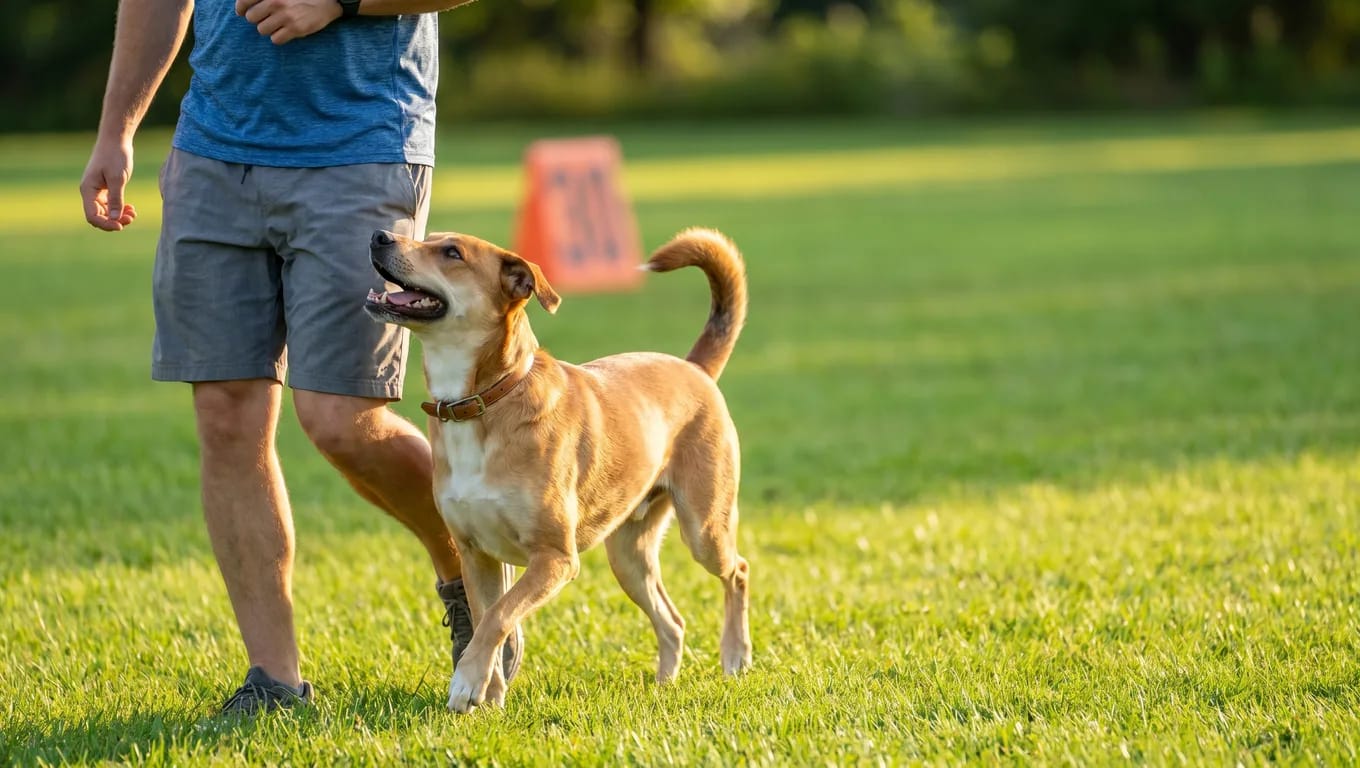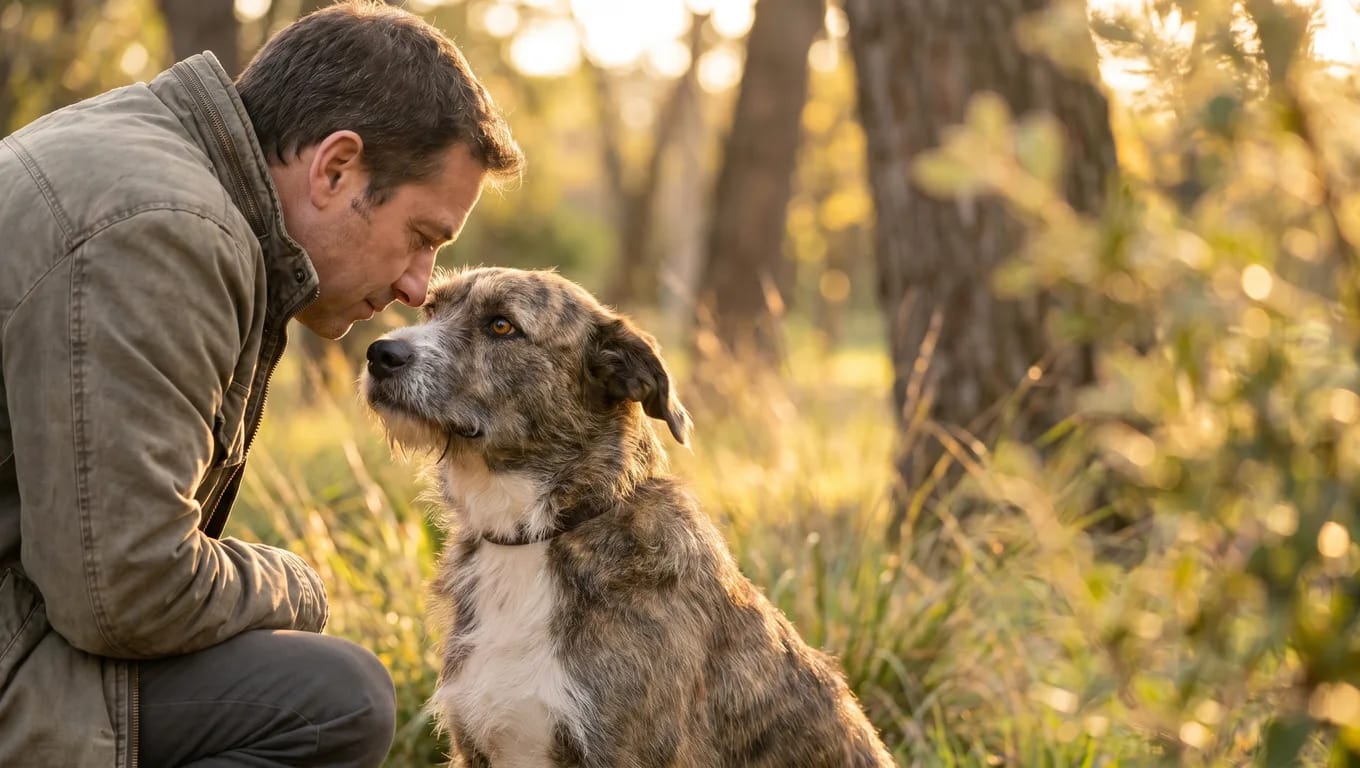
Bringing home a rescue dog is one of the most rewarding things you can do, and one of the most misunderstood. People often expect a grateful dog that settles in overnight, then worry when they get a nervous, shut-down, or over-the-top one instead. The truth is simpler and kinder: your dog is not being difficult, it is adjusting. Learning how to train a rescue dog is mostly about adapting your approach to the dog in front of you, not forcing the dog to fit a standard plan.
Your rescue dog is not broken
Whatever your dog's history, it arrived with habits that made sense somewhere else. A dog that counter-surfs, bolts through doors, or ignores its name is not stubborn, it simply never learned the rules of your home. Drop the idea of "fixing" and replace it with "teaching." That shift in mindset lowers your frustration and your dog's stress, which is exactly the climate learning needs.
Start with the decompression period
Before any real training, give your dog time to simply exist and feel safe. A popular guide is the 3-3-3 rule: roughly three days to feel overwhelmed and cautious, three weeks to start settling into a routine, and three months to feel truly at home. The timeline varies by dog, but the principle holds.
- Keep the world small at first: a calm home, a predictable routine, short low-pressure walks.
- Avoid the temptation to introduce every friend, dog, and outing in week one.
- Let your dog choose to approach you rather than crowding it.
Decompression is not wasted time, it is the foundation. A dog that feels safe learns faster and generalizes better than one rushed into lessons before it can think clearly.
Build trust before obedience
Early on, your real curriculum is the relationship. Hand-feed meals or scatter food so good things come from you. Reward any calm check-in or moment of eye contact. Keep sessions tiny and end on a win. You are teaching one lesson under all the others: you are safe, predictable, and worth paying attention to. Formal cues like sit and recall come far more easily once that belief is in place.
It is never too late: training an older dog
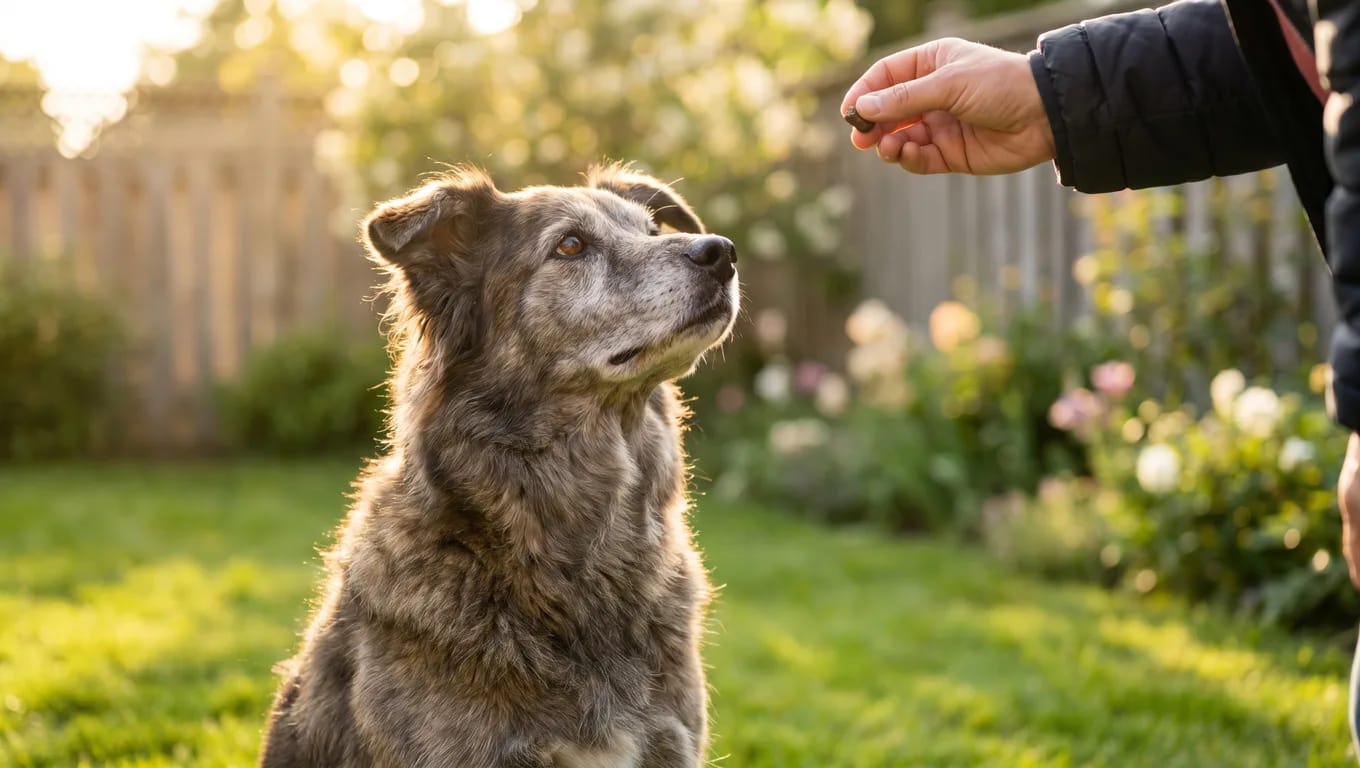
The old line about old dogs and new tricks is a myth. Older dog obedience training works just as well as it does with puppies, sometimes better, because adult dogs often focus longer and have fewer wild energy spikes. Adjust for the body, not the brain: shorter sessions if stamina is low, soft footing for sore joints, and a quick vet check if you see stiffness. Use the same reward-based methods you would with any dog.
How to train a deaf dog
A deaf dog learns the same way a hearing dog does, you just swap sound cues for visual ones. Knowing how to train a deaf dog comes down to a few adjustments:
- Use clear hand signals as your cues, and keep them consistent across the household.
- Replace the clicker or marker word with a visual marker, such as a quick thumbs-up or a flash from a small light, paired with a treat.
- Build a rock-solid check-in. Reward your dog generously for looking back at you, since you cannot call its name.
- Get attention gently with a soft foot tap on the floor (the vibration) or a wave in its line of sight, never by startling it awake.
Deaf dogs are often wonderfully attentive precisely because they learn to watch you.
Small dogs and other special cases
Tiny dogs are sometimes "trained" less because owners simply scoop them up instead of teaching them. They deserve the same clear rules as any dog. The thread through every special case, rescue, senior, deaf, or small, is the same: meet the dog where it is, lower the pressure, and reward the behavior you want.
If your dog shows deep fear, freezing, or any aggression, especially around food, handling, or strangers, work with a qualified force-free trainer or a veterinary behaviorist. With a fearful rescue, the wrong heavy-handed advice can set you back months.
You do not have to do it alone
A good class gives a rescue dog something hard to recreate at home: calm, controlled exposure to other dogs and people, with an instructor reading the room. Look for force-free, reward-based classes that welcome nervous dogs and let them work at a distance.
You can find and book a positive, beginner-friendly class with a qualified trainer near you on Canlyo, and give your rescue dog a confident fresh start.
Adopting a dog is a slow-build kind of love. Give it time to decompress, earn its trust before its obedience, and adapt your methods to its body and senses, and you will watch a guarded newcomer turn into a settled, willing companion that is unmistakably yours.