If you have ever seen a dog scale a wall, sail over a long jump, then launch into a dramatic, theatrical bite on a padded "bad guy," you were probably watching a ring sport. Mondioring and french ring are protection sports that blend obedience, athletic jumps, and controlled protection work into one demanding, spectator-friendly test of teamwork. They look intense, but at heart they reward the same thing every dog sport does: a dog that listens to its handler under pressure.
What are ring sports?
Ring sports are protection-dog sports performed inside a marked ring, where a dog works through a set program of exercises with its handler while a costumed helper, the decoy, plays the part of the challenger. Unlike a sport judged purely on obedience or speed, a ring sport asks for everything at once: precise control, real athleticism, and the nerve to engage and then disengage on command. The drama you see is built on a foundation of obedience so reliable it can hold even when the dog is highly aroused.
Mondioring, French Ring and Belgian Ring
The "ring sports" are a small family with shared DNA and local flavors:
- French Ring developed in France and is known for spectacular jumps and a strong emphasis on the bite-and-release protection routines. The french ring sport is fast, flashy, and physically demanding.
- Mondioring (or "mondio ring") is the international version, created to bring handlers from different ring-sport traditions together under one rulebook. It rotates themes and props so a dog cannot simply memorize a fixed routine.
- Belgian Ring is the older, regional ancestor that helped shape the others.
If you are choosing where to start, mondioring is often the most accessible internationally, while french ring has deep roots in Francophone clubs.
What happens in a trial
A ring sport trial groups its exercises into three broad areas:
- Obedience: heeling, positions (sit, down, stand) at a distance, retrieves, a food refusal test, and a send-away.
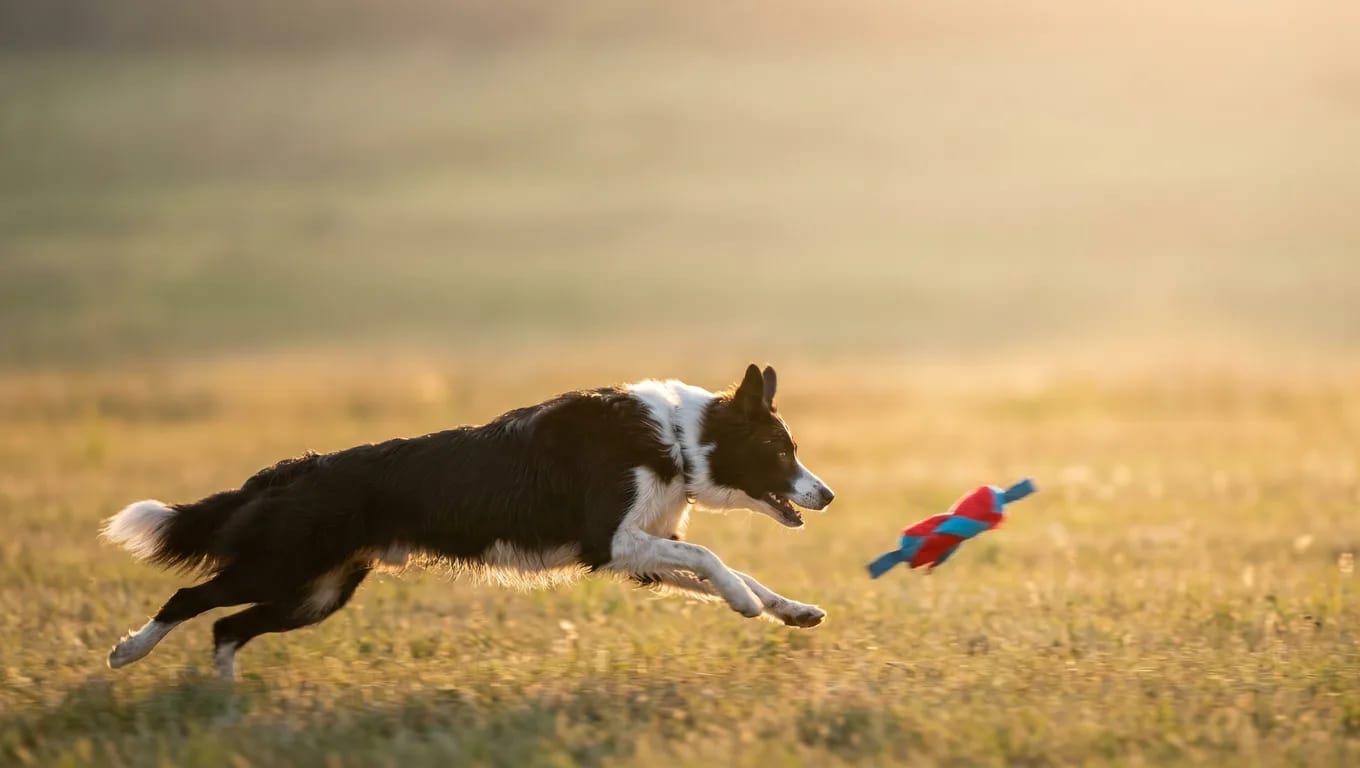
- Jumps: a long jump, a high hurdle, and a palisade (a steep wall the dog scales and clears).
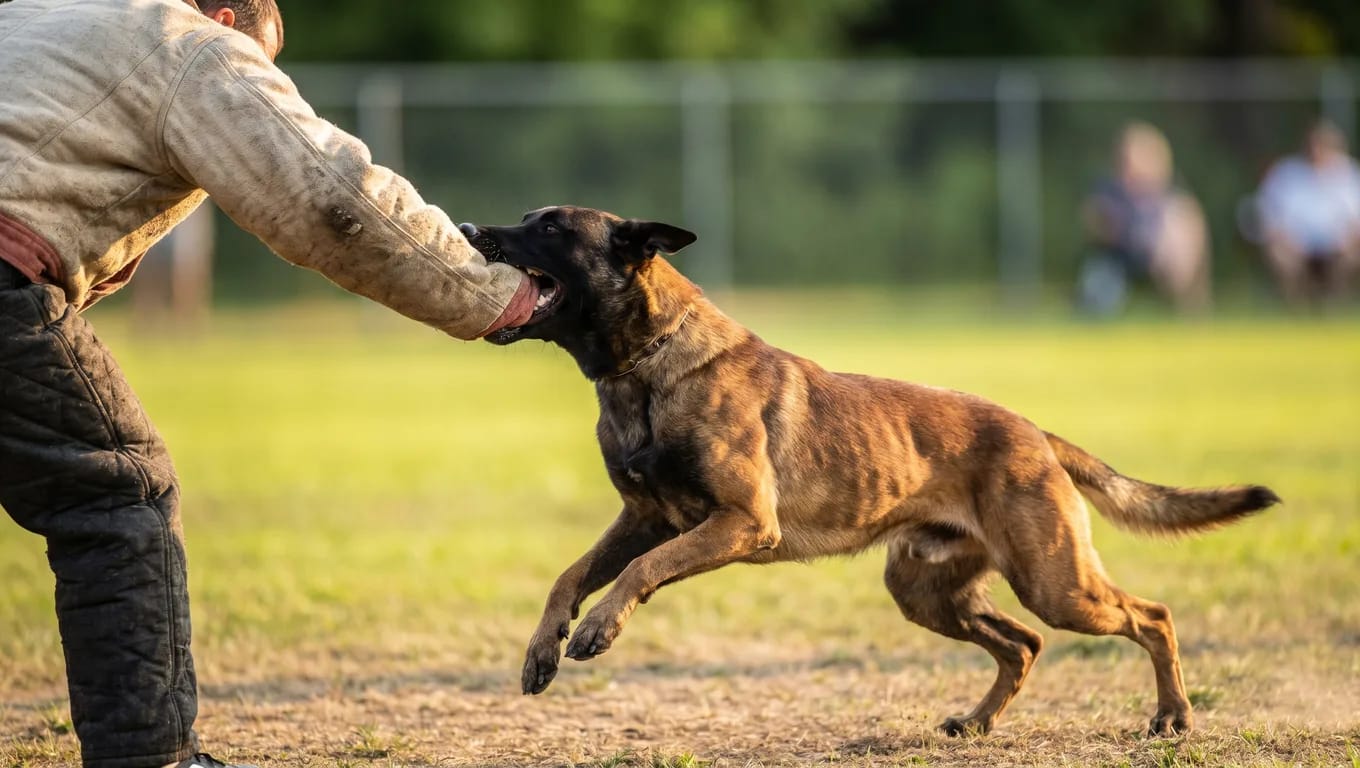
- Protection: a series of bite-and-guard exercises where the dog must engage the decoy on cue, hold or guard, and crucially, release instantly when told.
Points come not just from doing each exercise but from doing it with control and precision, and a single moment of disobedience can cost dearly.
The decoy: the heart of ring sport
The decoy is far more than a target. A skilled decoy is an athlete and an actor who tests the dog's nerve and the handler's control, varying their behavior so the dog must truly read the situation rather than run a memorized script. Good ring-sport clubs revolve around experienced decoys, which is one reason you cannot really train these sports alone.
Protection sport is about control, not aggression. A well-trained ring-sport dog is a stable, social companion that engages on cue and stops on cue. The bite is a trained behavior with an off switch, not a temperament.
How ring sport differs from IGP
People often lump ring sports together with IGP (formerly Schutzhund), and they are cousins, but the feel is different. IGP follows a fairly fixed three-phase format of tracking, obedience, and protection. Ring sports drop formal tracking, lean harder into athletic jumps, and make the protection work less predictable, with the decoy moving freely and the props changing. In short, IGP rewards precision against a known standard, while ring sports reward adaptability under a decoy's pressure.
Which dogs do ring sport
These sports are dominated by confident, high-drive working breeds, above all the Belgian Malinois, along with German Shepherds, Dutch Shepherds, and Belgian Tervuren. A capable ring sport dog needs sound nerves, athleticism, and a real "off switch." This is advanced territory, best suited to experienced handlers who enjoy detailed, long-term training.
How to get started
You do not begin with bite work. You begin with a foundation of rock-solid obedience, fitness, and engagement, then find a club.
- Find a ring-sport club with a qualified decoy and a positive training culture. This is non-negotiable, since the protection work must be taught safely.
- Build obedience and fitness first, ideally to a high standard, before any protection training.
- Watch a trial or two to see what the sport actually asks of a team.
- Talk to your vet about your dog's structural readiness for the jumps.
Curious whether your dog has what it takes? You can find and book an obedience or dog-sport class near you on Canlyo to build the foundation, and connect with the kind of club where ring sport begins.
Ring sports are not for every dog or every owner, and that is part of their appeal. They reward years of patient teamwork with a partnership you can see in the ring: a powerful dog working in complete, joyful concert with its handler, all drive and all control at the same time.