If your walks have turned into a constant scan for the next dog, jogger, or bicycle that might set your dog off, you already know how isolating life with a reactive dog can feel. The barking, lunging, and spinning at the end of the leash are exhausting, and they often leave owners feeling embarrassed or convinced they have done something wrong. You have not. Reactivity is common, it is rooted in emotion rather than disobedience, and with the right approach it genuinely improves. This guide explains what dog reactivity actually is and walks you through the calm, proven techniques that help a reactive dog feel safe.
What is dog reactivity, really?
A reactive dog overreacts to something in the environment, a trigger, with an intensity that seems out of proportion to the situation. The classic picture is the dog who barks and lunges at other dogs on the leash but is perfectly friendly off it.
The crucial point is that reactivity is usually driven by big emotions, most often fear, frustration, or overexcitement, not by a desire to dominate or misbehave. Your dog is not giving you a hard time. Your dog is having a hard time.
Reactivity is not the same as aggression. A reactive dog is mostly saying "please give me space," and is usually friendly or neutral once a trigger is far enough away. Aggression is intent to do harm and tends to persist regardless of distance. Telling them apart matters for both safety and training.
Common triggers
- Other dogs, especially on the leash
- Strangers, or specific types of people such as men or children
- Bikes, skateboards, cars, and joggers
- Other fast or noisy moving things
Understanding your dog's threshold
The single most useful idea in reactivity training is the threshold: the point at which your dog tips from noticing a trigger to reacting to it. Think of it like a traffic light. Below threshold your dog is green, able to see the other dog and still eat, listen, and think. Over threshold your dog is red, the thinking brain goes offline, and barking and lunging take over.
You cannot teach a dog anything once it is red, any more than you could teach a panicking person a new skill. Almost every technique below comes down to one goal: keep your dog in the green long enough to learn that triggers are no big deal.
Learn to read the early warning signs
Here is the catch: dogs rarely jump straight from calm to explosion. They climb a rising ladder of stress first, and if you can spot the early rungs you can add distance before the meltdown instead of after. Watch for these quiet signals that your dog is starting to worry:
- Yawning when not tired, or repeated lip licks and tongue flicks
- Turning the head or whole body away from the trigger
- Suddenly sniffing the ground for no clear reason
- A lower posture, stiffening, or a tucked tail
- Panting harder than the weather calls for
Treat the first of these as your cue to act. Reading the whispers is what makes everything below actually work.
Calm-down techniques that actually work
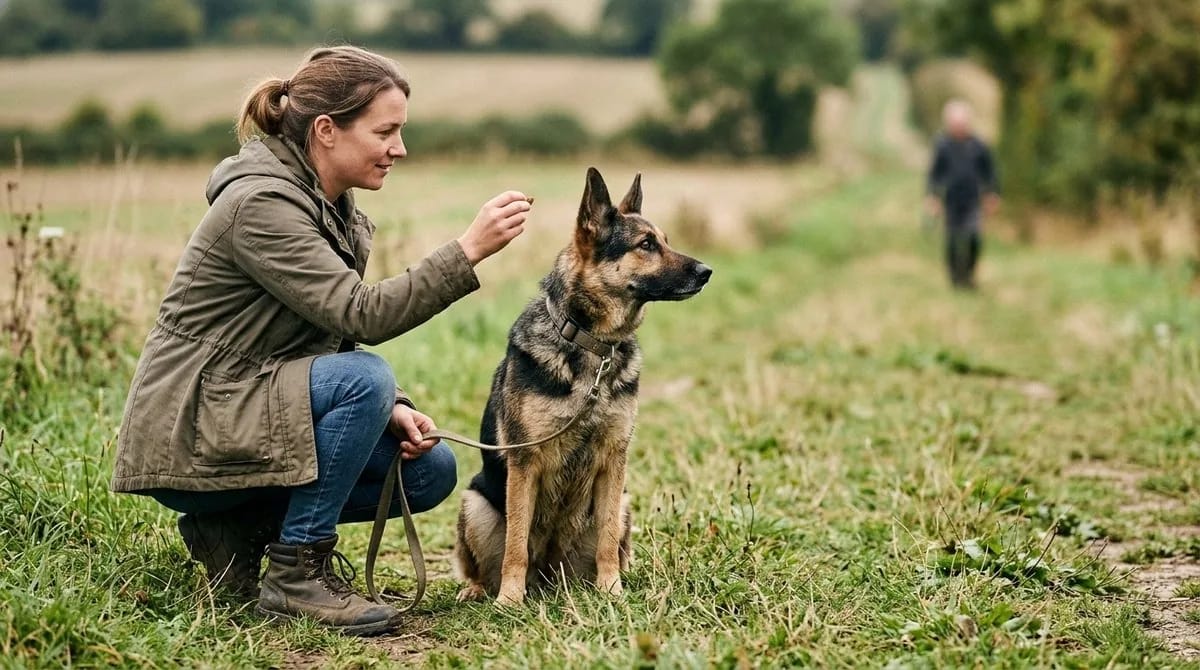
These methods are force-free, evidence-based, and used by modern trainers everywhere. They work together, so use them as a toolkit rather than picking just one.
Manage distance first
Distance is your most powerful tool. The farther you are from a trigger, the calmer your dog stays. Cross the street, step behind a parked car, or simply turn and walk the other way. Creating space is not "giving in," it is setting your dog up to succeed instead of rehearsing the meltdown.
Counter-conditioning: change how your dog feels
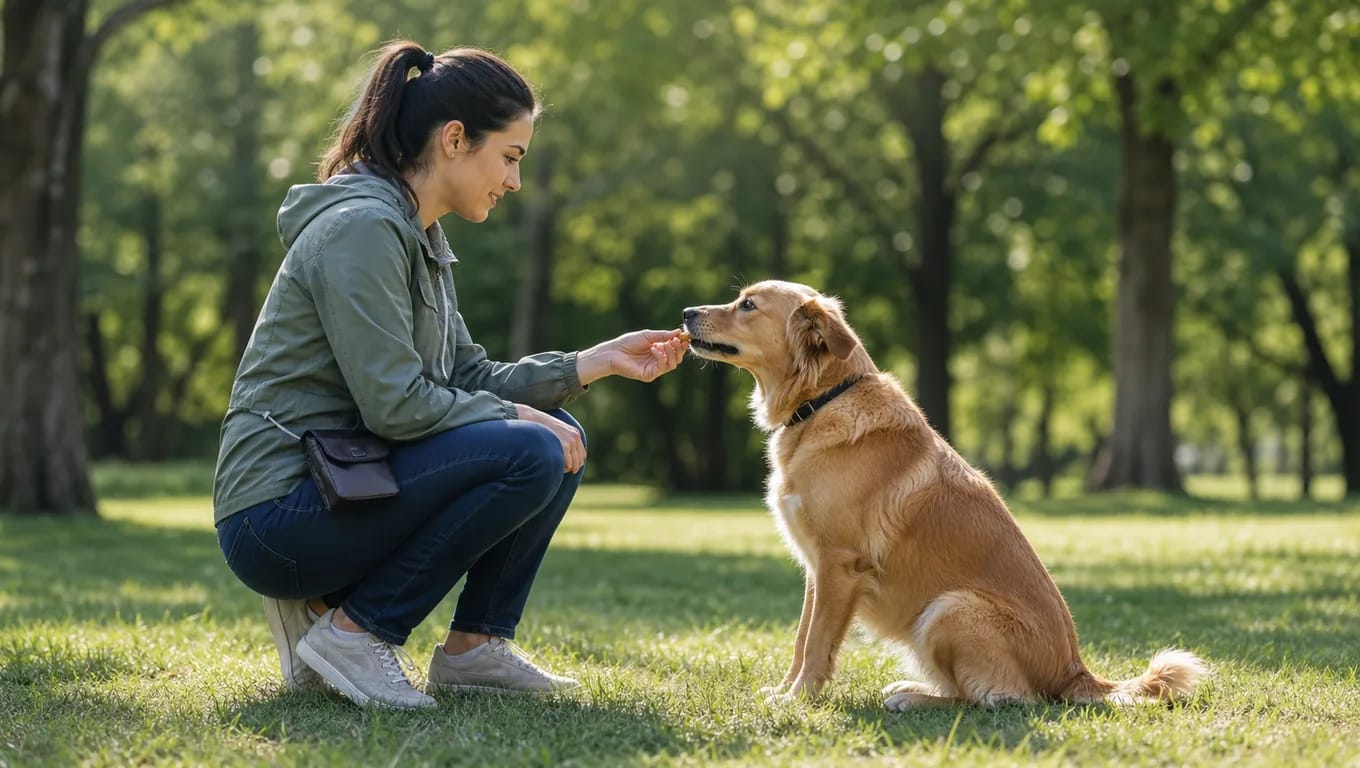
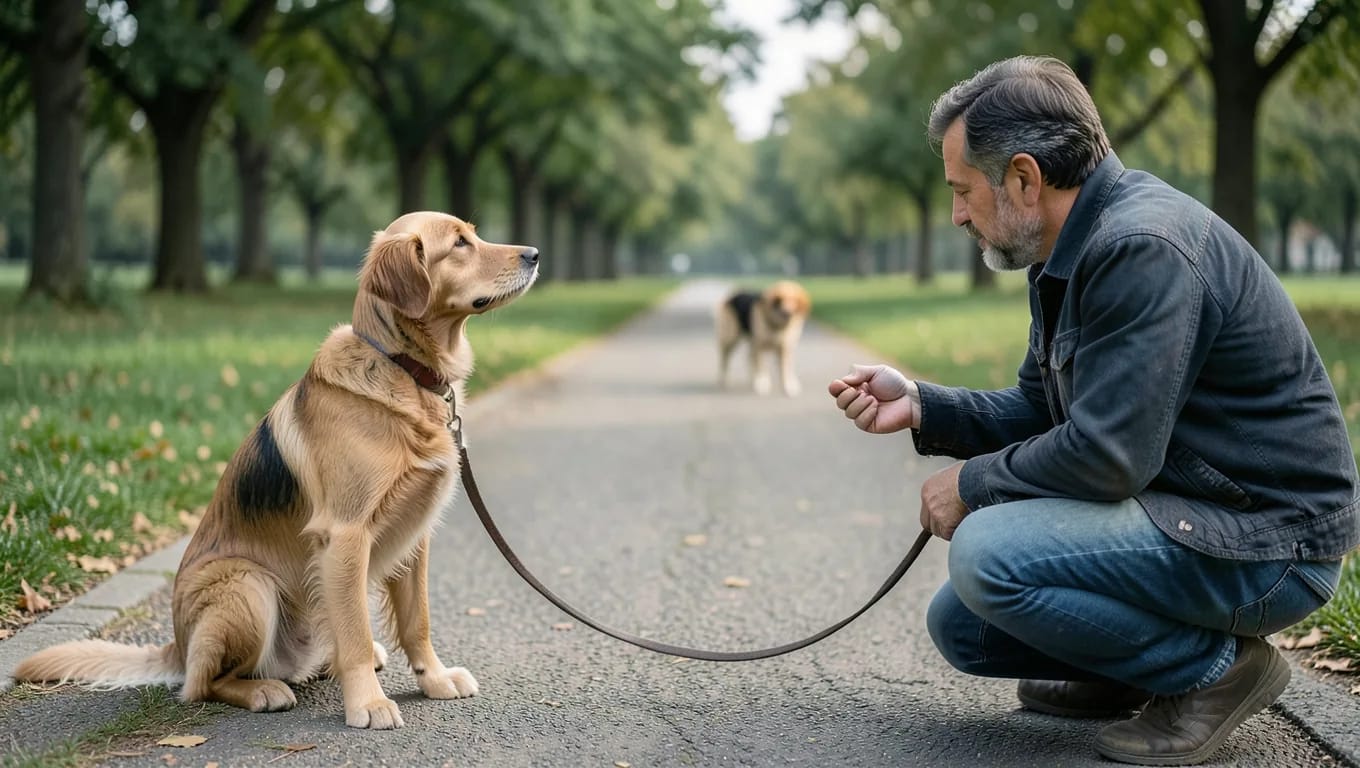
The core of reactivity work is teaching your dog a new emotional response. Every time your dog calmly notices a trigger at a safe distance, feed a stream of high-value treats. Trigger appears, chicken happens. Over many repetitions, your dog's brain starts to predict good things instead of danger, and the feeling itself shifts from "oh no" to "where's my treat?"
The "Look at That" game
Turn spotting the trigger into a calm, rewardable game:
- Observe: let your dog glance at the trigger from a safe distance.
- Mark: the instant they look without reacting, say a happy "yes" or click a clicker.
- Reward: deliver a great treat.
- Redirect: with repetition, your dog learns that looking back at you is what pays, so seeing a trigger becomes the cue to check in.
Teach an emergency U-turn
Train a cheerful "let's go" cue at home that means "spin and follow me." Out in the world, it lets you calmly retreat from a trigger that appears too suddenly or too close, before your dog goes over threshold. Reward warmly once you have made space.
On muzzle training
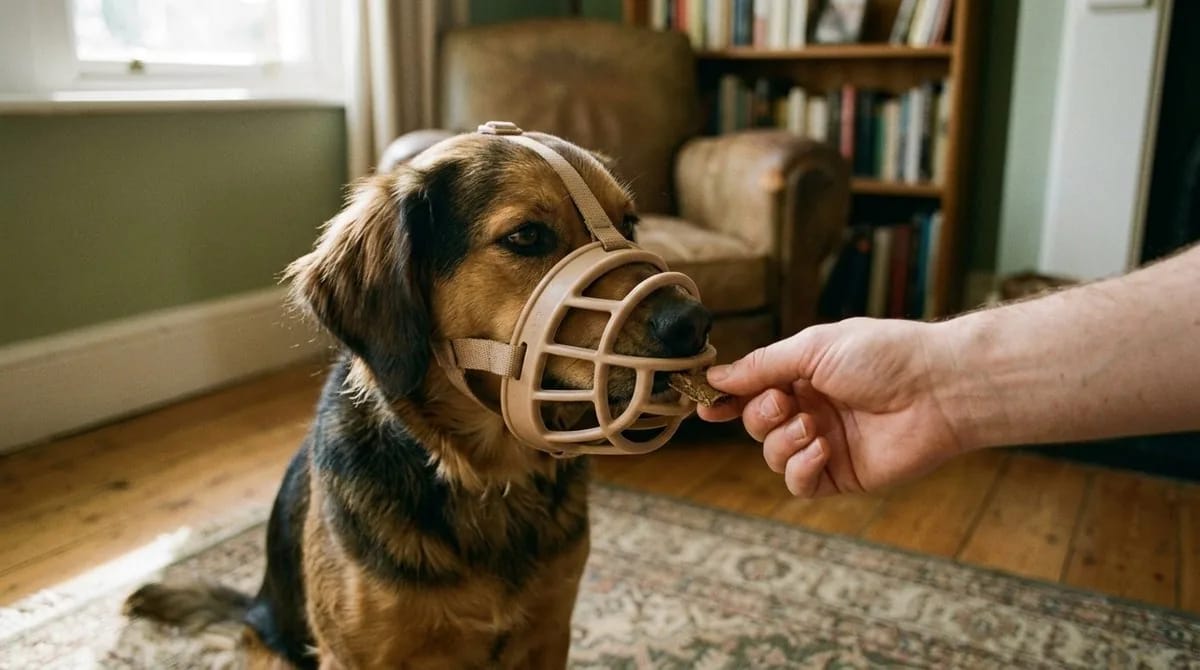
For some dogs, especially those with a bite history, a basket muzzle adds a layer of safety and, importantly, lets everyone relax. A relaxed handler means a calmer dog. Introduce it gradually and positively: pair the muzzle with food so your dog chooses to put its nose in, and never force it. A well-introduced muzzle is just another piece of equipment, not a punishment, and it often lets a dog experience more of the world, not less.
What not to do
A few common reactions make reactivity worse, even when they come from a good place.
- Avoid punishment. Yelling, leash-jerking, or aversive collars add fear and pain to a situation that is already too much, and can teach your dog that triggers predict bad things.
- Do not flood your dog. Forcing a frightened dog to "face its fears" up close overwhelms it and erodes trust.
- Do not ignore the calming signals. Miss the early yawns and lip licks and you lose your chance to act before the barking starts.
- Skip dominance-based methods. Prong collars and alpha rolls do real harm and undermine the confidence you are trying to build.
Set realistic expectations
Reactivity training is a marathon, not a sprint. Progress is rarely a straight line, and a tough day after a good week does not mean you are back to square one. Celebrate the small wins: a slightly shorter outburst, a glance back at you, a treat taken where one was refused last week. Those are the real milestones.
If your dog has bitten, is reacting out of deep fear, or is making no progress, please bring in a certified professional. A qualified trainer or a veterinary behaviorist can build a plan for your specific dog, and in some cases address medical or anxiety factors underneath the behavior, including whether medication would help your dog calm enough to learn.
You do not have to do this alone
Reactivity work is far easier with expert eyes on your dog and a controlled space to practice in. Many owners make their biggest breakthroughs in dedicated reactive-dog classes, where trainers stage safe, distance-controlled setups that you simply cannot recreate on a busy street.
You can find and book a reactive-dog or behavior class with a qualified trainer near you on Canlyo, and start turning stressful walks back into time you both enjoy.
Living with a reactive dog asks a lot of patience, but it also builds an extraordinary bond. As you learn to read your dog and advocate for the space it needs, you become the safe, predictable partner your dog has been looking for all along, and the walks slowly, surely, get better.